


Is Your Electrical Project Safe to DIY — or Time to Call a Pro?
Knowing when to call an electrician vs DIY can be the difference between a safe, code-compliant home and a costly — or even life-threatening — mistake. Here’s a quick answer to help you decide:
Call a licensed electrician if your project involves any of the following:
- Working inside the electrical panel or breaker box
- Installing new circuits or adding new outlet locations
- Home rewiring or service upgrades
- EV charger or generator transfer switch installation
- Burning smells, warm outlets, buzzing sounds, or flickering lights
- Any work that requires a permit
Generally safe for confident DIYers (with power verified OFF):
- Replacing light bulbs
- Swapping outlet covers or switch covers
- Resetting a tripped breaker (once)
- Replacing an existing outlet or switch at the same location
- Installing plug-in smart devices that require no wiring changes
- Resetting a tripped GFCI outlet
For everything else — especially anything involving live wiring, new circuits, or your electrical panel — the risk to your safety, your insurance, and your home’s resale value is too high to guess.
Electrical work is one of the few home repair categories where a mistake can injure you during the repair and burn your house down months later if the underlying wiring is left wrong. According to national fire safety data, electrical malfunctions are a leading cause of residential fires in the U.S., contributing to over 350,000 home fires annually and roughly $7 billion in property damage each year. That context matters when you’re deciding whether to watch a tutorial and grab a screwdriver — or pick up the phone.
I’m Daniel Allred, co-founder of Allred Heating Cooling & Electric and a licensed electrician serving the Puget Sound region, and I’ve seen what goes wrong when homeowners tackle the wrong electrical projects themselves — which is exactly why when to call an electrician vs DIY is a question worth getting right. Read on for a clear, practical breakdown of where the line is and how to stay safely on the right side of it.
When to call an electrician vs diy terms made easy:
- electrical safety checklist for older homes
- how to prevent electrical fires in your home
- how to spot electrical problems before they become dangerous
When to Call an Electrician vs DIY: The Golden Rule of Home Electricals
When it comes to home improvement, there is a massive difference between a poorly painted wall and a poorly wired outlet. If you mess up a painting project, you get an eyesore. If you mess up an electrical project, the consequences can be catastrophic.
The golden rule of home electricals is simple: When in doubt, don’t. If you cannot confidently explain how a circuit operates, or if you do not have the proper diagnostic tools to verify that a wire is completely de-energized, you should not be touching it.
Unlike plumbing, where a mistake results in a highly visible, immediate puddle of water, electrical mistakes are often invisible. A loose wire nut or a “backstabbed” connection can sit quietly inside a wall cavity for months. Over time, as appliances draw current through that loose connection, electrical arcing occurs. This generates intense heat, eventually igniting surrounding insulation and drywall. This is why electrical malfunctions remain the leading cause of residential property fires in the United States, causing an estimated $1.3 billion in direct property damage annually.
Furthermore, the immediate physical dangers of DIY electrical work are severe. Nationally, DIY electrical work leads to over 30,000 injuries and approximately 400 electrocutions every single year. Shocking as it sounds, a current of just 50 milliamps—less than the amount needed to power a small holiday light bulb—is enough to cause heart failure in a healthy adult.
Rather than gambling with your safety, it is vital to recognize when to step back. If you are experiencing complex electrical issues, it is always best to Stop Guessing and Call a Pro for These Electrical Issues.
Safe Electrical Projects You Can Tackle Yourself
While we always advocate for extreme caution, we also support informed, safe DIY projects. Homeowners in Washington State can legally and safely perform basic, like-for-like electrical maintenance. However, before you even open a toolbox, you must understand the absolute prerequisites of electrical safety.
First, you must always de-energize the circuit at the main electrical panel. Never rely on a wall switch to turn off the power; always flip the corresponding breaker to the “off” position. Second, you must verify that the power is actually off using a reliable, high-quality non-contact voltage tester. Do not guess, and never trust a breaker label blindly. Breaker directories are notoriously outdated or mislabeled, especially in older homes across Tacoma, Bellevue, or Puyallup.
To safely use a non-contact voltage tester:
- Test the tool on a known live outlet first to ensure the battery is working.
- Test the wires you plan to work on.
- Test the tool on the live outlet once more to confirm it didn’t fail during your check.
Once you have verified the circuit is entirely dead, here is a list of safe DIY tasks you can confidently handle:
- Replacing light bulbs: Upgrading standard incandescent bulbs to energy-efficient LEDs is completely safe and requires no electrical modifications.
- Replacing outlet and switch faceplates: Swapping out old, dirty, or cracked plastic covers for modern decorative plates is a purely cosmetic task that poses no electrical risk, provided you do not touch the screws on the sides of the actual switch or outlet body.
- Installing plug-in smart devices: Smart plugs and smart home hubs that plug directly into existing wall outlets require zero wiring and are 100% safe to set up yourself.
- Resetting a tripped breaker: If a breaker trips because you ran a hair dryer and a space heater at the same time, it is safe to reset it once. If it immediately trips again, stop and call a professional.
- Replacing a standard light fixture: If you are swapping an old dining room light for a new one in the exact same location, and the wiring matches color-for-color (black to black, white to white, bare copper to green/ground), this is a highly doable DIY task.
Understanding When to Call an Electrician vs DIY for Outlets and Switches
When it comes to outlets and switches, the line between DIY-friendly and professional-only can get a bit blurry. Cosmetic upgrades—like replacing a yellowed, painted-over light switch with a clean, modern toggle switch—are generally safe for confident homeowners who follow proper safety protocols.
However, things get complicated quickly when you encounter older wiring systems. If you open an outlet box in an older home in Redmond or Kirkland and find only two wires (no ground wire), or if you encounter crumbling rubber insulation, you are dealing with a hazard. Installing a modern three-prong outlet on an ungrounded circuit without GFCI protection is a major code violation and a serious safety hazard.
Additionally, replacing standard receptacles with Ground Fault Circuit Interrupter (GFCI) outlets requires a clear understanding of LINE versus LOAD terminals. GFCI outlets protect you from electrocution by monitoring the balance of current. If you miswire a GFCI by swapping the LINE (incoming power) and LOAD (downstream power) wires, the outlet may still power your appliances but fail to trip during a ground fault, leaving you unprotected.
Furthermore, current electrical codes require GFCI protection in all areas near water—kitchens, bathrooms, laundry rooms, garages, and outdoors. If you are unsure how to properly wire or daisy-chain these safety devices, it is highly recommended to rely on professional Electrical Services to ensure your home meets modern safety standards.
High-Risk Projects That Always Require a Professional
There are several home electrical projects that carry such high stakes that they should never, under any circumstances, be attempted as a DIY project. These projects require specialized training, expensive diagnostic equipment, and a deep understanding of the National Electrical Code (NEC).
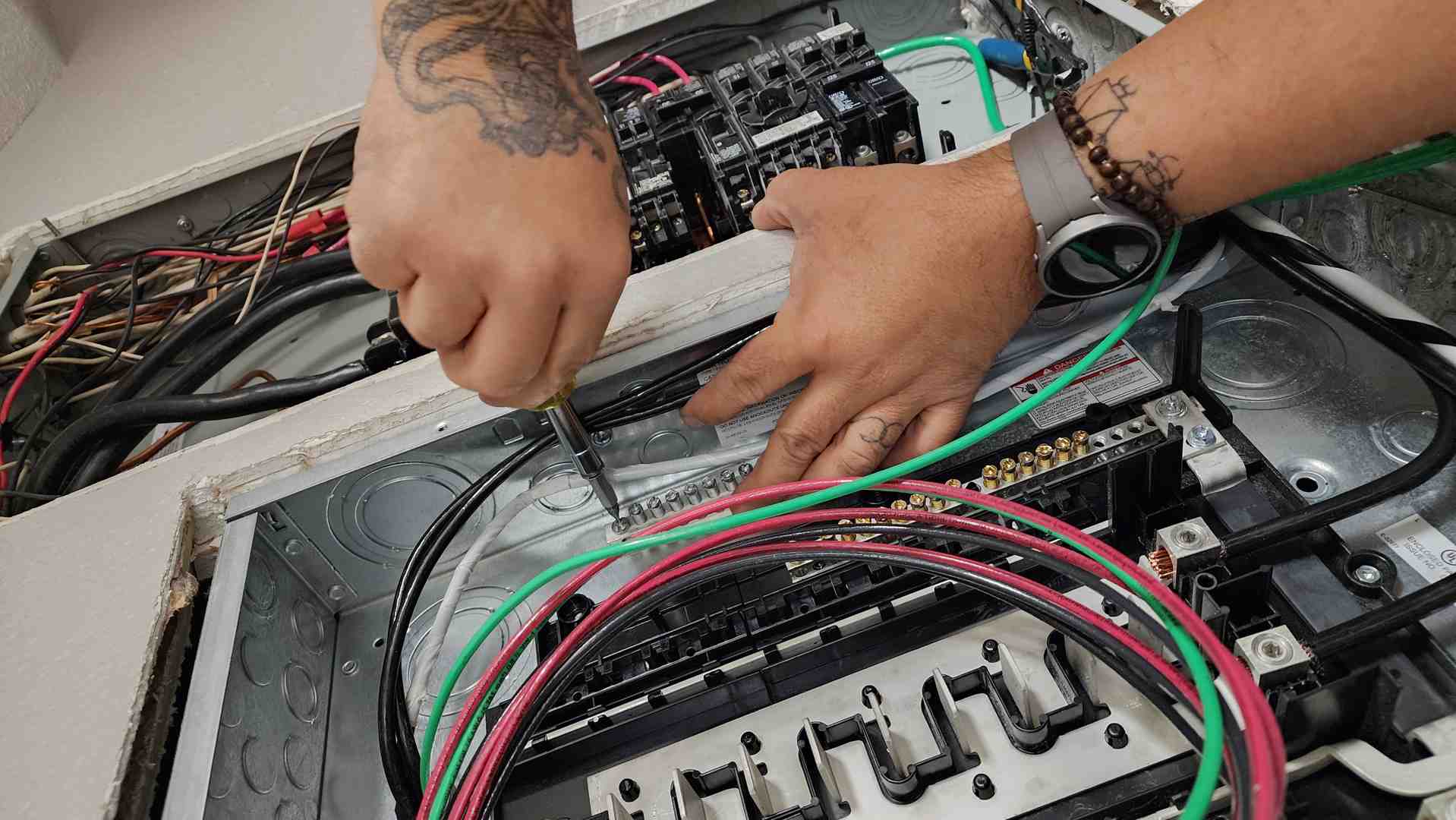
First and foremost is any work inside the main electrical panel. Your breaker box is the heart of your home’s electrical system. Even if you turn off the “Main” breaker at the top of the panel, the heavy service conductors coming from the utility meter remain energized with high amperage. One accidental slip of a screwdriver inside an open panel can cause an arc flash explosion, resulting in severe third-degree burns, blindness, or instant electrocution.
Other high-risk projects that always require a licensed professional include:
- Upgrading your electrical service: Upgrading an older 100-amp panel to a modern 200-amp panel to handle modern household loads requires coordination with local utilities (like Seattle City Light or Puget Sound Energy), pulling permits, and professional installation.
- Whole-home rewiring: Replacing outdated knob-and-tube or hazardous 1960s-1970s aluminum branch wiring is an incredibly complex undertaking. Aluminum wiring is highly prone to oxidation and expansion, which creates loose connections and extreme fire hazards.
- Adding new dedicated circuits: Running new Romex cable through walls, calculating load capacities, and installing new breakers in your panel is not a job for amateurs.
- Troubleshooting persistent electrical faults: If your breakers are constantly tripping, or your lights dim every time your refrigerator kicks on, you have an underlying system issue. If you notice these symptoms, it is highly recommended to check the Signs It’s Time to Schedule a Circuit Breaker Repair and have a professional diagnose the root cause.
- Wiring heavy appliances or specialized heating systems: Connecting HVAC systems, heat pumps, or electric fireplaces requires precise voltage and amperage configurations. For specialized heating systems, you should also be familiar with the Signs You Need Professional Fireplace Services to prevent ventilation and electrical hazards.
Why Complex Installations Mean Knowing When to Call an Electrician vs DIY
As technology advances, our homes are drawing more power than ever before. Modern upgrades like Electric Vehicle (EV) chargers, smart home hubs, and backup generators require sophisticated electrical infrastructure. Attempting to DIY these installations can easily overload your existing electrical system.
Consider EV charger installation. Charging an electric vehicle at home typically requires a dedicated 240-volt circuit drawing 40 to 50 amps. This is a massive continuous load—meaning it runs at full capacity for hours at a time. Under the NEC, continuous loads must not exceed 80% of the circuit’s maximum rating. A professional electrician must perform a precise load calculation of your entire home to ensure your existing electrical panel can handle this massive draw without overheating.
Smart home integrations can also present unexpected challenges. Many modern smart switches, dimmers, and video doorbells require a dedicated neutral wire to power their internal transmitters. Older homes built before the mid-1980s rarely have neutral wires running to light switch boxes. A DIYer attempting to force a smart switch into a box without a neutral wire might try to bypass safety measures by using the ground wire as a neutral—a dangerous code violation that energizes the metal parts of your electrical system.
Finally, emergency backup power systems require professional installation. Installing a portable or standby generator requires a dedicated generator transfer switch. Never, under any circumstances, attempt to “back-feed” a generator by plugging it into an outlet. Back-feeding sends high-voltage electricity backward through your home’s system and out into the utility lines, which can instantly electrocute utility workers trying to restore power in your neighborhood.
The Hidden Risks and Legal Consequences of DIY Mistakes
The risks of DIY electrical work extend far beyond the physical dangers of shocks and fires. There are massive financial, legal, and insurance consequences that most homeowners completely overlook until it is too late.
In Washington State, and specifically across King and Pierce counties, the law requires permits and inspections for almost all electrical work that goes beyond simple, like-for-like fixture replacements. If you add a new outlet in your garage or wire a hot tub in Puyallup without a permit, you are committing a code violation.
When you eventually decide to sell your home, home inspectors will easily spot unpermitted electrical work. This can delay your home sale, force you to pay hefty fines, or require you to pay a licensed contractor to tear out the DIY work and redo it entirely to meet local building codes.
Even worse, if a fire occurs in your home and fire investigators trace the cause back to unpermitted, unlicensed DIY electrical work, your homeowner’s insurance company has the legal right to deny your claim entirely. You could be left holding the bill for hundreds of thousands of dollars in property damage, simply because you wanted to save a few dollars on an installation.
| DIY Electrical Risks | Professional Electrician Guarantees |
|---|---|
| High Risk of Fire & Shock: Loose connections can arc and ignite surrounding materials inside wall cavities over time. | Code-Compliant Safety: Work is performed according to the strict guidelines of the National Electrical Code (NEC). |
| Voided Insurance Claims: Insurance providers can deny coverage for damages caused by unlicensed, unpermitted work. | Fully Insured & Bonded: Any accidental damage is fully covered by the contractor’s liability insurance. |
| Resale Complications: Unpermitted work is flagged during home inspections, stalling home sales and lowering property value. | Permitted & Inspected: All work is officially permitted and inspected by local municipal authorities, ensuring long-term peace of mind. |
| Hidden Costs: Homeowners often end up paying twice—once for DIY materials, and again for a professional to fix the mistakes. | Warrantied Craftsmanship: Reputable contractors back their work with written labor and material warranties. |
How to Choose a Qualified, Licensed Electrician
If you have decided that your project is best left to the experts, the next step is choosing the right professional. Not all electrical contractors are created equal, and hiring an unqualified “handyman” can be just as risky as doing the work yourself.
When hiring an electrician in the Seattle area, always verify their credentials through the Washington State Department of Labor & Industries (L&I) website. A qualified contractor should always be happy to provide their license number, which you can easily look up online to ensure their license is active and free of outstanding violations.
Additionally, make sure the contractor carries robust general liability insurance and workers’ compensation. This protects you from financial liability if a technician is injured on your property or if an accidental electrical fire occurs during the project.
Finally, choose a local company that stands behind their work with clear warranties and handles all necessary permits and inspections on your behalf. Taking the time to hire a true professional ensures your home remains safe, efficient, and fully compliant with all local regulations. To learn more about why professional service is always the smartest investment, read about the Benefits of Hiring Professionals for Electrical Needs.
Frequently Asked Questions About Home Electrical Work
What are the warning signs of serious electrical trouble?
You should call a licensed electrician immediately if you notice any of the following warning signs in your home:
- Burning smells: A distinct, fishy, or plastic-like burning smell near outlets or your electrical panel is an immediate emergency. Turn off the corresponding breaker and call a professional.
- Flickering or dimming lights: If your lights flicker constantly, or dim when major appliances turn on, your electrical system is struggling to handle the load.
- Warm outlets or switches: Outlets and switch faceplates should never feel warm or hot to the touch. This is a clear sign of dangerous heat buildup.
- Buzzing or humming sounds: Quiet buzzing or sizzling sounds inside walls or outlet boxes indicate active electrical arcing.
Can unlicensed electrical work void my home insurance?
Yes. Most standard homeowner’s insurance policies contain specific exclusions for damage caused by unlicensed, unpermitted, or non-code-compliant work. If an electrical fire is traced back to a DIY wiring project or work performed by an unlicensed handyman, your insurer can legally deny your claim, leaving you financially responsible for all repairs and rebuild costs.
Do I need a permit for replacing existing light fixtures?
In most Washington State jurisdictions, including King and Pierce counties, you do not need a permit for simple, “like-for-like” replacements of existing light fixtures, outlets, or switches, provided you are not altering the underlying wiring or adding new circuits. However, if you are running new wire, adding new outlet locations, or upgrading your electrical panel, a permit and official inspection are legally required.
Conclusion
At Allred Heating Cooling & Electric, we believe that your family’s safety and comfort should always come first. While tackling home improvement projects on your own can be highly rewarding, electrical work is simply too dangerous to leave to chance. Knowing when to call an electrician vs DIY is the most important tool in your home maintenance kit.
Whether you need a quick safety inspection, an electrical panel upgrade, or a complex wiring repair, our team of highly rated, expert technicians is here to help. We proudly serve homeowners across the entire Puget Sound region—including Auburn, Bellevue, Tacoma, Redmond, and beyond—with family-oriented service, 24/7 emergency availability, and guaranteed craftsmanship.
Don’t risk your safety or your home’s value on a DIY guess. Contact us today or reach out directly to our expert Kent Electricians to schedule your professional service and enjoy true peace of mind.
