


Electrical Fires Are More Common Than You Think — Here’s How to Stay Safe
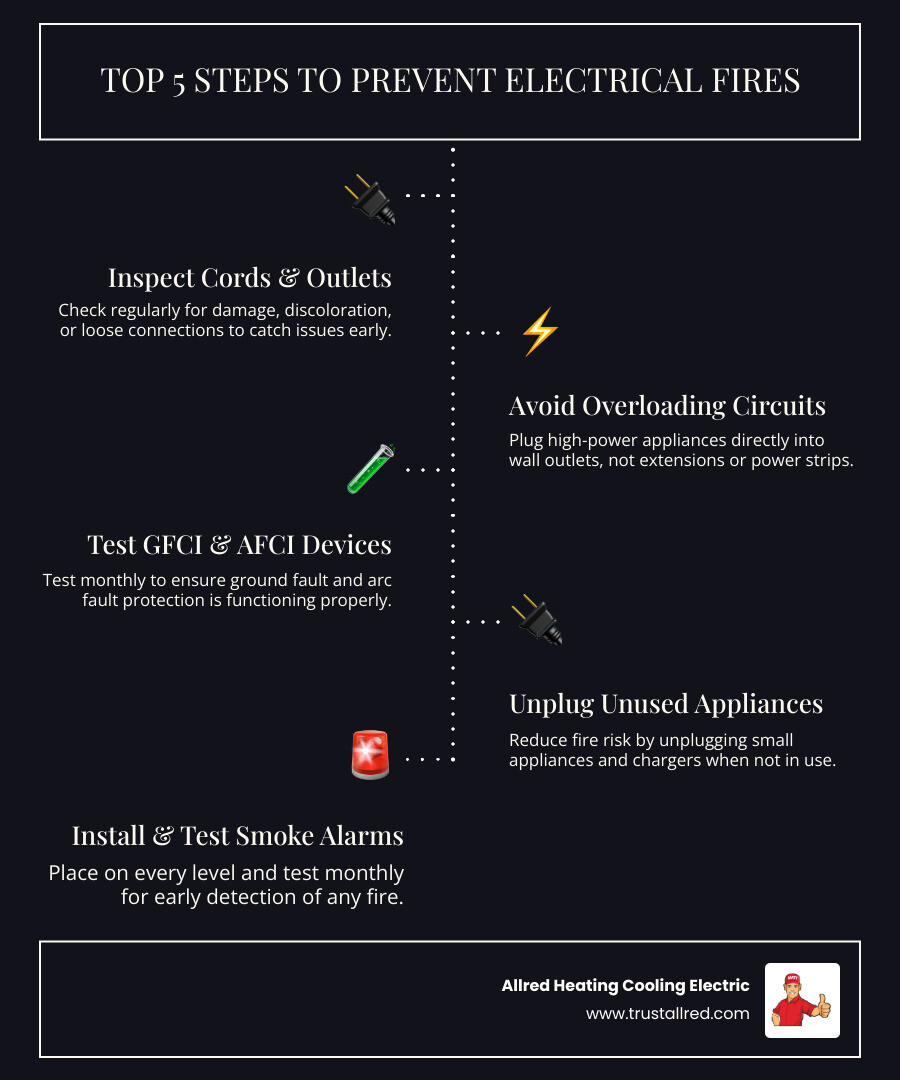
How to prevent electrical fires in your home starts with understanding a few key habits and knowing when to call a professional. Here’s a quick overview:
- Inspect cords and outlets regularly for damage, discoloration, or loose connections
- Avoid overloading outlets — plug high-power appliances directly into wall outlets
- Test GFCI and AFCI devices monthly to make sure they’re working
- Unplug small appliances when not in use
- Schedule a professional electrical inspection every 10 years, or sooner if your home is older
- Install smoke alarms on every level of your home and test them monthly
- Never use damaged cords — replace them immediately
Home electrical fires account for an estimated 51,000 fires every year in the United States, resulting in nearly 500 deaths, more than 1,400 injuries, and $1.3 billion in property damage annually. That’s not a rare worst-case scenario — that’s a consistent, ongoing crisis happening in ordinary homes just like yours. And here in the Seattle area, where older housing stock is common and modern households are piling on more electronics than ever, the risks are very real.
What makes electrical fires especially dangerous is how quietly they start. A frayed cord tucked behind furniture. Wiring that hasn’t been touched since the 1970s. A space heater plugged into an extension cord. These aren’t dramatic failures — they’re everyday oversights that can turn into disasters.
I’m Daniel Allred, a licensed electrician and co-founder of Allred Heating Cooling & Electric, and I’ve spent years inspecting and upgrading home electrical systems across the Puget Sound region — giving me a front-row seat to the hazards that put families at risk when it comes to how to prevent electrical fires in your home. In the sections ahead, I’ll walk you through exactly what to watch for and what to do about it.
Common Causes and Warning Signs of Electrical Hazards
Understanding how to prevent electrical fires in your home begins with identifying the “silent” threats lurking behind your walls. Statistics from 2019–2023 show that electrical distribution or lighting equipment was involved in an average of over 31,000 reported home fires per year. Most of these incidents are preventable if you know what to look for.
Faulty Wiring: The Hidden Culprit
Wiring defects are a leading cause of residential blazes. In many older homes throughout the Seattle area, the original wiring simply wasn’t designed to handle the massive electrical load of 2026 technology. Whether it’s aging insulation that has become brittle or outdated aluminum wiring from the 1960s and 70s, faulty wiring can arc and spark without you ever seeing it. If you live in an older neighborhood, a Columbia City Electrician can help determine if your home needs a service capacity upgrade.
Overloaded Circuits
We’ve all been there: trying to plug a laptop, a lamp, a phone charger, and a portable heater into a single outlet. When you draw more power than a circuit is rated for, the wires heat up. This heat can eventually melt the insulation, leading to a fire. If your circuit breakers trip frequently, your system is trying to tell you it’s overwhelmed. Don’t just flip the switch back on; investigate why it happened.
Sensory Warning Signs: Trust Your Senses
Your home often provides early warning signs before a fire breaks out. Pay close attention to:
- Burning Smells: An odor like burning plastic, rubber, or even a “fishy” smell is a major red flag. This often indicates that plastic components or wire insulation are melting.
- Flickering Lights: While sometimes a sign of a loose bulb, consistent flickering often points to loose connections or a struggling electrical panel.
- Buzzing or Sizzling Sounds: Electricity should be silent. If you hear a hum or a pop coming from an outlet or switch, stop using it immediately.
- Warm Walls or Outlets: If a wall feels warm to the touch near an outlet, or if the outlet plate itself is hot, you have a dangerous heat buildup.
If you notice any of these signs, you may need Emergency Electrical Repairs in Kent WA to secure your home before a spark turns into a flame.
Common Electrical Fire Triggers
- Frayed or pinched cords: Cords under rugs or behind heavy furniture can overheat or break.
- Loose-fitting plugs: If a plug falls out of an outlet easily, the loose connection can cause arcing.
- Pest damage: Squirrels or rats in attics often chew on wire insulation, exposing live wires.
How to Prevent Electrical Fires in Your Home: Maintenance Tips
Prevention isn’t just about big repairs; it’s about consistent maintenance. Many electrical fires start in the appliances we use every single day.
Appliance Maintenance and Cleaning
Did you know that “failure to clean” was the leading factor in 31% of clothes dryer fires between 2018 and 2020? Lint is highly flammable. When it builds up in the trap or the vent pipe, the heat from the dryer can easily ignite it.
- Dryer Lint: Clean the lint filter after every load and have your dryer vents professionally cleaned at least once a year.
- Refrigerator Coils: Dust and pet hair can insulate refrigerator coils, forcing the motor to work harder and run hotter. Vacuuming these coils every six months reduces the fire risk and saves energy.
Kitchen Safety
The kitchen is a high-traffic area for electricity. From high-draw appliances like microwaves to small gadgets like air fryers, the load is heavy. If you’re noticing issues in your cooking space, Pierce County Kitchen Electrical Updates can ensure your circuits are properly balanced for modern appliances.
Lightbulb Wattage and Fixture Safety
Always check the recommended wattage on your light fixtures. Using a 100-watt bulb in a fixture rated for 60 watts can cause “overlamping.” The excessive heat can melt the light socket and the insulation on the fixture’s wires. Also, keep flammable materials like curtains or decorative paper shades away from hot bulbs.
Monthly Electrical Safety Checks
We recommend performing these quick checks every month:
- Test GFCIs and AFCIs: Press the “test” button to ensure the power cuts off, then “reset.”
- Check Cords: Look for cracks, frays, or heat damage on all visible power cords.
- Unplug Unused Devices: Small appliances like coffee makers and toasters still draw a small amount of power when plugged in. Unplugging them when not in use is a simple way to eliminate a potential fire source.
- Wall Plate Inspection: Ensure all switch and outlet plates are secure and not discolored.
Essential Safety Technology: GFCIs, AFCIs, and Alarms
Modern technology has given us incredible tools to stop fires before they start. Two of the most important are GFCIs and AFCIs.
GFCI vs. AFCI Protection
| Feature | GFCI (Ground Fault Circuit Interrupter) | AFCI (Arc Fault Circuit Interrupter) |
|---|---|---|
| Primary Goal | Prevents Electrocution/Shock | Prevents Electrical Fires |
| Detection | Detects current leaks to ground | Detects dangerous electrical arcing |
| Best Locations | Kitchens, Bathrooms, Garages, Outdoors | Bedrooms, Living Rooms, Dining Areas |
| Mechanism | Shuts off if current varies by 5mA | Shuts off when it detects a “sparking” pattern |
Arc faults are responsible for more than 28,000 home fires annually. While GFCIs protect you from shocks near water, AFCIs are the real heroes of fire prevention. If you’re planning a Queen Anne Bathroom Electrical Update, ensuring you have the right mix of these safety devices is critical.
Smoke Detectors and Fire Extinguishers
Sixty-five percent of home fire deaths occur in homes with no working smoke detectors. To maximize safety:
- Install detectors on every level, inside every bedroom, and outside sleeping areas.
- Space them roughly every 21 feet.
- Replace batteries annually and replace the entire unit every 10 years.
Keep a Class C or multipurpose ABC fire extinguisher in the kitchen and garage. Never use water on an electrical fire, as water conducts electricity and could lead to a fatal shock.
If you aren’t sure if your home meets the current 2026 safety standards, consulting a Southcenter Electrical Contractor can provide peace of mind through a comprehensive safety audit.
Modern Hazards: EVs, E-Bikes, and Space Heaters
As we move further into 2026, new technologies bring new risks. Electric vehicles (EVs) and e-bikes are wonderful for the environment, but they require significant electrical care.
EV and E-Bike Charging Safety
Charging a vehicle requires a massive amount of sustained power.
- Dedicated Circuits: Never use a standard extension cord to charge an EV. You need a dedicated circuit installed by a pro. Using a Sea-Tac Vehicle Charging Station setup ensures your home’s wiring can handle the amperage without overheating.
- Lithium-Ion Batteries: E-bikes and scooters use powerful lithium-ion batteries. Only use the manufacturer-provided charger. Avoid overcharging, and never charge these devices on “soft” surfaces like beds or couches, which can trap heat. Always charge on hard, flat surfaces.
- Damage Signs: If a battery smells unusual, changes color, or feels excessively hot, stop using it immediately.
If you’re adding green tech to your home, a Factoria Vehicle Charging Station installation is the safest way to power your commute.
Space Heater Safety
Space heaters are involved in over 30% of home heating fires and a staggering 88% of associated deaths.
- The 3-Foot Rule: Keep heaters at least three feet away from anything flammable (curtains, rugs, bedding).
- Plug Directly into Walls: Never plug a space heater into a power strip or extension cord. These devices aren’t rated for the high current a heater draws and can easily melt.
- Auto Shut-off: Only use heaters with a tip-over sensor and overheat protection.
Frequently Asked Questions
How to prevent electrical fires in your home by spotting warning signs?
The best way is to use your senses. Look for discolored or charred outlet plates. Listen for buzzing or popping sounds. Most importantly, smell for “fishy” or acrid plastic odors. If a wall feels warm to the touch or a circuit breaker trips the moment you plug in a specific device, you likely have a fault. Don’t wait for a fire to start—contact us for a professional Repair to diagnose the issue.
How to prevent electrical fires in your home when using extension cords?
Extension cords are for temporary use only. They are not a permanent solution for a lack of outlets. Never “daisy-chain” cords (plugging one into another) and never run them under rugs or through doorways where they can be pinched. If you find yourself relying on extension cords daily, it’s time to have Medina Electricians install additional permanent outlets.
How often should I have a professional electrical inspection?
We recommend a thorough inspection every 10 years for most homes. However, if your home was built before 1980, or if you are moving into a new-to-you property, you should have it checked immediately. Older systems often have aluminum wiring or “knob and tube” components that are high-risk. For those living near military housing or in older districts, JBLM Electricians can provide specialized inspections to ensure your system meets modern safety codes.
Conclusion
At Allred Heating Cooling & Electric, we believe your home should be your sanctuary, not a source of stress. Knowing how to prevent electrical fires in your home is a vital part of protecting your family and your investment. From cleaning your dryer lint trap to upgrading your electrical panel, every step you take makes a difference.
As a family-oriented business serving the Seattle, Tacoma, and Bellevue areas, we pride ourselves on expert craftsmanship and 24/7 emergency availability. Whether you need a safety audit or a major upgrade, our Kent Electricians are here to help you stay safe and comfortable all year round. Don’t wait for a spark—give us a call today and let’s make sure your home’s electrical system is as safe as it can be.
