


Why Knowing How to Spot Electrical Problems Before They Become Dangerous Could Save Your Home
Knowing how to spot electrical problems before they become dangerous is one of the most important things you can do as a homeowner. Electrical malfunctions cause more than 46,700 house fires every year in the U.S. — and most of them are preventable with early detection.
Here are the most common warning signs to watch for right now:
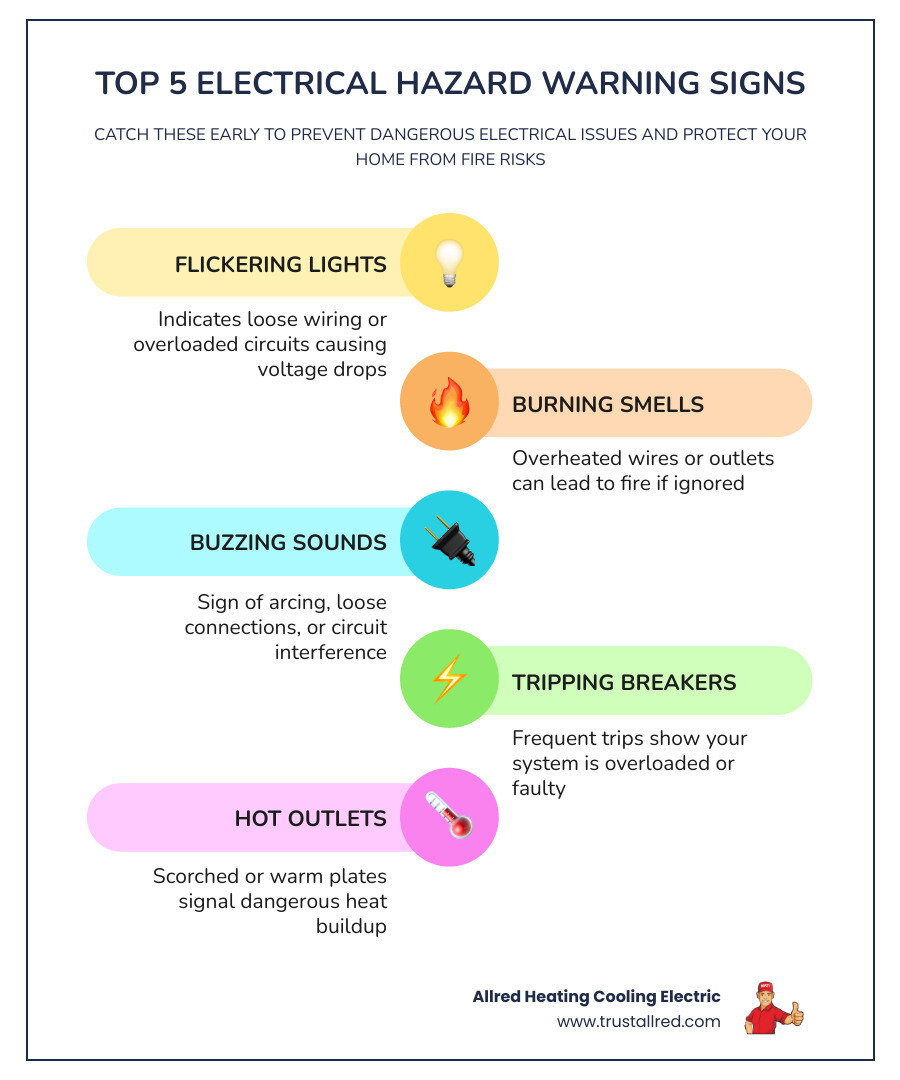
- Flickering or dimming lights — often signals loose wiring or an overloaded circuit
- Burning smells or scorched outlets — indicates overheating that can lead to fire
- Buzzing or crackling sounds from outlets, switches, or your panel — a sign of arcing or loose connections
- Frequently tripping circuit breakers — your system is telling you something is wrong
- Warm or hot outlets and switch plates — abnormal and potentially dangerous
- Discolored or scorch-marked outlets — visible evidence of heat damage
- Mild electric shocks when touching appliances — points to a ground fault in your wiring
If you notice any of these signs, do not ignore them. Turn off power to the affected area if it is safe to do so, and contact a licensed electrician as soon as possible.
Electricity is something most of us take completely for granted — right up until something goes wrong. Behind your walls, inside your panel box, and running through every outlet in your home, your electrical system works around the clock under constant demand. Modern households put more load on that system than ever before, with smart devices, EV chargers, and high-draw appliances all competing for capacity that older homes were never designed to handle.
The challenge is that most electrical problems don’t announce themselves dramatically. More often, they show up quietly — a faint burning smell you chalk up to the stove, a light that flickers once and seems fine, a breaker that trips but resets without issue. These small signals are easy to dismiss. But they are frequently the first warning that something more serious is developing inside your walls, where you cannot see it.
Electrical distribution and lighting equipment alone caused more than 36,000 home structure fires per year between 2015 and 2019, according to the NFPA. Many of those fires started with warning signs that went unaddressed. The good news is that when you know what to look for, you can catch problems early — before they become costly, dangerous, or life-threatening.
I’m Daniel Allred, a licensed electrician and co-founder of Allred Heating Cooling & Electric, and I’ve spent years helping Pacific Northwest homeowners understand how to spot electrical problems before they become dangerous before they escalate into emergencies. In this guide, I’ll walk you through exactly what to watch for, what it means, and when to call a professional.
Common Warning Signs: How to Spot Electrical Problems Before They Become Dangerous
Identifying electrical hazards is a sensory experience. You don’t necessarily need fancy tools or a degree in engineering to protect your home; you just need to pay attention to what your house is telling you through sight, sound, and smell.

When an electrical system is in trouble, it leaves clues. One of the most obvious visual indicators is a discolored outlet. If you see brown, black, or yellow staining on the faceplate of an outlet or switch, it’s a sign that heat is building up behind the wall. This is often caused by “arcing,” where electricity jumps across a gap in a loose connection, creating temperatures that can reach thousands of degrees.
Another major red flag is the presence of sparks. While a tiny blue spark when you plug in a large appliance can sometimes be normal, frequent or large sparks are a cry for help. If you ever see a spark that lingers or leaves a mark on the wall, stop using that outlet immediately. For residents in the Seattle area, our Emergency Electrical Repairs Auburn WA Guide provides a deeper dive into what constitutes a true electrical emergency.
Identifying Flickering Lights and Buzzing Sounds
We’ve all seen a light flicker when the wind blows outside, but if your lights are dimming or flickering when you turn on the microwave or the vacuum, you have a problem. This usually indicates a voltage drop or a circuit that is being pushed beyond its limits. In some cases, it could mean a loose neutral wire in your main electrical panel, which is a significant fire hazard.
Electricity should be silent. If you hear a buzzing, humming, or crackling sound coming from a switch, outlet, or your breaker panel, it is almost certainly a sign of a loose connection or a failing component. Think of it like a river hitting a pile of rocks; that sound is the electricity struggling to flow through a point of high resistance. If the lights go out or the buzzing gets louder, you may need Auburns 247 Emergency Electricians When The Lights Go Out to diagnose the issue before a fire starts.
Recognizing Burning Smells and Discolored Outlets
A burning smell is perhaps the most urgent warning sign your home can give you. Many people describe the scent of an electrical fire as “fishy” or like “burning plastic.” This is the smell of wire insulation melting. If you notice an unfamiliar odor near an outlet or your breaker box, don’t wait for smoke to appear.
Overheated wires can quickly ignite the wooden studs or insulation inside your walls. If you find an outlet that feels hot to the touch — even if nothing is plugged into it — the wiring behind it is likely failing. This is where the Benefits Hiring Professionals Electrical Needs become clear; a pro can use thermal imaging or specialized testers to find the exact point of failure without tearing apart your entire wall.
Primary Causes of Electrical Faults and Failures
Understanding why these problems happen can help you prevent them. Most electrical faults stem from a few common culprits.
| Normal Electrical Behavior | Dangerous Warning Signs |
|---|---|
| A tiny blue spark when plugging in a high-draw device. | Large sparks, smoke, or black scorch marks. |
| A breaker trips once every few years during a storm. | A breaker trips every time you use a specific outlet. |
| An outlet feels room temperature to the touch. | An outlet feels warm or hot even with nothing plugged in. |
| Lights stay at a consistent brightness. | Lights flicker or dim when appliances kick on. |
| Silent operation of switches and panels. | Buzzing, crackling, or sizzling sounds. |
Common causes of these issues include:
- Loose Connections: Over time, wires can pull away from terminals due to house settling or “thermal expansion” (wires growing and shrinking as they heat and cool).
- Water Ingress: Moisture from a leaky pipe or high humidity can corrode connections and cause short circuits.
- Rodent Damage: Mice and rats love the taste of wire insulation. Chewed wires are a leading cause of hidden house fires.
- Frayed Cords: Damaged power cords on appliances can create shorts that travel back into your home’s wiring.
To keep your system in top shape, consider Shockingly Good Auburns Premier Electrical Maintenance Services to catch these hidden issues during a routine check-up.
How to Spot Electrical Problems Before They Become Dangerous in Older Homes
If you live in an older home in places like Tacoma or Puyallup, your risks are naturally higher. Homes built before the 1970s often contain wiring systems that weren’t designed for the “always-on” digital world we live in today.
Aluminum Wiring: Between 1965 and 1973, many homes were built with aluminum wiring. Research shows these homes are 55 times more likely to have a fire than those with copper wiring. This is because aluminum expands and contracts more than copper, eventually loosening the connections and creating a fire risk.
Knob-and-Tube Wiring: Found in homes built before 1940, this system lacks a ground wire, which increases the risk of shocks and appliance damage. Furthermore, the brittle rubber insulation on these wires often flakes off over time, leaving bare wires exposed inside your walls.
Federal Pacific Electric (FPE) Panels: If your home has an FPE panel installed between the 1950s and 1980s, be aware that these have a high failure rate. They often fail to trip during an overload, which can lead to the panel literally melting or catching fire.
Overloaded Circuits and Extension Cord Overuse
One of the most common ways homeowners accidentally create hazards is through the overuse of extension cords and power strips. Extension cords are meant for temporary use only. If you have them snaked under rugs or taped along baseboards to power your TV and computer, you are asking for trouble.
Electrical power cords cause about 3,300 residential fires each year. When you “daisy-chain” power strips (plugging one into another), you create a massive demand on a single circuit that can lead to overheating. If you find yourself constantly reaching for a power strip, it’s a sign that your home needs more permanent outlets and perhaps a panel upgrade. Understanding the Benefits Hiring Professionals Electrical Needs means recognizing that adding a few outlets is a much cheaper and safer solution than risking a fire with a tangled web of cords.
Immediate Safety Steps for Suspected Electrical Issues
If you suspect an electrical problem, your first priority is safety. Do not attempt to “test” a buzzing outlet by plugging something else into it.
- Cut the Power: If you smell burning or see sparks, go to your electrical panel immediately and turn off the main breaker. This cuts power to the entire house and stops the flow of electricity to the fault.
- Unplug Devices: If it is safe to do so, unplug appliances from the affected circuit. This reduces the load and helps prevent damage to your expensive electronics.
- Don’t DIY Repairs: Unless you are a licensed electrician, do not open your electrical panel or attempt to rewire an outlet. Electricity is unforgiving.
- Call for Help: Contact a professional to diagnose the root cause. You can find more detailed protocols in our Emergency Electrical Repairs Auburn WA Guide.
How to Spot Electrical Problems Before They Become Dangerous with Modern Appliances
Modern life is heavy on electricity. In the Seattle and Bellevue area, we see a lot of homes adding EV chargers, high-efficiency HVAC systems, and smart home hubs. These additions can cause “nuisance tripping” or surges if the system isn’t prepared.
If your lights flicker every time your air conditioner kicks on, your HVAC system is drawing too much “inrush” current for the circuit it’s on. This can shorten the life of your AC unit and damage other electronics in the house. High-demand appliances should always be on dedicated circuits. If you’re worried about how your new gadgets are affecting your home, Auburns 247 Emergency Electricians When The Lights Go Out can help you balance your electrical load.
Frequently Asked Questions about Home Electrical Safety
Why does my circuit breaker keep tripping?
A tripping breaker is actually a safety feature — it’s doing its job! It trips when it detects an “overload” (too much power being drawn), a “short circuit” (when a hot wire touches a neutral wire), or a “ground fault” (when electricity takes an unintended path to the ground). If a breaker trips repeatedly, stop resetting it. This is a clear sign of a persistent fault that needs professional attention.
Is it normal for an outlet to feel warm?
Absolutely not. While some electronic “bricks” (like laptop chargers) can get warm, the outlet itself and the wall around it should always remain at room temperature. A warm outlet indicates high resistance, usually caused by loose wires or an overloaded circuit. This is a major fire hazard.
How often should I have my electrical system inspected?
We recommend a professional electrical inspection every 3 to 5 years. However, if you live in an older home or have recently moved into a new property in Kent or Federal Way, an immediate safety audit is a wise investment. Regular checks are the best way to ensure Shockingly Good Auburns Premier Electrical Maintenance Services keep your family safe.
Conclusion
Your home’s electrical system is its central nervous system. When it’s healthy, everything runs smoothly. When it’s struggling, it sends out warning signals that you cannot afford to ignore. By learning how to spot electrical problems before they become dangerous, you are taking a proactive step toward protecting your home and your loved ones from preventable disasters.
At Allred Heating Cooling Electric, we take a family-oriented approach to everything we do. Our expert technicians are highly rated and available 24/7 for emergencies across the Seattle region, from Auburn and Puyallup to Bellevue and Issaquah. Whether you’ve noticed a strange buzzing sound or you just want the peace of mind that comes with a professional inspection, we are here to help.
Don’t wait for a small flicker to turn into a major fire. Schedule your inspection with our Kent Electricians today and let us ensure your home stays comfortable and safe all year round.
