


Is Annual HVAC Maintenance Worth It? Here’s What Seattle Homeowners Need to Know
Annual HVAC maintenance is it worth it for most Seattle-area homeowners — and the short answer is yes. A well-maintained system runs more efficiently, lasts significantly longer, and is far less likely to break down on the coldest night of the year or during a Pacific Northwest heat dome. Here’s a quick breakdown of what regular maintenance actually delivers:
The core benefits at a glance:
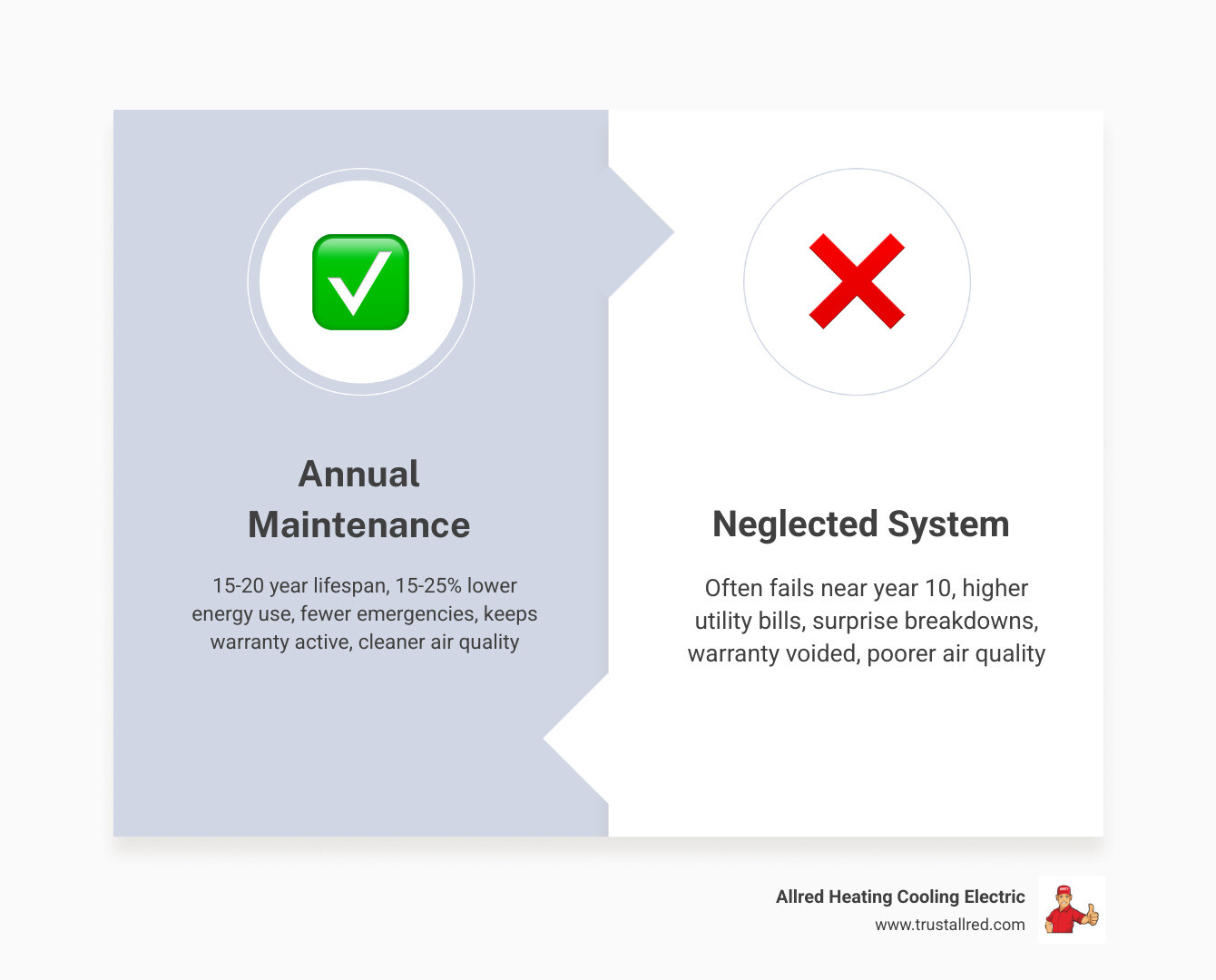
- Longer system life — Maintained systems last 15–20 years; neglected ones often fail around the 10-year mark
- Lower energy bills — Regular tune-ups can reduce energy consumption by up to 15–25%
- Fewer emergency repairs — Catching small issues early prevents large, expensive failures
- Warranty protection — Many manufacturers require documented annual service to keep your warranty valid
- Better indoor air quality — Clean filters, coils, and drains mean cleaner air for your family
- Peace of mind — You’re not wondering whether your system will hold up when you need it most
That said, not all maintenance plans are created equal — and whether a formal service contract is the right fit for your situation depends on your system’s age, your home’s needs, and what’s actually included. This guide walks you through everything you need to know to make a smart decision.
I’m Daniel Allred, co-founder of Allred Heating, Cooling & Electric, and after years of servicing HVAC systems across the Puget Sound region, I’ve seen how annual HVAC maintenance is it worth it for protecting both your equipment and your wallet. I’ll share what we’ve learned in the field so you can make a confident, informed choice for your home.
What is an HVAC Maintenance Plan?
Think of an HVAC maintenance plan as a “health insurance policy” for your home’s comfort system. It isn’t just a quick glance at your furnace or AC; it is a comprehensive, multi-point inspection performed by a professional technician to ensure every component is functioning at its peak.
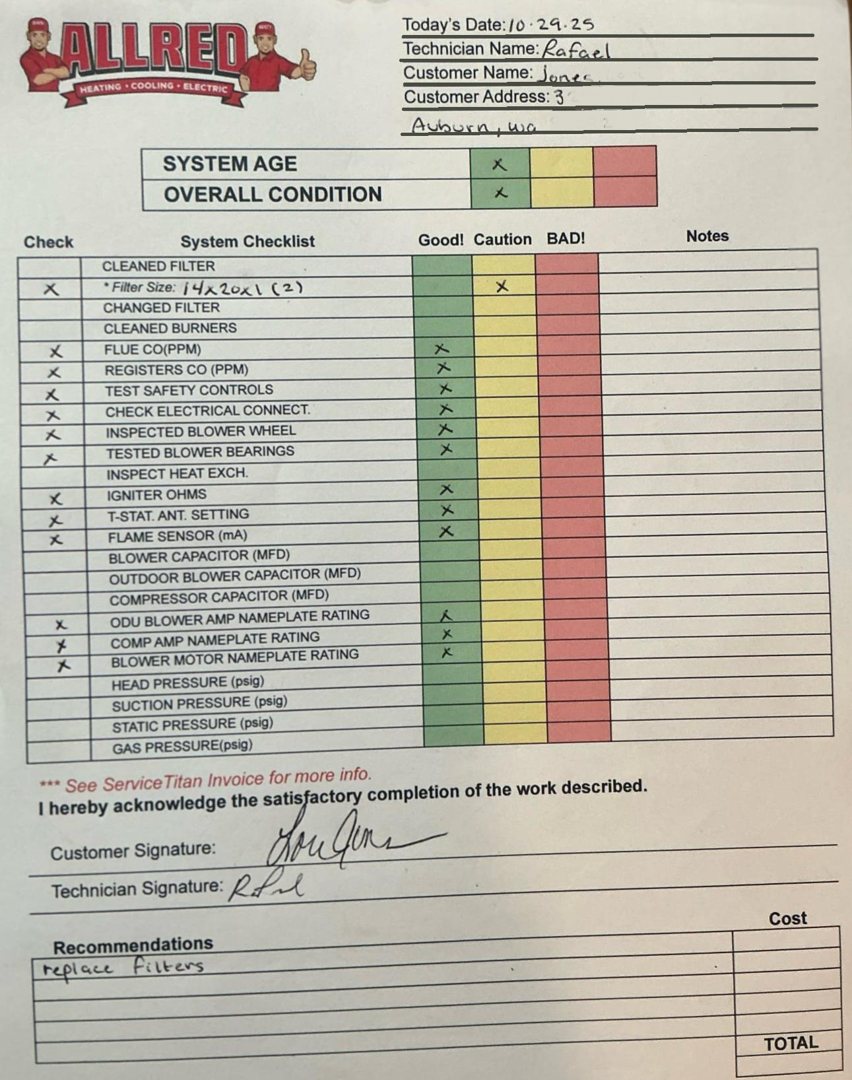
When you sign up for Annual HVAC Maintenance Plans, you are essentially scheduling a “physical” for your equipment. In the King and Snohomish County areas, where our systems work hard through damp winters and increasingly hot summers, these plans typically include:
- Professional Inspection: A deep dive into the system’s mechanical and electrical parts to identify wear and tear before it leads to a total shutdown.
- Thermostat Calibration: Ensuring your thermostat accurately reads the temperature so your system doesn’t run longer than necessary.
- Electrical Connections: Tightening all connections and measuring voltage and current on motors. Loose connections are a common cause of system failure and can even be a fire hazard.
- Cleaning Coils: Dust and debris on evaporator and condenser coils act like a “winter coat” in the middle of summer, forcing the system to work much harder to move heat.
- Condensate Drains: Clearing these lines is vital. A clogged drain can lead to water damage in your home or cause the system to shut down entirely to prevent a flood.
- Safety Checks: Inspecting the heat exchanger for cracks (which can leak carbon monoxide) and testing all safety limit controls.
- Lubrication: Oiling moving parts to reduce friction, which lowers the amount of electricity the motor uses.
- Refrigerant Levels: Checking for leaks or improper levels that can damage the compressor and spike your utility bills.
- Blower Motor Adjustment: Ensuring the blower is clean and adjusted for proper airflow, which is the heart of your home’s comfort.
Annual HVAC Maintenance: Is It Worth It for Your Home?
Many homeowners in places like Auburn, WA or Bellevue ask: if it isn’t broken, why fix it? The reality is that HVAC systems are like cars—you wouldn’t drive 50,000 miles without an oil change and expect the engine to survive.
Comparing Maintained vs. Neglected Systems
| Feature | Well-Maintained System | Neglected System |
|---|---|---|
| Average Lifespan | 15–20+ Years | 8–10 Years |
| Energy Efficiency | High (Maintains SEER/AFUE) | Low (Loses ~5% per year) |
| Breakdown Risk | Minimal | High (40% more likely to fail) |
| Repair Costs | Lower (Caught early) | High (Emergency rates) |
| Air Quality | Clean and Filtered | Dusty and Allergen-heavy |
When we look at whether annual HVAC maintenance is it worth it, the financial ROI is clear. According to the U.S. Department of Energy, regular maintenance can reduce energy consumption by up to 25%. For a family in Tacoma or Kent, that translates to hundreds of dollars saved every year on utility bills.
Furthermore, Importance of Regular Furnace Tune-Ups cannot be overstated. A furnace that hasn’t been checked can develop a cracked heat exchanger. This isn’t just a repair issue; it’s a safety crisis. Carbon monoxide is a “silent killer,” and annual checks ensure your system’s combustion process is venting safely out of your home.
Beyond safety and savings, there is the “Emergency Factor.” Most HVAC failures happen during extreme weather—the exact time when every HVAC company in the Puget Sound is booked solid. Maintenance plan members often receive priority scheduling, meaning you aren’t stuck in a cold house in January waiting days for a technician.
The Impact of Regular Service on System Longevity and Efficiency
The biggest threat to your HVAC system isn’t age—it’s dirt. Dust and debris are the primary causes of “premature retirement” for heating and cooling units.
When coils are dirty, airflow is restricted. This causes the compressor or furnace to run longer cycles to reach the desired temperature. This extra “runtime” adds up. A system that runs 20% longer than it should will reach its mechanical end-of-life years earlier than a clean system. By investing in Regular HVAC Maintenance for Optimal Performance, you ensure that every component—from the smallest capacitor to the heavy-duty compressor—is working under ideal conditions.
Protecting the “Heart” of the System
The compressor is the most expensive part of an air conditioner or heat pump. Often, a compressor fails because a $20 capacitor (a small part that helps the motor start) went bad. During a routine maintenance visit, we test these capacitors. Replacing a worn capacitor is a minor task; replacing a seized compressor often means it’s time for a whole new unit.
You can Keep Your HVAC From Retiring Early With These Maintenance Tips by focusing on heat exchanger integrity and moisture control. In our humid Washington climate, moisture can lead to rust and mold inside the cabinet. Professional cleaning removes these threats, ensuring your system stays “young” for as long as possible.
Balancing Professional Service with DIY Maintenance Tasks
While we highly recommend professional service for the technical aspects of your system, there are plenty of things you can do as a homeowner to help. In fact, the best results come from a partnership between you and your technician.
Essential Homeowner Maintenance Checklist
- Filter Changes: This is the #1 thing you can do. Check your filters monthly and replace them at least every 90 days. If you have pets or allergies, you might need to do it every 30 days.
- Debris Clearance: Keep plants, shrubs, and grass at least two feet away from your outdoor unit. Your AC needs to “breathe” to release heat; if it’s surrounded by overgrown bushes, it will overheat.
- Vent Cleaning: Keep your indoor return and supply vents clear of furniture, curtains, or dust. Restricted airflow puts unnecessary strain on the blower motor.
- Visual Inspections: Take a walk around your outdoor unit. Look for frayed wires or signs of pests (like mice or wasps) nesting inside the unit.
- Monitor Performance: Pay attention to strange noises, unusual odors, or sudden spikes in your energy bill. These are early warning signs that something is wrong.
Learning How to Maintain Your Heating and Cooling System Without Losing Your Cool involves knowing where your DIY skills end and professional expertise begins. For example, Why Your HVAC System Hates the Rain is a real concern in the Northwest; while rain itself is fine, the debris and mud it washes into your unit are not.
Understanding the different Types of HVAC Filters is also helpful. Some high-efficiency filters are great for air quality but can actually “choke” older systems if they aren’t designed for that level of restriction. Your technician can tell you exactly which MERV rating is best for your specific equipment.
Frequently Asked Questions about HVAC Maintenance Value
How often should I schedule annual HVAC maintenance?
For the best results, you should have your system serviced twice a year. We recommend a cooling-focused tune-up in the spring (before the first heatwave) and a heating-focused tune-up in the fall (before the first frost).
The Truth About How Often Your HVAC Needs a Tune-Up is that even if your system is new, it still needs annual attention. Think of it as a seasonal “switch-over” to ensure the components required for the upcoming season are lubricated, clean, and ready for heavy use.
Why annual HVAC maintenance is it worth it for protecting your warranty?
This is a point many homeowners miss: your manufacturer’s warranty (which often covers expensive parts for 10 years) likely has fine print. Most major brands like Trane, Lennox, and Carrier require documented proof of professional annual maintenance to honor warranty claims.
If your compressor fails in year seven and you cannot provide service records showing the system was maintained, the manufacturer can deny your claim. Checking our HVAC FAQs can help you understand how to keep your paperwork in order to protect these valuable parts-and-labor coverages.
Does annual HVAC maintenance is it worth it for reducing utility bills?
Absolutely. A neglected system can lose roughly 5% of its efficiency every year it goes without service. Dust accumulation on the blower fan and coils makes the motor work harder to move the same amount of air. By optimizing performance, we ensure your system uses the least amount of energy possible to keep your home comfortable. Over a decade, those monthly savings can actually pay for the cost of the maintenance plan itself.
Conclusion
At Allred Heating Cooling Electric, we’ve built our reputation from Auburn to Sammamish by treating our customers like family. We know that your home is your sanctuary, and the last thing you want to deal with is a preventable HVAC breakdown.
When you ask, “annual hvac maintenance is it worth it?”, consider the long-term value. It’s about more than just a technician showing up with a wrench; it’s about peace of mind, lower monthly costs, and ensuring your home remains a comfortable haven for your family through every Washington season. Our expert technicians are ready to help you protect your investment and keep your system running like new for years to come.
Protect your home with professional HVAC maintenance by reaching out to us today—we’re available 24/7 to ensure you never lose your cool (or your warmth).
