


How Rain and Moisture Affect Your HVAC System — What Every Seattle Homeowner Should Know
How rain and moisture affect your HVAC system is something most homeowners don’t think about until something goes wrong — and in the Pacific Northwest, that can happen fast.
Here’s a quick breakdown of what you need to know:
| Situation | Impact on HVAC | Action Needed |
|---|---|---|
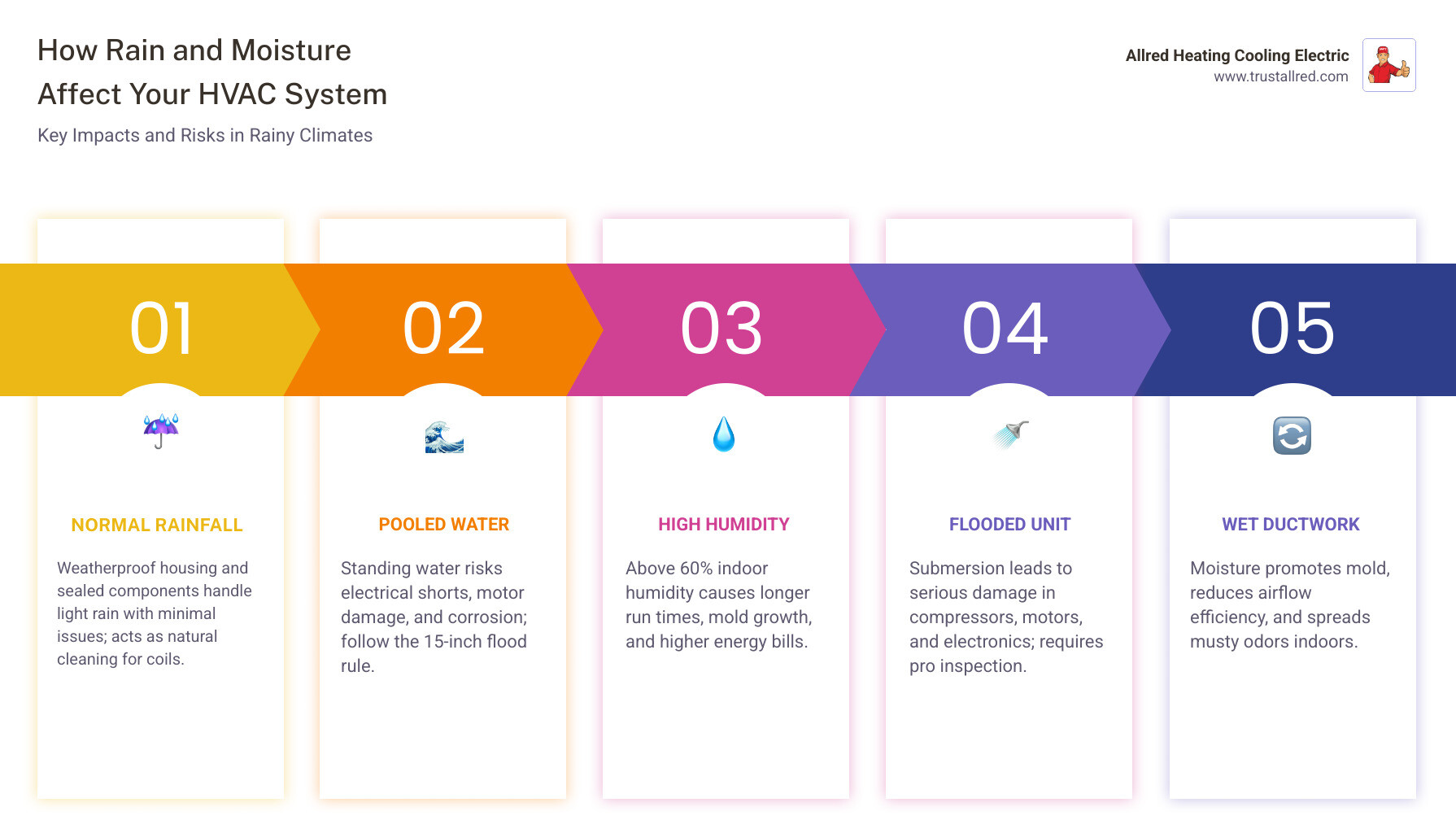
| Normal rainfall | Minimal — units are built to handle it | No action needed |
| Heavy rain / pooled water | Risk of electrical shorts, motor damage | Turn off unit; call a pro |
| Indoor humidity above 60% | Longer run times, mold risk, higher bills | Dehumidify; schedule maintenance |
| Flooded unit (15+ inches) | Serious component damage possible | Professional inspection required |
| Wet ductwork | Mold growth, reduced efficiency | Inspection and drying needed |
| Power surges from storms | Compressor and capacitor damage | Install surge protection |
The short answer? Light rain generally won’t hurt your system — outdoor HVAC units are designed with weatherproof housing, sealed electrical components, and corrosion-resistant materials like copper and aluminum. But heavy storms, flooding, and the relentless humidity that comes with Seattle winters? Those are a different story. They can quietly stress your system, reduce efficiency, and in serious cases, cause real damage to both indoor and outdoor components.
I’m Daniel Allred, co-founder of Allred Heating Cooling & Electric, and after more than a decade of servicing HVAC systems across the Puget Sound region, I’ve seen how rain and moisture affect your HVAC system in ways that catch homeowners completely off guard. In the sections below, I’ll walk you through exactly what to watch for — and how to protect your home before the next storm rolls in.
Does Normal Rainfall Damage Your Outdoor Unit?
Living in areas like Auburn, Kent, or Tacoma, we are no strangers to a steady drizzle. One of the most common questions we get at TrustAllred is: “Should I turn off my AC when it’s raining?” The good news is that under normal conditions, your outdoor unit is a bit of a tank.
Manufacturers design outdoor condensers to live outside year-round. They utilize weatherproof housing made of treated steel or heavy-duty plastics. The internal electrical connections are sealed tight against the elements, and the most critical parts—the copper coils and aluminum fins—are naturally resistant to corrosion from fresh rainwater.
In fact, a light rain can be a secret blessing for your system. As water falls through the condenser fan grille, it helps wash away dust, pollen, and light debris that might be clinging to the coils. Think of it as a free, natural HVAC Upkeep session provided by the Seattle sky. As long as the water can drain away freely from the base of the unit, your system will keep humming along just fine.
Identifying How Rain and Moisture Affect Your HVAC System Performance
While the rain itself is rarely the villain, the consequences of prolonged moisture can lead to trouble. In the Pacific Northwest, we deal with “damp” more than “dry.” If your unit is constantly shrouded in moisture without proper airflow, you run the risk of accelerated rust on the outer cabinet or the fan motor brackets.
Furthermore, rain often brings wind, which blows leaves, pine needles, and mud into the delicate aluminum fins of your outdoor unit. If these fins get clogged, the heat transfer process is choked. Your system has to work twice as hard to move heat, leading to higher energy bills and a shorter equipment lifespan. If you notice your unit making strange rattling sounds after a storm or if it seems to be running longer than usual, these are clear Signs Your Air Conditioner Needs Repair.
How Rain and Moisture Affect Your HVAC System During Severe Weather
Things get serious when we move from “rainy” to “flooded.” Whether it’s a burst pipe or a flash flood in a low-lying area of Puyallup or Issaquah, standing water is the ultimate enemy of your HVAC system.
The industry standard is the 15-inch rule. If floodwaters rise above 15 inches, or if the water level reaches the internal electrical components and the compressor, you must not turn the unit back on. Submerged motors and wiring can short-circuit instantly, leading to a total system loss or even a fire hazard.
Standing water also brings silt and mud. Even after the water recedes, that mud stays trapped inside the unit, coating the coils and the motor. This creates a “blanket” that traps heat and promotes rapid corrosion. If your unit has been sitting in a pool of water, you need a professional HVAC Service technician to deep-clean the internals and test the electrical integrity before you even think about flipping the thermostat.
Electrical Risks and Power Surges
Severe storms in the Sound often come with lightning and power fluctuations. Lightning doesn’t even have to hit your house to cause damage; a nearby strike can send a massive surge through the power lines.
- Capacitor and Compressor Damage: These are the “heart and brain” of your outdoor unit. A surge can fry the start capacitor or damage the compressor windings.
- Power Restoration Surges: Often, the damage doesn’t happen when the power goes out, but when it slams back on.
- The Solution: We highly recommend installing a dedicated HVAC surge protector. This acts as a localized “circuit breaker” that sacrifices itself to save your multi-thousand-dollar system. If you’re unsure if your system is protected, check out our HVAC System FAQ for more on storm safety.
The Impact of High Humidity on Indoor Comfort
Rain doesn’t just stay outside; it changes the very nature of the air inside your home. In April 2026, as we face another wet spring, understanding the relationship between humidity and your HVAC is vital.
The Environmental Protection Agency (EPA) recommends keeping indoor humidity between 30 and 50 percent. When it rains, outdoor humidity often hits 90% or higher. Your air conditioner (or heat pump) has two jobs: lowering the temperature and removing moisture.
| Humidity Level | HVAC Workload | Comfort Level | Risk Factor |
|---|---|---|---|
| 30-45% | Optimal | Perfect; skin feels dry but not itchy | Low |
| 50-60% | Moderate | “Clammy” or “Sticky” feeling | Mild mold risk |
| Above 60% | High | Heavy air; musty smells | High mold/mildew risk |
When humidity rises above 60%, your system has to run much longer cycles to “wring out” the air. This leads to increased wear and tear and higher electric bills. If your filters are dirty, this process is even harder, which is why you should Enhance Air Quality With New Filter Services during the wet seasons.
Preventative Steps for How Rain and Moisture Affect Your HVAC System
If you find that your home feels like a swamp every time it rains in Redmond or Kirkland, you might need more than just a standard AC.
- Dehumidifier Integration: A whole-home dehumidifier works alongside your HVAC to pull gallons of water out of the air without needing the AC to run constantly.
- Smart Thermostats: Modern thermostats can monitor humidity levels and adjust cooling cycles specifically to prioritize moisture removal.
- Hygrometer Readings: Buy a cheap hygrometer to keep an eye on your indoor levels. If you’re consistently over 55%, your system is struggling.
- Air Sealing: Moisture often enters through leaks in windows, doors, and attics. Sealing these gaps helps your HVAC maintain control.
If you have a specialized system, a Ductless Mini Split Needs Tune Up just as much as a central system to handle these humidity spikes effectively.
Protecting Indoor Components and Ductwork from Moisture
While the outdoor unit is built for rain, your indoor components—the furnace, air handler, and ductwork—are absolutely not.
In the Pacific Northwest, moisture often sneaks into the home through roof leaks or damp crawlspaces. If your ductwork is located in a damp crawlspace or attic, it can act like a sponge.
- Wet Insulation: Once fiberglass duct insulation gets wet, it loses its R-value and becomes a breeding ground for mold.
- Musty Odors: That “old basement” smell when the heat kicks on? That’s likely mildew spores originating from moisture in the ducts.
- Respiratory Health: For families in Bellevue or Sammamish with asthma or allergies, wet ductwork can be a major health trigger.
Regular maintenance is the only way to catch these hidden moisture traps before they turn into a full-scale mold remediation project. We cannot stress the Importance of Regular Ductwork Maintenance enough, especially in our “evergreen” (a.k.a. ever-wet) climate.
Maintenance Strategies for Rainy Climates
To ensure your system survives the next decade of Seattle storms, you need a proactive strategy. It’s not just about the machine; it’s about the environment around it.
- Clear the Perimeter: Keep at least two feet of clearance around your outdoor unit. Remove wet leaves, tall grass, and “wind-driven” debris that can trap moisture against the cabinet.
- Check the Pad: Heavy rain can erode the soil under your unit’s concrete pad. If the unit becomes unlevel, the oil in the compressor won’t circulate correctly, leading to a burnout.
- Gutter Alignment: Ensure your roof gutters aren’t pouring a “waterfall” directly onto your HVAC unit. This concentrated flow can force water into places it was never meant to go.
- Professional Eyes: A technician can spot the early signs of rust or a failing seal that a homeowner might miss. This is a standard part of an HVAC Check During Routine Maintenance.
Consistency is key. Here is Why Annual HVAC Maintenance is Important: it allows us to prep your system for the specific challenges of the upcoming season, whether that’s a freezing winter or a humid spring.
Why You Should Never Use a Tarp
We see this every winter in neighborhoods from Federal Way to Maple Valley: a well-meaning homeowner wraps their outdoor unit in a blue plastic tarp or a garbage bag. Please, do not do this.
Tarps are moisture traps. They prevent air from circulating, which means any condensation or humidity from the ground gets locked inside with your expensive equipment. This creates a “greenhouse effect” that accelerates rust and encourages mold growth on the internal coils. Furthermore, if the system accidentally kicks on while covered, the compressor will overheat almost instantly because it can’t “breathe.”
If you want to protect your unit from falling icicles or heavy snow, use a specialized, breathable HVAC cover that allows moisture to escape while blocking debris. For more “pro-tips,” check out our HVAC Maintenance Tips Long Lasting Systems.
Frequently Asked Questions about Rain and HVAC
What should I do if my unit is submerged in water?
Immediately shut off the power at the main circuit breaker. Do not touch the unit if you are standing in water. Once the water recedes, do not attempt to turn it back on. Call us for a professional inspection. We will need to dry out the components, clean away silt, and test the electrical windings to ensure the motor hasn’t shorted.
Can rain actually help my air conditioner run better?
Yes, in a very specific way! If it’s a light rain on a hot day, the water can help cool the ambient air around the unit and wash away dust from the coils, which can actually provide a temporary boost in efficiency. However, this doesn’t replace the need for a professional cleaning.
How do I know if moisture has damaged my ducts?
Look for “sweating” or condensation on your registers (the metal grates on your floor or ceiling). If you notice a persistent musty or earthy smell when the air is blowing, or if your family is experiencing unexplained sneezing or itchy eyes, it’s time to have the ducts inspected for mold or standing water.
Conclusion
At Allred Heating Cooling & Electric, we know that Seattle weather is unpredictable. From atmospheric rivers to summer humidity spikes, your HVAC system is constantly battling the elements. Understanding how rain and moisture affect your HVAC system is the first step toward ensuring your family stays comfortable and your utility bills stay manageable.
As a family-oriented business founded by twin brothers, we take pride in serving our neighbors across the South Sound—from Auburn and Tacoma to Bellevue and Issaquah. Whether you’re dealing with storm damage, high indoor humidity, or just want to make sure your system is ready for the next rainy season, our expert technicians are available 24/7 to help.
Don’t wait for a breakdown in the middle of a storm. Schedule your professional HVAC maintenance today and let us give you the peace of mind that comes with a weather-ready home.
