


Is Your HVAC System Getting the Attention It Needs?
How often should you service your hvac system is one of the most common questions homeowners ask — and the short answer is:
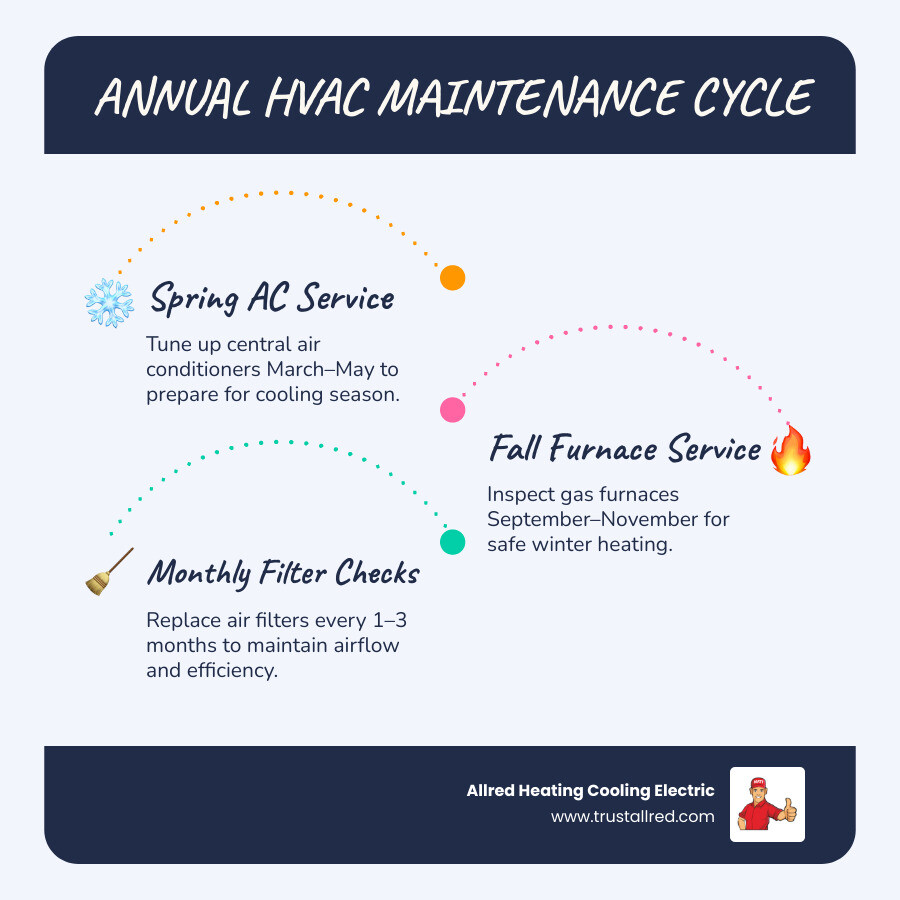
- Central air conditioner: Once a year, in the spring (March–May)
- Gas furnace: Once a year, in the fall (September–November)
- Heat pump: Twice a year — spring and fall — since it handles both heating and cooling
- Older systems (10+ years): Consider additional mid-season check-ins
Most HVAC experts agree that at minimum, every system needs at least one professional tune-up per year. For most Seattle-area homes dealing with year-round heating and cooling demands, twice a year is the gold standard.
That said, your ideal schedule depends on a few key factors — your system’s age, how hard it runs, your home environment, and yes, the unpredictable Puget Sound weather. We’ll break all of that down in this guide.
Regular maintenance isn’t just about comfort. A well-tuned system can use 10–30% less energy than a neglected one, and annual service prevents an estimated 70–80% of HVAC breakdowns before they happen. Skipping it doesn’t save money — it delays costs and makes them bigger.
I’m Daniel Allred, co-founder of Allred Heating, Cooling & Electric, and after years of hands-on HVAC service across the Puget Sound region, I’ve seen what happens when homeowners wonder how often should you service your hvac system and wait too long to find out. In the sections ahead, I’ll walk you through everything you need to know to keep your system running right, season after season.
How Often Should You Service Your HVAC System for Peak Performance?
When it comes to maintaining a comfortable home in places like Auburn, Bellevue, or Tacoma, timing is everything. While the “once a year” rule is a good baseline, the gold standard for peak performance is a biannual schedule. This means having a professional look at your cooling system in the spring and your heating system in the fall.
Think of it as a seasonal hand-off. In the spring (ideally between March and May), we focus on HVAC Upkeep for your air conditioner. We want to ensure that when that first July heatwave hits the Puget Sound, your AC doesn’t decide to take a permanent vacation. Conversely, fall maintenance (September to November) ensures your furnace is ready to handle the damp, bone-chilling cold we know all too well.
| Maintenance Task | Spring (AC Focus) | Fall (Furnace Focus) |
|---|---|---|
| Coil Cleaning | Condenser & Evaporator coils | N/A (usually) |
| Refrigerant Check | Check levels & leaks | N/A |
| Heat Exchanger | N/A | Inspect for cracks/corrosion |
| Burner Assembly | N/A | Clean and adjust |
| Electrical | Tighten connections | Inspect ignition system |
| Filters | Replace/Clean | Replace/Clean |
By sticking to this rhythm, you aren’t just reacting to problems; you are engaging in peak season prevention. A system that is tuned up before it has to work its hardest is far more reliable and efficient. In fact, research shows that well-maintained units can outlast neglected ones by 5 to 10 years, delaying the need for a total Washington HVAC System Replacement.
Why how often should you service your hvac system matters for your warranty
One of the most overlooked reasons to maintain a strict service schedule is your manufacturer’s warranty. Most major HVAC brands require proof of regular professional maintenance to keep the warranty valid. If a major component like a compressor or heat exchanger fails in year five, the manufacturer may ask for service records before they ship a replacement part.
Without documented Annual HVAC Maintenance Plans, you could be left footing the bill for a repair that should have been covered. Regular service provides long-term protection for your investment, ensuring that component coverage remains intact for the full life of the system.
Determining how often should you service your hvac system based on equipment age
As your system hits the ten-year milestone, the “how often” question changes slightly. Older systems naturally experience more wear and tear, and their efficiency begins to degrade. While a brand-new unit might hum along perfectly with annual care, a system that is 11 to 15 years old often benefits from quarterly professional check-ups.
Older motors, aging capacitors, and thinning heat exchangers need a closer eye. Increased inspection frequency allows us to catch small issues — like a failing fan motor or a minor refrigerant leak — before they escalate into a total system failure during a February cold snap. If your energy bills are creeping up despite regular service, it may be a sign of efficiency degradation that warrants a conversation about Washington HVAC System Replacement.
Key Factors That Influence Your Maintenance Schedule
While the calendar is a great guide, your specific lifestyle in the Pacific Northwest can change the math on how often should you service your hvac system.
- Usage Intensity: Do you keep your home at a steady 72 degrees year-round, or do you utilize “eco” modes? Heavy users, especially those in larger homes in areas like Sammamish or Issaquah, put more strain on their blowers and motors, requiring more frequent checks.
- Household Allergens and Pets: If you have multiple pets, pet dander and fur act like a magnet for your HVAC filters and coils. In these homes, indoor air quality can suffer quickly. You might need to check your filters every 30 days rather than every 90.
- Puget Sound Climate: Our region is known for high humidity and significant pollen counts. Dust accumulation and moisture can lead to biological growth inside the dark, damp areas of your AC unit.
- Home Environment: Are you near a construction site in a growing area like Covington or Maple Valley? Construction dust is incredibly fine and can clog a system faster than almost anything else.
Our HVAC Techs often recommend that homes with heavy pet hair or high allergy sensitivities increase their professional “eyes-on” time to ensure the air you breathe remains clean and the system remains unobstructed.
What Happens During a Professional HVAC Tune-Up?
A professional maintenance visit is much more than just a quick glance and a filter swap. When we perform an HVAC Check During Routine Maintenance, we go through a comprehensive checklist designed to optimize every moving part.
A typical visit includes:
- Coil Cleaning: Cleaning the evaporator and condenser coils can improve cooling efficiency by up to 40%.
- Refrigerant Levels: We check for the “closed-loop” integrity. If refrigerant is low, we don’t just “top it off” — we find the leak.
- Electrical Connections: We tighten all connections and measure voltage/current on motors to prevent electrical fires or component burnout.
- Blower Motor Lubrication: Reducing friction extends the life of the motor and keeps the system quiet.
- Safety Control Testing: For furnaces, we test the limit switches and thermocouple to ensure the system shuts down safely if it overheats.
- Condensate Drain Clearing: We clear the lines to prevent water damage and mold growth in your home.
- Ductwork Inspection: We look for leaks that could be wasting 20-30% of your conditioned air.
If we find an issue, our Professional HVAC Repair Services can often address it on the spot, saving you from a future emergency call.
The Risks of Skipping Your Scheduled Service
It’s tempting to think, “If it ain’t broke, don’t fix it.” However, HVAC systems don’t usually break down on a mild Tuesday afternoon. They fail when they are under the most stress — like during a record-breaking heatwave or a snowstorm in North Bend.
Skipping service leads to:
- Emergency Repairs: Unexpected breakdowns cost homeowners an average of $250 to $1,000 or more in emergency fees.
- Efficiency Loss: A neglected system works harder to move air, spiking your energy bills by 10-30%.
- Shortened Lifespan: Systems serviced biannually often last 15-20 years, while neglected ones may fail at 10-12 years.
- Safety Hazards: This is especially true for heating. The Importance of Regular Furnace Tune-Ups cannot be overstated, as we check for cracked heat exchangers that could leak deadly carbon monoxide into your home.
When you need a Repair, it’s often because a small, $150 maintenance task was ignored until it became a $1,500 replacement.
DIY Maintenance Tasks Between Professional Visits
While we handle the technical stuff, there are several HVAC Services to Keep Home Comfortable that you can perform yourself to bridge the gap between our visits.
- Air Filter Replacement: This is the #1 thing you can do. Change your filters every 1-3 months. Clogged filters can raise energy bills by 5-15% and are the leading cause of blower motor failure.
- Debris Clearance: Keep at least two feet of clearance around your outdoor unit. Trim back bushes and remove fallen leaves or “cottonwood fluff” that can choke the system.
- Vent Obstruction: Ensure that furniture, rugs, or curtains aren’t blocking your return or supply vents.
- Visual Inspections: Take a look at your outdoor unit once a month. If you see ice on the lines or hear a new grinding noise, call us immediately.
- Fall Prep: Follow our Fall HVAC Tips by testing your thermostat before the first freeze and ensuring your furnace area is clear of flammable materials.
Frequently Asked Questions about HVAC Maintenance
For more in-depth answers, you can always visit our HVAC FAQs page, but here are the most common questions we hear from our neighbors in Federal Way and Kent.
What are the signs my HVAC needs service sooner than scheduled?
If you notice any of the following, don’t wait for your scheduled appointment:
- Unusual Noises: Squealing, banging, or grinding sounds.
- Inconsistent Temperatures: Some rooms are freezing while others are sweltering.
- Rising Energy Bills: An unexplained jump in your monthly utility costs.
- Frequent Cycling: The system turns on and off every few minutes.
- Musty Odors: Smells that suggest mold in the ducts or electrical issues.
How does regular maintenance affect my monthly energy bills?
Regular maintenance is essentially “airflow optimization.” When your coils are clean and your motor is lubricated, the system doesn’t have to work as hard to reach your desired temperature. Regular HVAC Maintenance for Optimal Performance ensures that your system draws the least amount of electricity possible. Fixing duct leaks alone can improve efficiency by about 20%.
Is annual maintenance necessary for a brand-new system?
Yes! Think of it like a new car. You still need to change the oil. Annual maintenance on a new system establishes a “baseline” of performance, allows us to catch any rare factory defects early, and — most importantly — keeps you in compliance with your manufacturer’s warranty.
Conclusion
At Allred Heating Cooling Electric, we believe that a comfortable home is a happy home. Whether you are in Auburn, Puyallup, or Kirkland, our family-oriented team is here to ensure your HVAC system is a source of comfort, not a source of stress.
We pride ourselves on our expert technicians and our 24/7 emergency availability, but our real goal is to make sure you never have an emergency in the first place. By following the “how often” guidelines in this guide and partnering with a team that knows the Puget Sound climate, you can enjoy lower bills, cleaner air, and total peace of mind.
Don’t wait for the next weather extreme to test your system. Schedule your professional HVAC maintenance today and let us take the guesswork out of your home comfort.
