


Why Understanding How a Maintenance Plan Extends Equipment Life Could Save You Thousands
How a maintenance plan extends equipment life comes down to one core idea: catching small problems before they become expensive failures. For Seattle-area homeowners dealing with cold, wet winters and warm summers, your heating and cooling system works hard — roughly 3,300 hours every single year. To put that in perspective, that’s the equivalent of driving a car over 200,000 miles annually. Without regular care, that kind of wear adds up fast.
Here’s a quick look at how a maintenance plan extends equipment life:
- Prevents wear buildup — Regular lubrication and cleaning reduce friction on moving parts before damage sets in
- Catches problems early — Technicians spot failing components like frayed belts or bulging capacitors before they cause a full breakdown
- Maintains efficiency — Clean coils and clear filters mean the system doesn’t have to work harder than it should
- Reduces thermal stress — Consistent performance keeps components from expanding and contracting excessively through Seattle’s seasonal swings
- Validates your warranty — Most manufacturers require annual service to keep coverage active
- Extends usable lifespan — Equipment with consistent maintenance routinely lasts 20 to 30 years, while neglected units often fail within 5 to 10 years
The difference between proactive and reactive maintenance isn’t just about comfort — it’s about how long your investment lasts and how much you spend along the way.
I’m Daniel Allred, co-founder of Allred Heating, Cooling & Electric, and after years of hands-on HVAC service across the Puget Sound region, I’ve seen how a maintenance plan extends equipment life and how skipping it leads to avoidable breakdowns and early replacements. In the sections below, we’ll walk you through exactly what to do — and what to watch for — to keep your system running strong for the long haul.
Understanding How a Maintenance Plan Extends Equipment Life
When we talk about equipment longevity, we aren’t just talking about luck. There is a specific mechanical reason why some furnaces in Auburn or Kent last 25 years while others give out before their tenth birthday. To grasp Understanding Your Home’s Heating & Cooling System, you have to look at the physics of wear and tear.

Think of your HVAC system like a high-performance athlete. If that athlete is forced to run a marathon while breathing through a straw and wearing heavy, restrictive clothing, their heart and lungs will eventually give out. In the HVAC world, “breathing through a straw” is the equivalent of running a system with a clogged air filter or a dirty evaporator coil.
When coils are coated in dust, they act as an insulator, preventing efficient heat transfer. This forces the compressor to run hotter and longer to achieve the same temperature. Over time, this excess heat causes “thermal stress.” Components like the heat exchanger undergo constant expansion and contraction as they overheat and cool down. Eventually, this stress leads to microscopic cracks in the metal, which can compromise the entire system’s safety and integrity.
| Feature | Reactive Maintenance (Run-to-Fail) | Preventive Maintenance (Planned) |
|---|---|---|
| Average Lifespan | 5–10 Years | 20–30 Years |
| Reliability | Unpredictable; frequent breakdowns | High; predictable performance |
| Energy Costs | Increases by 5–10% annually | Stays optimized and low |
| Repair Costs | Emergency rates; major part failures | Routine rates; small part replacements |
| Safety Risks | Higher risk of leaks or electrical fire | Regular safety audits minimize risk |
The Science of Preventing Mechanical Wear
The “heart” of your HVAC system consists of moving parts—motors, fans, and bearings. Without proper lubrication, these parts suffer from friction, which generates heat and causes metal to grind against metal. This is the primary cause of bearing failure. A well-executed maintenance plan ensures that every moving part is lubricated to the manufacturer’s specifications, significantly reducing the “drag” on your system.
Furthermore, Clear the Air by ensuring airflow optimization. When airflow is restricted, your blower motor has to work twice as hard to move air through your home. This leads to premature motor burnout. By keeping the internal components clean and the pathways clear, we ensure the system operates under the least amount of mechanical strain possible.
Why Consistency Outperforms Emergency Repairs
Many homeowners in Snoqualmie and North Bend wonder: “If it isn’t broken, why fix it?” The answer lies in “System DNA.” Every time a technician performs a maintenance visit, they document the system’s vitals—amperage draws, refrigerant pressures, and temperature splits. This creates a historical record that allows us to spot trends. If a motor is drawing more power this year than it did last year, we know it’s starting to fail, even if it’s still running.
Consistency also protects your wallet through warranty validation. It is a little-known fact that most HVAC manufacturers require proof of annual professional service to honor their warranties. If your compressor fails in year seven but you haven’t had a tune-up since year one, you might be stuck paying for the full replacement. Knowing What Are the Best HVAC Maintenance Plans Available in Snoqualmie, WA? can help you stay compliant and protected.
The Core Benefits of Proactive System Care
Implementing a maintenance plan isn’t just an expense; it’s a strategic investment in your home’s infrastructure. Beyond just surviving another winter, proactive care offers tangible benefits that improve your daily quality of life.
One of the most immediate benefits is downtime reduction. Research shows that preventive maintenance can reduce unplanned downtime by as much as 40% to 75%. In the middle of a January cold snap in Federal Way, that 40% represents the difference between a cozy evening and a frantic call for emergency repairs. During these visits, we perform safety audits and electrical tightening. Over time, vibrations can loosen electrical connections, leading to arcing, blown fuses, or even fire hazards. You can Stop Throwing Money Out the Window with Regular Maintenance by catching these issues during a scheduled visit.
How a Maintenance Plan Extends Equipment Life Through Energy Efficiency
Energy efficiency is directly tied to equipment health. A neglected HVAC unit can consume up to 25% more energy than a maintained one. When your system is clean and calibrated, it reaches the desired temperature faster and cycles off sooner. This reduces the total “run time” of the equipment.
By maintaining peak efficiency, you aren’t just lowering your monthly utility bills; you are also reducing your home’s carbon footprint. For those looking into Annual HVAC Maintenance Plans, the goal is to maintain that “factory fresh” performance level for as many years as possible, ensuring that every dollar spent on electricity or gas goes toward comfort rather than overcoming mechanical friction.
Improving ROI and Asset Reliability
Your HVAC system is likely one of the most expensive assets in your home. To maximize your Return on Investment (ROI), you want to push the replacement date as far into the future as possible. Well-maintained units routinely last 20 to 30 years. If you can double the life of your furnace, you’ve essentially cut your long-term HVAC costs in half.
Additionally, a documented service history increases your home’s resale value. Potential buyers in places like Covington or Maple Valley love to see a “medical history” for the home’s systems, as it gives them confidence that they won’t face a massive repair bill immediately after moving in. Check out Your Complete Guide to Furnace Tune-Up Services in Covington, WA from 24/7 to Commercial Needs for more on how professional care builds long-term reliability.
Warning Signs Your Equipment is Crying for Help
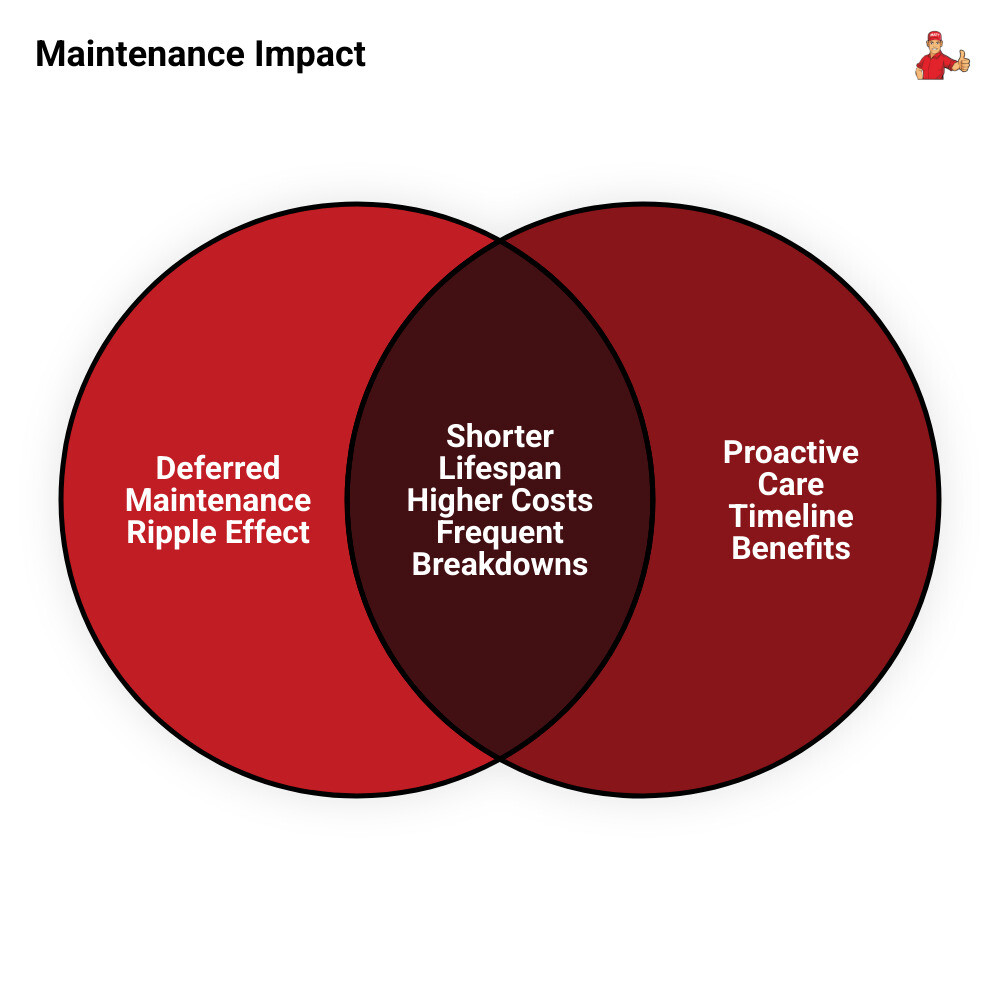
Sometimes, your equipment tries to tell you it’s struggling before it actually quits. Learning to recognize these warning signs can prevent a “ripple effect” where one small part failure destroys a much more expensive component.
- Unusual Noises: If you hear popping, rattling, screeching, or grinding, these are signs of mechanical distress. A screeching sound often indicates a belt that is about to snap or a motor bearing that has run dry.
- Short Cycling: If your unit turns on and off every few minutes, it’s “short cycling.” This is often caused by overheating or a faulty sensor, and it is incredibly hard on the compressor and igniter.
- Rising Utility Bills: If your usage habits haven’t changed but your bills are climbing, your system is losing efficiency.
- Poor Airflow: This often points to a Ductless Mini-Split Needs Tune-Up or a clogged filter in a traditional system.
Early Detection: How a Maintenance Plan Extends Equipment Life
The beauty of a professional maintenance plan is that we find microscopic damage that the average homeowner would never notice. For example, during an HVAC Check During Routine Maintenance, we use specialized tools to check for refrigerant leaks. A system low on refrigerant doesn’t just cool poorly; it causes the compressor to overheat, which can lead to a total system burnout.
We also calibrate sensors and clear condensate lines. A clogged drain line might seem like a small annoyance, but it can lead to water damage in your home or trigger a safety switch that shuts your heat off in the middle of the night.
Identifying Hidden System Killers
Dust is the silent killer of HVAC systems. It acts as an insulator on electrical components and a “plug” in your coils. In the Pacific Northwest, biological buildup (like mold or algae) can also occur in the damp environment of an AC evaporator coil.
By following Don’t Get Left in the Cold: The Essential Auburn WA Furnace Tune-Up Checklist, you can ensure that these hidden killers are scrubbed away before they can cause electrical arcing or permanent component failure.
Essential Steps to Build Your Maintenance Strategy
Creating an effective maintenance strategy doesn’t have to be complicated. It starts with an asset inventory—knowing exactly what equipment you have, how old it is, and when it was last serviced.
When you look for How to Choose the Best Furnace Tune-Up Company in Bonney Lake, WA, you should look for a partner that follows manufacturer guidelines strictly but also understands the unique demands of our local climate.
Seasonal Adjustments for Seattle Weather
In the Puget Sound region, we recommend a biannual scheduling approach.
- Spring Cooling Checks: Before the first heatwave hits Tacoma or Bellevue, we ensure your AC or heat pump is ready to handle the load. This includes cleaning outdoor coils of “cottonwood” seeds and debris.
- Fall Heating Tune-Ups: Before the damp cold of November sets in, we inspect your furnace or heat pump’s heating elements and heat exchanger.
Understanding Why Your Auburn Home Needs a Heating Tune-Up Services Explained is key to avoiding that “Friday night breakdown” during a winter storm.
The Role of Modern Technology and CMMS
Modern maintenance has gone high-tech. We now use predictive tools and performance auditing to monitor system health. In some commercial applications, IoT sensors can provide real-time monitoring, alerting us to a problem before you even feel a change in temperature. For residential customers, this technology means more accurate diagnostics and faster repairs. If you’re in a pinch, you can even Don’t Freeze: Find Same-Day Heating Tune-Up Services in Kent to get a technician out to evaluate your system’s performance data.
Common Pitfalls to Avoid in Equipment Care
Even with the best intentions, some maintenance habits can actually do more harm than good. Here are the most common mistakes we see:
- Deferred Maintenance: Postponing a $200 tune-up to save money today is a “trap.” Industry data shows a 1:4 cost ratio: every dollar “saved” by skipping maintenance eventually costs four dollars in emergency repairs and lost efficiency.
- Using Low-Quality Parts: Generic parts often don’t have the same tolerances as OEM (Original Equipment Manufacturer) parts. This can lead to premature failure or even void your warranty.
- Neglecting Filters: This is the simplest task, yet the one most often forgotten. A dirty filter is the leading cause of blower motor failure.
- DIY Overreach: While homeowners can and should change filters, tasks involving high-voltage electricity, gas pressures, or refrigerants require a certified professional.
You can Stop Throwing Money Out the Window with Regular Maintenance simply by staying consistent and avoiding these common errors.
Frequently Asked Questions about Equipment Longevity
How often should I schedule professional maintenance?
Ideally, you should have your system serviced twice a year: once in the spring for your cooling system and once in the fall for your heating system. If you have a heat pump that handles both, biannual visits are still recommended to switch the system’s focus from one mode to the other.
Does a maintenance plan really lower my monthly utility bills?
Yes! A well-maintained system operates at peak efficiency. Neglected systems often have to run 20–30% longer to reach the same temperature, which shows up directly on your Puget Sound Energy or Tacoma Public Utilities bill.
Can I perform all maintenance tasks myself?
No. While you should definitely handle monthly filter changes and keep the area around your outdoor unit clear of debris, the technical aspects—like checking gas pressure, testing electrical capacitors, and measuring refrigerant levels—require specialized tools and training for safety and accuracy.
Conclusion
At Allred Heating Cooling Electric, we believe that your home should be your sanctuary. As a family-oriented business founded by twin brothers, we treat every home in Auburn, Tacoma, and Bellevue like it’s our own. Our expert technicians are available 24/7 for emergencies, but our goal is to help you avoid those emergencies altogether through a robust maintenance plan.
How a maintenance plan extends equipment life is no secret—it’s about dedication to the small details that keep your system running smoothly for decades. Don’t wait for your HVAC system to “retire” early. Protect your investment with a professional maintenance plan today and enjoy the peace of mind that comes with year-round comfort.
