


Why Finding the Best Air Filter for Pacific Northwest Homes Matters More Than You Think
The best air filter for Pacific Northwest homes handles a unique mix of threats that filters designed for other regions simply aren’t built for. Wildfire smoke, heavy seasonal pollen, year-round humidity, and mold spores all combine to make indoor air quality a serious concern for Seattle-area homeowners. And according to the EPA, indoor air can be two to five times more polluted than outdoor air — sometimes up to 100 times worse.
Here is a quick look at the top air filtration options for PNW homes:
Top Air Filter Choices for Pacific Northwest Homes
- MERV 13 pleated HVAC filter (e.g., Filtrete MPR 1900 or PuroAir Mega Filter) – Best all-around for forced-air systems; captures wildfire smoke, pollen, pet dander, and bacteria
- True HEPA portable air purifier with activated carbon (e.g., Coway Airmega, Winix 5500-2) – Best for targeted room protection during smoke events; removes particles and odors
- Whole-house air scrubber (e.g., Air Scrubber by Aerus) – Best for ductless mini-splits and forced-air systems needing active air treatment
- MERV 13 + activated carbon combo HVAC filter – Best for homes near wildfire zones needing both particle and VOC control
- DIY box fan with MERV 13 filter – Best budget backup during acute smoke events
The Pacific Northwest’s air quality challenges are not just seasonal — they are year-round. Wildfires now push hazardous smoke into the region for weeks at a time, while the damp climate creates ideal conditions for mold growth inside homes. Add in spring pollen peaks and the everyday reality of pet dander, and it becomes clear that a single, well-chosen air filtration solution can make a meaningful difference in how your family breathes and feels at home.
I’m Daniel Allred, co-founder of Allred Heating, Cooling & Electric, and after years of helping Puget Sound homeowners improve their indoor comfort through proper HVAC installation and maintenance, I’ve seen how the right air filtration strategy — the true best air filter for Pacific Northwest homes — can transform a stuffy, smoke-affected house into a clean, healthy living space. In the sections below, I’ll walk you through everything you need to know to make the right choice for your home.
Terms related to best air filter for pacific northwest homes:
Unique Indoor Air Quality Challenges in Pacific Northwest Homes
Living in Western Washington—whether you are in Auburn, Bellevue, or Tacoma—means enjoying lush forests, beautiful summers, and mild winters. However, those same forests and mild climates create a perfect storm for indoor air pollution.
In our region, we face four major indoor air quality challenges:
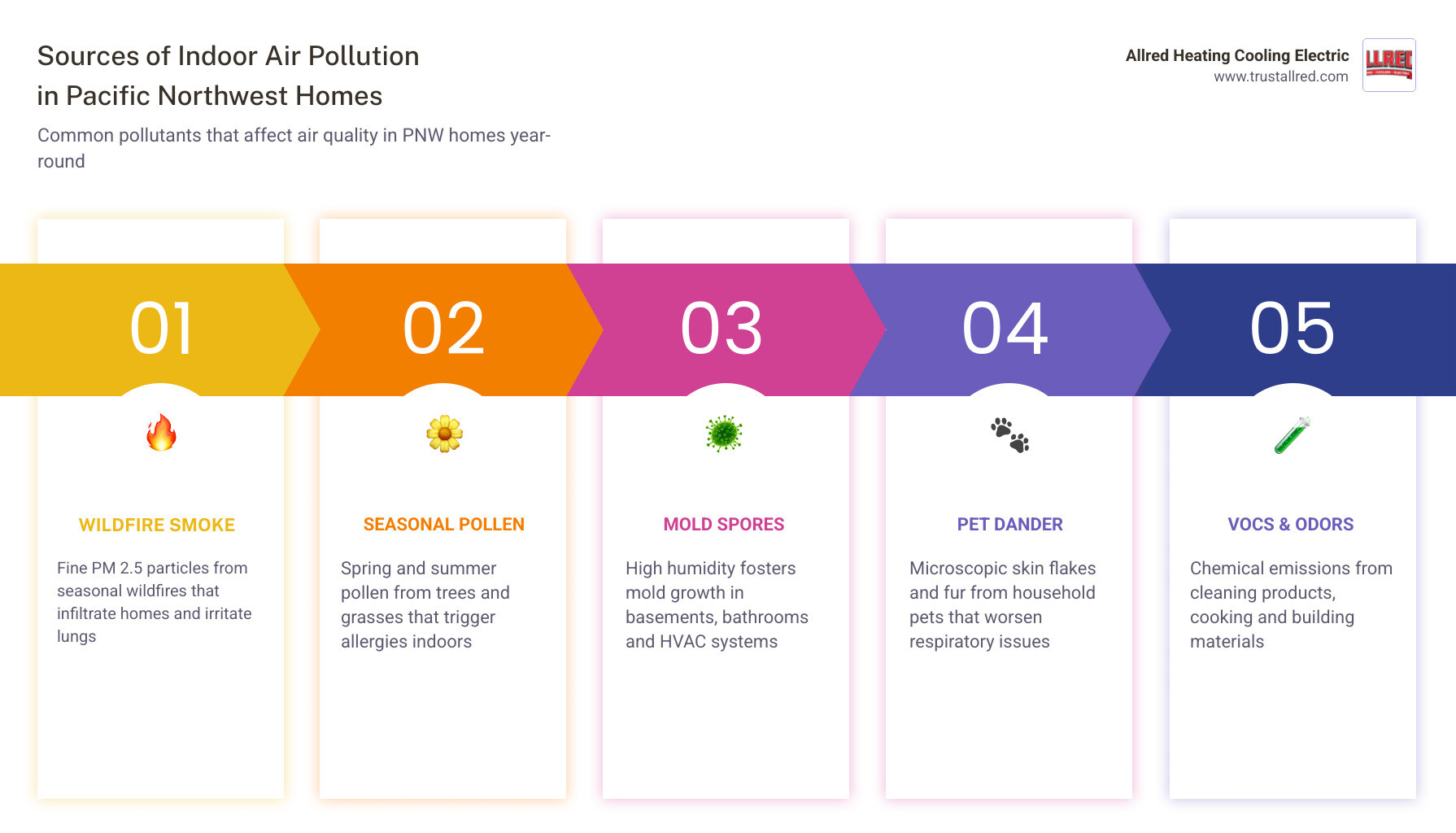
- Wildfire Smoke and PM 2.5: In recent years, late summers have brought heavy wildfire smoke that can linger for weeks. This smoke contains fine particulate matter (PM 2.5), which consists of microscopic particles smaller than 2.5 microns. Because they are so small, these particles can bypass your respiratory system’s natural defenses, enter your bloodstream, and impact your heart and lungs.
- Seasonal Pollen: Spring and summer in the Puget Sound region bring incredibly high pollen counts from alder, birch, and local grasses. If you suffer from seasonal allergies, a standard fiberglass filter won’t do much to keep these outdoor allergens from circulating through your home.
- High Humidity and Mold Spores: Our damp autumns and winters keep outdoor humidity high. When moist air finds its way indoors, it can condense on cold walls, windows, and inside your HVAC ductwork, leading to mold growth. Mold spores are a major trigger for asthma and respiratory irritation.
- Pet Dander and Dust: Because we spend so much time indoors during the rainy season, pet dander, hair, and dust mites accumulate quickly in our living spaces.
To combat these regional pollutants effectively, local homeowners need to look beyond basic hardware store options. You can read more about how specialized services can help in our guide to Enhance Air Quality with New Filter Services.
Choosing the Best Air Filter for Pacific Northwest Homes

When selecting a filter for your heating and cooling system, you have to balance two competing factors: filtration efficiency and airflow resistance.
While it is tempting to simply buy the thickest, highest-rated filter available, doing so can actually harm your HVAC system. Filters work by trapping particles in a web of fibers. The tighter the web, the smaller the particles it can trap—but the harder your system’s blower motor has to work to push air through it. If a filter restricts airflow too much, it can cause your system to overheat, freeze up, or consume significantly more energy.
Understanding MERV Ratings for Home HVAC Systems
Air filters are rated using the Minimum Efficiency Reporting Value (MERV) scale, which ranges from 1 to 16 for residential systems. Understanding these ratings is key to choosing the right level of protection:
- MERV 1 to 4: These are basic fiberglass filters. They are cheap, but they are only designed to protect your HVAC equipment from large dust bunnies and hair. They do virtually nothing to clean your breathing air.
- MERV 8: These pleated filters are a common baseline for residential homes. They capture larger particles like pollen, dust mites, and pet dander. The Filtrete MPR 700 is a classic example of a MERV 8 filter. It is great for everyday dust control but falls short during wildfire season.
- MERV 12 to 13: This is the “sweet spot” for most Pacific Northwest homes. A MERV 13 filter (such as the Filtrete MPR 1900 or the PuroAir Mega Filter) is highly effective at capturing fine microparticles, including bacteria, virus-carrying droplets, and wildfire smoke (PM 2.5), without putting excessive strain on modern HVAC blower motors.
- MERV 14 to 16: These filters offer hospital-grade filtration, capturing up to 90% of airborne viruses and ultrafine particles (like the Filtrete MPR 2500). However, they are highly restrictive and should only be used in systems specifically designed or modified to handle them.
To explore how these ratings translate to different physical filter materials, check out our breakdown of the different Types HVAC Filters.
Portable HEPA vs. Whole-House Filtration Systems
If you want the absolute cleanest air possible, you will likely end up comparing portable room air purifiers with whole-house HVAC filtration.
Portable air purifiers are self-contained units that use an internal fan to pull air through a HEPA filter. They are rated by Clean Air Delivery Rate (CADR), which measures how quickly they can clean a specific room’s square footage. Whole-house systems, on the other hand, integrate directly into your central ductwork to clean all the air circulating through your home.
| Feature | Portable HEPA Purifiers | Whole-House HVAC Filters |
|---|---|---|
| Coverage Area | Single room or small open area | Entire home (where vents are present) |
| Filtration Level | True HEPA (99.97% down to 0.3 microns) | MERV 8 to 16 (depends on system capability) |
| Smoke & Odor Removal | Excellent (when equipped with Carbon) | Moderate to Excellent (with carbon-backed media) |
| Installation | Plug-and-play | Requires compatible HVAC system/professional install |
| Noise Level | Can be noisy on high speed settings | Silent (runs through central vents) |
Comparing Air Purification Technologies for Regional Pollutants
Not all air cleaning technologies are created equal. Some work passively by trapping particles on a physical screen, while others actively alter the air to neutralize pollutants.
HEPA and Activated Carbon: The Best Air Filter for Pacific Northwest Homes During Smoke Season
If your primary goal is protecting your family from wildfire smoke, your filtration system must include two distinct components: True HEPA and Activated Carbon.
Wildfire smoke is a double-edged sword. It consists of physical particles (PM 2.5) and harmful gases (Volatile Organic Compounds, or VOCs) that carry that distinct, acrid smoke smell.
- True HEPA Filters: These physical filters are rated to trap 99.97% of particles as small as 0.3 microns. They are incredibly effective at capturing the physical soot and ash in wildfire smoke. According to the EPA, air purifiers equipped with HEPA filters can reduce indoor particle concentrations by as much as 85 percent.
- Activated Carbon Filters: HEPA filters cannot trap gases or odors. That is where activated carbon comes in. Carbon is treated with oxygen to open up millions of tiny pores between the carbon atoms. This process allows the carbon to adsorb (chemically bind) gases, chemical fumes, and smoke odors, neutralizing them completely.
For the ultimate smoke defense, we recommend using a high-quality MERV 13 pleated filter in your central system alongside a portable HEPA/Carbon unit in your main living areas.
UV Lights, Ionizers, and Ozone Generators Explained
You may run across air purifiers that market “active” technologies like UV lights, ionizers, or ozone generation. Here is what you need to know about them:
- UV-C Light: These systems use ultraviolet light to disrupt the DNA of biological contaminants like mold spores, bacteria, and viruses. While they do not remove physical dust or smoke, installing a UV-C light system inside your HVAC coil chamber is highly effective at preventing mold growth in our damp PNW climate.
- Ionizers: These devices emit negatively charged ions that attach to airborne particles, making them heavy so they fall out of the air onto your floor or furniture. While they can reduce airborne dust, they often leave a layer of dust on your home’s surfaces and can produce small amounts of ozone.
- Ozone Generators: Avoid these for home use. Ozone is a known lung irritant that can worsen asthma and damage lung tissue. Any device that intentionally produces ozone to “clean” the air should not be used in occupied residential spaces.
Whole-House Filtration vs. Portable Air Purifiers
If your home has a central furnace or heat pump with ductwork, upgrading your central filter is the most efficient way to clean the air in every room simultaneously. However, this only works if your ductwork is clean and sealed. Leaky ducts can pull dusty, unconditioned air from your crawlspace or attic directly into your living spaces, bypassing your filter entirely. This is why we emphasize the Importance of Regular Ductwork Maintenance to keep your whole-house filtration working efficiently.
Integrating the Best Air Filter for Pacific Northwest Homes into Ductless Mini-Splits
Many homes in Seattle, Bellevue, and Redmond do not have central ductwork. Instead, they rely on ductless mini-split systems.
Mini-splits are incredibly efficient, but because they do not have a central air handler, they cannot use standard 1-inch or 4-inch pleated HVAC filters. Instead, they use washable mesh filters designed to catch larger dust particles.
To maximize air quality with a mini-split system:
- Clean the filters every 2 to 4 weeks: During peak heating or cooling seasons, slide the mesh filters out, rinse them in the sink, let them air dry completely to prevent mold, and slide them back in.
- Utilize “Dry Mode”: During our humid, mild spring and autumn days, run your mini-split in Dry Mode. This prioritizes dehumidification over cooling, keeping indoor humidity below 50% to stop mold spores in their tracks.
- Consider supplemental filtration: Because mini-split filters are thin, we recommend pairing them with a dedicated portable HEPA purifier during smoke season.
To learn more about keeping these systems running cleanly, check out how Ductless AC Services Improve Air Quality and read The Ultimate Guide to What is a Ductless Mini Split System.
In-Line HVAC Filters and Air Scrubbers
For homes with central forced-air systems, you aren’t limited to standard 1-inch filters. If you are remodeling or upgrading your system, you can install an in-line media cabinet. These cabinets allow you to use deep, 4-inch or 5-inch pleated media filters (like the Filtrete MPR 700 4-inch series). Because these filters have much more surface area, they can hold more dust, last up to a year, and offer excellent filtration without restricting your system’s airflow.
Another premium option is an active air scrubber (such as the Air Scrubber Plus). Installed directly into your ductwork, these units use specialized light and catalytic processes to send natural oxidizers through your vents. This actively neutralizes odors, mold, and bacteria on surfaces and in the air throughout your home. You can read more about how these integrations improve daily comfort in our post on the Benefits Ductless AC Systems Home.
DIY Solutions and Supplemental Air Quality Tips
If you find yourself caught unprepared during a sudden wildfire smoke event, or if you want an affordable way to boost your home’s air cleaning capacity, you can build a highly effective DIY air purifier using items from your local hardware store in King or Pierce County.
How to Build a DIY Box Fan Filter
- Purchase a standard 20-inch by 20-inch box fan and a MERV 13 (or MPR 1900) furnace filter of the same size.
- Identify the direction of airflow on both the fan and the filter (look for the arrow on the filter frame).
- Place the filter against the back (intake side) of the box fan, ensuring the airflow arrow points toward the fan blades.
- Secure the filter to the fan frame using duct tape or a large bungee cord to create a tight seal around the edges.
- Turn the fan on low or medium.
Testing has shown that this simple setup performs nearly as well as commercial room purifiers at removing fine PM 2.5 smoke particles!
Supplemental Clean Air Tips:
- Keep Windows and Doors Closed: When outdoor air quality drops, seal your home. Use weather stripping on drafty doors and close your chimney flue.
- Adjust Your HVAC Fan Settings: Switch your thermostat’s fan setting from “Auto” to “On.” This keeps your system’s fan running continuously, constantly circulating and filtering your indoor air even when the heating or cooling isn’t actively running.
- Incorporate Indoor Plants: While they won’t clean heavy smoke, hardy indoor plants like spider plants, peace lilies, snake plants, and philodendrons thrive in low-light PNW homes and naturally help filter minor everyday toxins from the air.
How to Select, Size, and Maintain Your Home Air Filtration System
Choosing the best air filter for Pacific Northwest homes is only half the battle; you also have to size it and maintain it properly.
When sizing a portable purifier, look for the CADR rating. As a rule of thumb, the CADR rating of your unit should be equal to at least two-thirds of the room’s square footage. For example, a 300-square-foot bedroom needs a purifier with a smoke CADR of at least 200.
On the maintenance side, neglecting your filters is one of the most common—and expensive—mistakes we see. According to HVAC industry data, proper maintenance can cut energy consumption by up to 30% for heating and cooling systems. Conversely, dirty coils and clogged filters can spike your monthly energy bills by 20% to 30% and put massive strain on your equipment.
Remember: for every dollar you put into proactive maintenance, you can avoid roughly four dollars in emergency repairs down the road.
Keep your system running smoothly by reading about The High Cost of Dirty Filters and What Happens When You Forget Them and the benefits of Regular HVAC Maintenance Optimal Performance.
Frequently Asked Questions About PNW Air Filtration
How does well water or iron bacteria affect indoor air quality?
If your home in rural King or Pierce County relies on well water, you might wonder if your water quality can affect your indoor air.
Many wells in the Pacific Northwest contain high levels of dissolved iron and iron bacteria. While iron bacteria are not harmful to human health, they create a thick, slimy buildup in plumbing fixtures and well casings. This buildup can release a strong “rotten egg” odor caused by hydrogen sulfide gas.
When you run hot showers or wash clothes, these gases aerosolize into your indoor air, creating unpleasant odors and respiratory irritation. Additionally, the filtration systems used to treat well water—such as aeration filters or ozone water treatment systems—can increase indoor humidity if they leak or vent indoors, potentially leading to mold growth.
If you use an ozone water treatment loop to oxidize well iron, ensure it is properly vented to the outdoors so that residual ozone gas does not escape into your home’s living spaces.
What are the Energy Trust of Oregon incentives for air purifiers?
While we primarily serve Western Washington communities like Kent, Federal Way, and Tacoma, we often get questions about regional energy incentives.
For our neighbors in Oregon, the Energy Trust of Oregon offers discounts of up to $75 off select ENERGY STAR certified portable air purifiers, along with free shipping. To qualify, the unit must be ENERGY STAR certified, which means it is significantly more energy-efficient than standard models.
Even if you live in Washington where these specific utility incentives differ, choosing an ENERGY STAR certified air purifier is highly recommended. Because you will want to run your air purifier continuously during smoke season, choosing an energy-efficient model will keep your electric bills manageable. You can read more about keeping your home efficient and sustainable in our guide to Keeping Your Home Eco Viable This Winter.
How often should I replace my home HVAC filters?
For standard 1-inch pleated filters, we recommend the 90-day rule: replace them at least once every three months.
However, if you have pets, suffer from severe allergies, or are dealing with an active wildfire smoke event, you should check your filter every 30 days. During heavy smoke events, filters can clog with ash and soot in as little as two to three weeks. If your filter looks dark grey or dusty, swap it out immediately to protect your lungs and your heating system.
For thicker 4-inch or 5-inch media filters, you can typically go 6 to 12 months between changes, though we still recommend checking them before and after the summer smoke season. To make filter care stress-free, consider signing up for one of our Annual HVAC Maintenance Plans.
Conclusion
Finding the best air filter for Pacific Northwest homes isn’t just about picking the highest number on a box; it’s about understanding how your home breathes, managing our damp climate, and being prepared for summer smoke. Whether you need a simple MERV 13 filter upgrade, a whole-house air scrubber, or regular maintenance to keep your system running at peak efficiency, taking action today ensures your family breathes cleaner, healthier air all year long.
At Allred Heating, Cooling & Electric, we are dedicated to keeping our neighbors comfortable, safe, and healthy. If you want to make sure your home’s air filtration is set up correctly for the seasons ahead, Schedule professional HVAC maintenance with Allred Heating Cooling Electric today!
