



Why Understanding How Wet Weather Impacts Your Outdoor Heat Pump Matters in the Pacific Northwest
How wet weather impacts your outdoor heat pump is something every Seattle-area homeowner should understand — especially when the region averages over 160 rainy days a year. The short answer is reassuring: your outdoor unit is built to handle normal rain. But wet weather does affect performance, efficiency, and long-term wear in ways that are worth knowing about.
Here is a quick breakdown of the key ways wet weather affects your heat pump:
- Normal rain: Generally harmless — units are sealed and weatherproofed by design
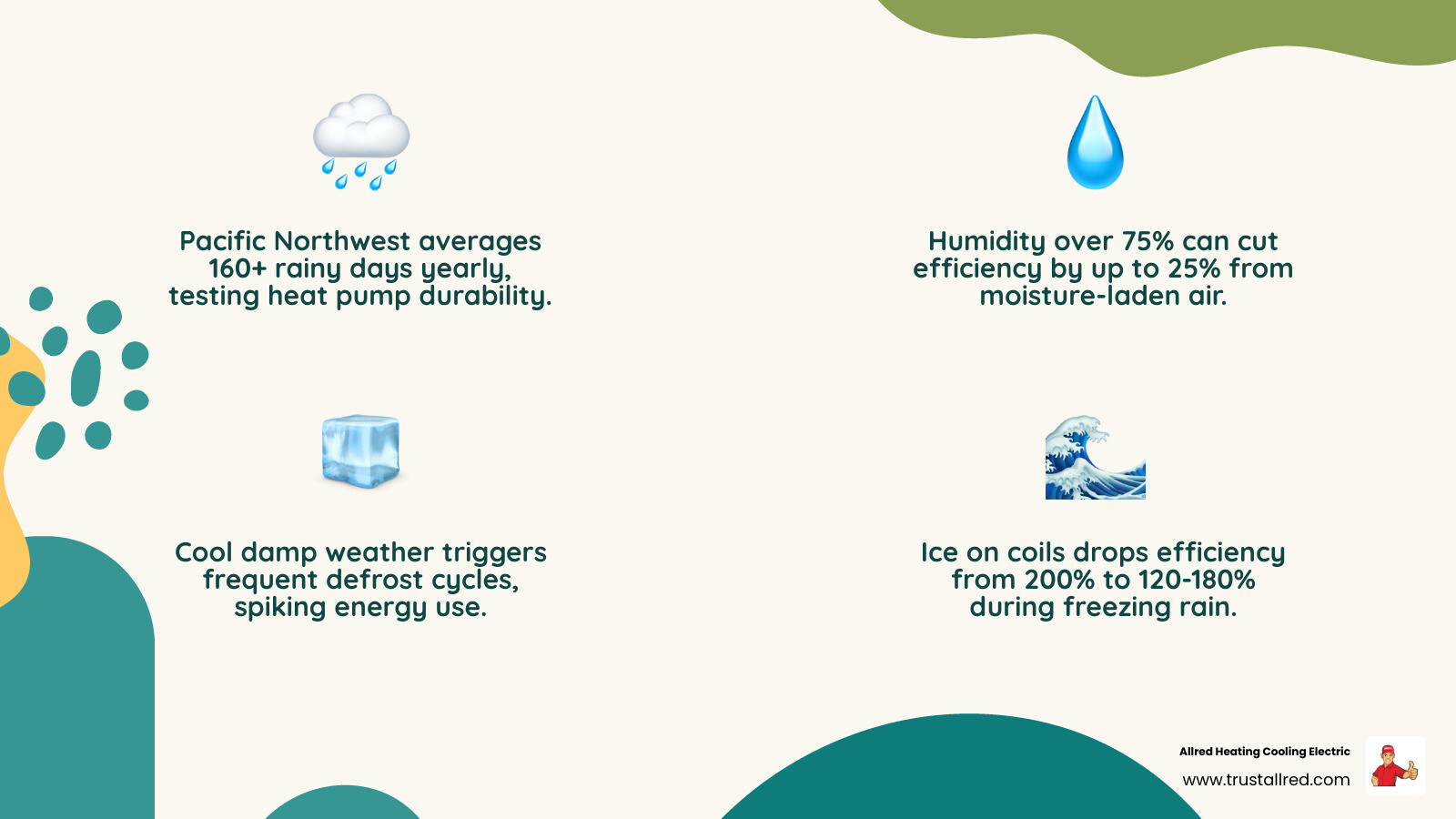
- High humidity (above 75%): Can reduce heat pump efficiency by up to 25% due to the extra energy needed to extract heat from moisture-laden air
- Cool, damp weather (40s°F): Triggers more frequent defrost cycles, which temporarily interrupt heating and raise energy use
- Freezing rain or ice accumulation: Reduces efficiency from around 200% down to 120–180% when ice builds up on outdoor coils
- Standing water or flooding: The one scenario that poses real risk — water reaching electrical components requires immediate shutdown and professional inspection
- Storm debris: Leaves, pine needles, and branches can block airflow and force the system to work harder
- Persistent moisture: Accelerates corrosion on metal parts over time without proper maintenance
Understanding these impacts helps you protect your system, keep energy bills in check, and avoid preventable breakdowns — especially heading into a long Northwest wet season.
I’m Daniel Allred, co-founder of Allred Heating, Cooling & Electric, and after years of servicing heat pumps across the Puget Sound region, I’ve seen how wet weather impacts your outdoor heat pump in ways that range from minor efficiency dips to serious flood damage. In the sections ahead, I’ll walk you through everything you need to know to keep your system running strong all season long.
Built for the Rain: Heat Pump Weatherproofing
If you’ve ever stood outside during a classic April 2026 downpour in Kent or Federal Way, you might have looked at your outdoor heat pump and wondered, “Is that thing really supposed to be getting soaked?” The answer is a resounding yes. Outdoor heat pumps are essentially the “all-weather athletes” of the HVAC world. They are engineered from the ground up to sit in the elements for 15 to 20 years.
Manufacturers use a combination of heavy-duty materials to ensure the unit survives our relentless Northwest moisture. The cabinets are usually made of galvanized steel that has been powder-coated to resist rust. Inside, the most sensitive parts — like the compressor and the electrical control board — are tucked away in sealed compartments. This design ensures that while the fan and coils are exposed to the rain, the “brains” of the operation stay dry.
When we perform Heat Pump Services, we often point out these protective features to homeowners. For instance, the electrical wiring is heavily insulated, and the motor for the outdoor fan is typically a sealed unit, meaning rain can’t get inside the housing to cause a short circuit. The coils themselves are made of copper and aluminum, metals that naturally resist the type of rapid corrosion that would destroy lesser materials.
Are outdoor heat pumps designed for wet weather?
Absolutely. Beyond just being “waterproof,” heat pumps are designed for drainage. If you look at the base pan of your outdoor unit, you’ll see small “weep holes.” These are intentional gaps that allow rainwater to flow out of the unit rather than pooling inside.
The electrical protection is also multi-layered. Most modern units include pressure controls that protect the compressor from the physical stresses of extreme weather. So, while a typical Seattle rainstorm might look intense to us, your heat pump is just doing what it was built to do. It’s only when that rain turns into a flood or brings a pile of debris with it that we need to start taking extra precautions.
How Wet Weather Impacts Your Outdoor Heat Pump Efficiency

While the rain won’t “break” your heat pump, it definitely makes it work harder. In the Pacific Northwest, we deal with a specific challenge called the “latent heat challenge.” Because our humidity levels frequently exceed 75% during the wet season (from October all the way through May), the air is heavy with water vapor.
When your heat pump tries to pull heat from this damp air, it has to deal with all that moisture first. Water vapor has a high specific heat capacity, meaning it takes a lot of energy to change its temperature. This creates what some call a “fog tax.” Essentially, your system spends a significant portion of its energy managing the moisture in the air rather than just heating your home. This is especially true for Mini Split Heat Pumps, which are highly efficient but still subject to the laws of physics when the Puget Sound mist rolls in.
Why how wet weather impacts your outdoor heat pump defrost frequency
The biggest efficiency killer in wet weather is the defrost cycle. Think of it this way: your heat pump’s outdoor coil gets very cold as it extracts heat from the air. When the outdoor air is both cold (in the 30s or 40s) and very damp, that moisture freezes instantly upon touching the coil.
As ice builds up, it acts like a thermal blanket, preventing the system from “breathing” and absorbing more heat. To fix this, the heat pump has to enter “defrost mode.” It temporarily reverses its operation, sending heat from your home back to the outdoor unit to melt the ice. If you’ve ever needed a Heat Pump Repair because your energy bills were suddenly astronomical, frequent defrosting was likely the culprit. In damp 40-degree weather, your system might defrost every 30 to 90 minutes, which consumes a lot of electricity without actually adding heat to your living room.
Performance metrics in damp conditions
To put some numbers on it, heat pumps are incredibly efficient in dry, moderate weather. They often achieve a Coefficient of Performance (COP) of 3.0 or higher, meaning they move three units of heat for every one unit of electricity they use. Between 45°F and 60°F, they can hit 200% efficiency.
However, during freezing rain or heavy icing conditions, that efficiency can slide down to 120–180%. While that is still much better than a standard electric furnace (which is only 100% efficient), it’s a noticeable drop. In a city like Portland or Seattle, which sees 164 rainy days a year, these efficiency losses can add up. Research shows that high humidity can reduce overall efficiency by up to 25% compared to drier climates at the same temperature.
The Defrost Cycle: Steam vs. Smoke in Damp Weather
One of the most common “emergency” calls we get at Allred during a cold snap in Bellevue or Issaquah is: “My heat pump is on fire! There’s smoke coming out of the top!”
Ninety-nine percent of the time, that “smoke” is actually steam. When the defrost cycle kicks in, the outdoor coil heats up rapidly to melt accumulated frost. If it’s raining or very damp outside, that melting ice and rainwater turn into a cloud of steam. It can look alarming, but it’s a sign that the system is working exactly as it should.
During this cycle, you might notice your indoor vents blowing slightly cooler air for a few minutes. This is because the system is temporarily pulling heat from the house to clear the outdoor ice. Most systems will kick on “auxiliary heat” (electric heat strips) to prevent you from feeling a chill, but you might still notice the shift. This continues until the “balance point” is reached — the temperature where the heat pump can no longer keep up with the home’s heat loss and needs full-time backup. If you need help understanding your system’s specific behavior, our HVAC Services Seattle team can walk you through your thermostat settings.
Identifying normal vs. problematic icing
So, how do you know if the ice on your unit is normal or a reason to call for HVAC Services Kent?
- Normal: A light coating of white frost on the coils that disappears after a 5–10 minute defrost cycle.
- Abnormal: Solid ice more than 1/4 inch thick that covers the entire unit and doesn’t melt away.
- The 90-Minute Rule: If your heat pump is encased in ice and hasn’t initiated a defrost cycle in over 90 minutes of operation during freezing rain, something is wrong. It could be a faulty defrost board or a sensor issue.
In places like Springfield or the South Sound, severe icing (over a quarter inch) is rare but can happen during atmospheric river events where the temperature hovers right at the freezing mark. If the ice starts to look like a glacier, it’s time to shut it down and call us.
Protecting Your System from Storm Damage and Flooding
While rain is fine, “weather” can be a different story. High winds in the Snoqualmie Valley can hurl branches at your unit, and heavy rains can lead to localized flooding in low-lying areas of Puyallup or Tacoma.
| Condition | Risk Level | Action Required |
|---|---|---|
| Normal Rain | Low | None; ensure drainage is clear |
| Heavy Storm/Wind | Medium | Clear debris (leaves/branches) after storm |
| Standing Water | High | Ensure water isn’t touching electrical panels |
| Flooding (>15 inches) | Critical | Power off immediately; call for professional inspection |
If you are expecting an atmospheric river, check the area around your unit. If water is pooling at the base, clear any clogged drains or gutters that might be dumping water directly onto the system. We often recommend a professional Heat Pump Installation include an elevated “snow feet” or a sturdy riser to keep the unit a few inches off the ground, preventing it from sitting in a puddle.
Managing debris and airflow
The real enemy during a Northwest storm isn’t the water — it’s the stuff the water brings with it. Pine needles, maple leaves, and small twigs can get sucked against the sides of your heat pump, choking off the airflow.
We recommend maintaining at least a 24-inch clearance around the entire unit. If you have shrubs or trees nearby, keep them trimmed back. After a big windstorm, take five minutes to sweep away any debris that has stuck to the aluminum fins. If the airflow is restricted, your system has to work twice as hard to get the same amount of heat, which wears out the compressor faster.
For those with window-mounted units, ensure the seals are tight. Wet weather can cause wood frames to swell or shrink, creating gaps that let in humid air and rain, which forces the unit to run constantly to dehumidify the room.
Maintenance Strategies for Rainy Seasons
Because we live in such a damp climate, maintenance isn’t just a “good idea” — it’s a necessity for your system’s survival. Moss, algae, and pollen love the wet surfaces of a heat pump, and they can quickly gunk up the coils.
Your Rainy Season Checklist:
- Clear the Perimeter: Ensure no leaves or debris are touching the unit.
- Check the Vents: Make sure indoor registers aren’t blocked, as this affects the pressure the heat pump needs to operate.
- Inspect the Pad: Ensure the unit is still level. Saturated soil can cause the mounting pad to tilt, which prevents proper water drainage.
- Filter Changes: In high humidity, filters can get “damp” and grow mold or restrict airflow faster. Change them every 30–45 days during the peak wet season.
Maintenance tips for how wet weather impacts your outdoor heat pump lifespan
To get the most out of your system, consider these professional upgrades. Bi-annual tune-ups are the best way to catch small issues — like a failing defrost sensor — before they become expensive repairs.
Modern technology also helps. A smart thermostat with humidity sensors can improve efficiency by up to 23% by better managing the balance point. If you’re looking to replace an old system, two-stage or modulating systems are fantastic for the Northwest. They can run at lower speeds during those humid 50-degree days, providing better dehumidification and saving up to 30% on energy compared to older “on-or-off” models. Weather-resistant coatings can also be applied to coils to help them shed water faster, potentially extending the life of the unit by 5 to 7 years.
Frequently Asked Questions
Should I cover my heat pump during the rainy season?
No! This is the most common mistake we see. While it seems logical to “protect” the unit from rain, a non-ventilated cover (like a plastic tarp) traps moisture inside. This creates a high-humidity microclimate that accelerates rust and corrosion on the metal parts and provides a perfect breeding ground for mold. Your heat pump needs to “breathe” to work. If you must have a cover, it should only be a “weather guard” or awning installed high above the unit to deflect falling ice or heavy snow, never a tight-fitting wrap.
Is it safe to run my heat pump during a heavy rainstorm?
Yes, it is perfectly safe. The electrical components are sealed and insulated. The only exception is if your yard is flooding. If water is rising and looks like it might reach the bottom of the electrical access panel (usually about 10-15 inches off the ground), turn the system off at the breaker immediately. Running a submerged unit can cause catastrophic electrical damage.
Why does my heat pump blow cold air when it is raining and cold?
As mentioned earlier, this is likely the defrost mode. When it’s cold and rainy, the outdoor unit is prone to icing. The system reverses itself to melt that ice, and for about 5 to 10 minutes, you might feel cooler air coming from your vents. Once the ice is cleared, the system will switch back to heating mode and things should return to normal. If it blows cold air for more than 15 minutes, you might have a technical issue that requires an inspection.
Conclusion
Living in the Pacific Northwest means accepting that rain is a part of life — and your heat pump is built to accept that, too. By understanding how wet weather impacts your outdoor heat pump, you can take simple steps like clearing debris and scheduling regular maintenance to ensure your home stays warm and your energy bills stay manageable.
At Allred Heating Cooling Electric, we’re proud to be your local Seattle HVAC experts. Whether you’re in Auburn, Bellevue, or Tacoma, our family-oriented team is here to help with 24/7 emergency availability and expert technicians who know exactly how to handle our unique climate.
Don’t let the rain wash away your home’s comfort. Keep your system in peak condition with our professional HVAC Maintenance services. Give us a call today, and let’s make sure your heat pump is ready for whatever the Northwest sky decides to drop next!
