


Is it Safe to Do Your Own Electrical Work?
When we ask, is it safe to do your own electrical work, we have to look at the specific skill level of the person holding the screwdriver. In our experience serving the Puget Sound area from Auburn to Bellevue, we find that homeowners often underestimate the complexity of their home’s “circulatory system.”
Electricity is invisible, which makes it uniquely dangerous. While you can see a plumbing leak or a hole in the drywall, you cannot see a loose neutral wire or an arc fault until it begins to smoke. Furthermore, the voltage levels in a standard home are nothing to scoff at. Most of your outlets and lights run on 120 volts, which is more than enough to stop a human heart under the right conditions. When you move into high-power appliances like your dryer, water heater, or HVAC system, you are dealing with 240 volts. A 240-volt shock delivers approximately four times the energy of a 120-volt shock, making the margin for error effectively zero.
Before you start any project, even a minor one, you should perform Essential Home Electrical Inspections to understand the current state of your wiring. If your home still has aluminum wiring from the 1960s or 70s, or if you see signs of wear and tear, DIY work becomes significantly more hazardous.
Is it safe to do your own electrical work for minor cosmetic upgrades?
For minor cosmetic upgrades, the answer is often “yes,” provided you follow strict safety protocols. These “like-for-like” replacements are the most common DIY tasks we see in Kent and Issaquah. They include:
- Light Fixtures: Swapping an old, dated chandelier for a modern LED fixture is generally safe if the mounting box is already in place and rated for the weight of the new light.
- Dimmer Switches: Replacing a standard toggle switch with a dimmer is a popular weekend project. As long as you match the wattage of the dimmer to your bulbs and ensure the power is completely killed at the breaker, this is manageable.
- Outlet Covers: This is the safest DIY task there is. Swapping plastic plates for decorative ones involves no contact with live wires.
Understanding the limits of amateur electrical repairs
The danger begins when a project moves from “replacing a part” to “modifying the system.” Many homeowners fall into the trap of overconfidence after watching a few online tutorials. However, those videos often fail to mention the nuances of circuit complexity and system integration.
For instance, you might know how to connect a black wire to a gold screw, but do you know how to calculate the load on that circuit? If you add a high-draw appliance to a circuit that is already near its limit, you create a fire hazard that may not manifest for months. Overconfidence is arguably the biggest safety hazard in the DIY world. If you find yourself staring at a junction box with more than three sets of wires and feeling confused, it’s time to look into professional Electrical Services to ensure your home remains a safe haven, not a hazard.
The Risks and Dangers of DIY Electrical Projects
The consequences of a DIY mistake range from a minor “zap” to a catastrophic house fire. To put the risks into perspective, consider the following data:
| DIY Error | Immediate Consequence | Long-Term Danger |
|---|---|---|
| Loose Wire Connection | Intermittent power/flickering | Arc faulting and electrical fire |
| Wrong Wire Gauge | Wire overheats | Insulation melts, causing a short circuit |
| Bypassing GFCI | No immediate change | Electrocution risk in wet areas (kitchen/bath) |
| Oversized Breaker | Circuit doesn’t trip | The wire becomes a heating element inside your walls |
Electrocution is the most immediate threat. There are nearly 400 electrocutions in the United States each year, with approximately 15% related to consumer products and wiring hazards. Beyond the personal risk, there is the risk to your property. Electrical failure accounted for 89% of electrical fires in residential buildings in recent studies. If you notice your lights dimming when the microwave starts, you should check for Signs It’s Time to Schedule a Circuit Breaker Repair before the situation escalates.
Common DIY electrical mistakes to avoid
Even well-intentioned DIYers often make these four critical mistakes:
- Wrong Wire Gauge: Using 14-gauge wire on a 20-amp circuit is a recipe for disaster. The wire isn’t thick enough to handle the current the breaker allows, leading to overheating.
- Loose Neutrals: A loose neutral wire can cause voltage fluctuations that fry your expensive electronics, like your 4K TV or your smart refrigerator.
- Overcrowded Junction Boxes: Cramming too many wires into a small plastic box can lead to heat buildup and damaged insulation.
- Bypassing GFCIs: Ground Fault Circuit Interrupters (GFCIs) are required by the National Electrical Code (NEC) in any area near water. Skipping these to save a few dollars is a life-threatening mistake.
Long-term impacts on insurance and home value
Many homeowners in places like Puyallup and Sammamish don’t realize that DIY electrical work can haunt them years later. If a fire occurs and the investigation finds that the cause was unpermitted, non-professional electrical work, your homeowner’s insurance company may deny the claim entirely.
Furthermore, when it comes time to sell your home, a professional home inspector will likely spot “handyman” wiring. This can lead to failed inspections, forced repairs at the last minute, and a significant drop in home value. In the eyes of a buyer, “DIY electrical” often translates to “hidden fire hazard.”
Safe Homeowner Tasks vs. Professional Requirements
We want to empower you to handle the small stuff. It is perfectly safe to handle battery-powered smart home devices, such as video doorbells or leak sensors. Resetting a tripped breaker is also a standard homeowner task—though if the breaker trips again immediately, that is a sign of a deeper issue. If you are in Auburn and your power goes out suddenly, you might need Same Day Electrical Repair in Auburn WA to diagnose the fault.
Is it safe to do your own electrical work on a service panel?
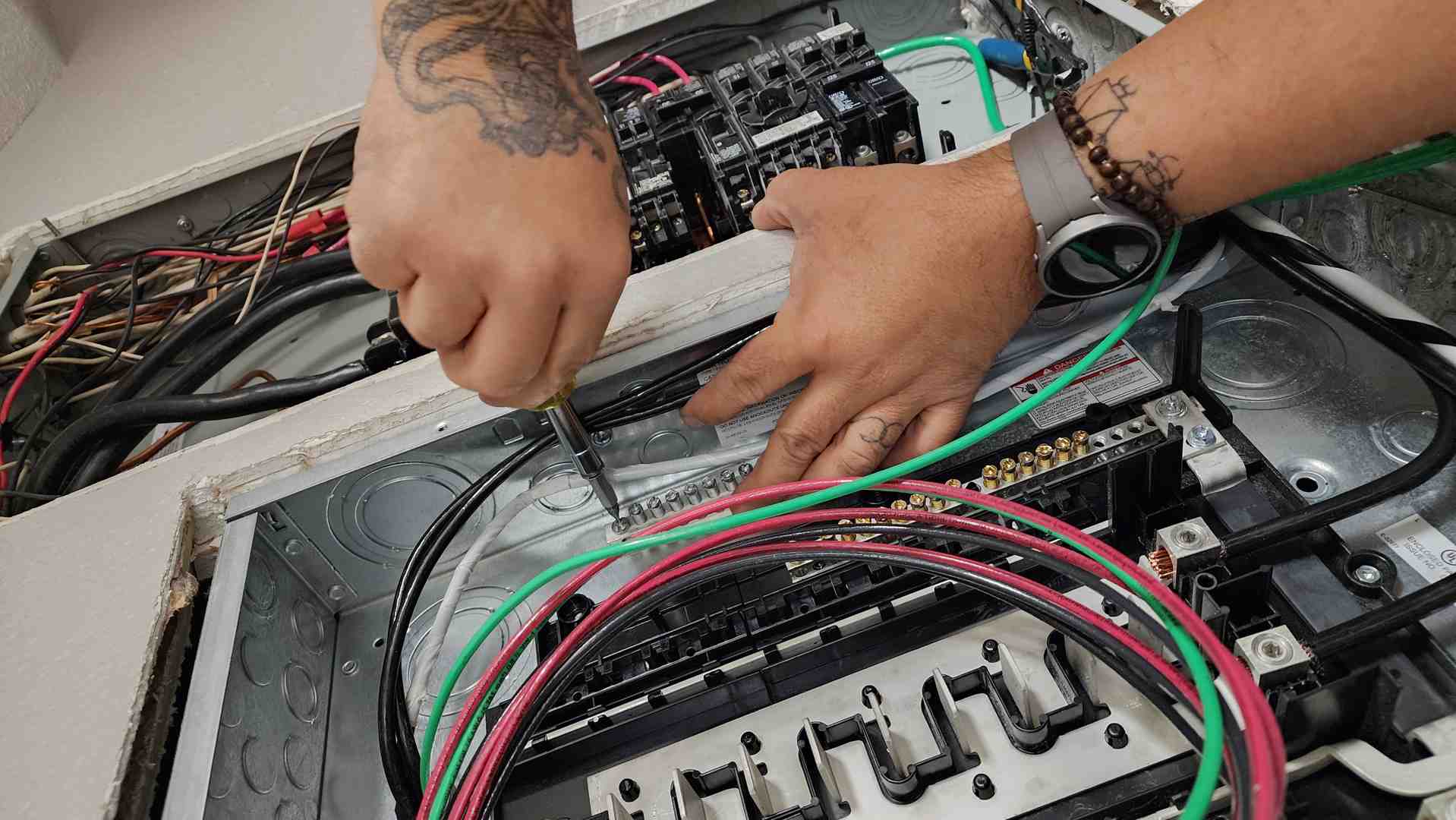
The short answer is: No. The service panel (or breaker box) is the most dangerous part of your home. Even if you turn off the “Main” breaker, the large lugs where the power enters the box from the street remain live. Touching these can be fatal instantly.
Working inside the panel requires an understanding of bus bars, amperage matching, and proper grounding. If you have an issue that requires opening the dead-front cover of your panel, you should refer to an Emergency Electrical Repairs Auburn WA Guide and call a professional.
Projects that strictly require a licensed professional
There are certain projects that, by law and for safety, should never be DIY:
- Panel Upgrades: Increasing your home’s capacity from 100 amps to 200 amps.
- New Circuits: Running new wire through walls for a dedicated appliance or a room addition.
- Aluminum Wiring: Repairing or replacing older aluminum branch wiring requires specialized connectors and knowledge.
- Generator Transfer Switches: These are essential for safety to prevent “backfeeding” power into the grid, which can kill utility workers.
- Outdoor Conduit: Running power to a detached garage or outdoor kitchen involves specific trenching and weatherproofing codes.
Legal Rules, Permits, and the National Electrical Code
The National Electrical Code (NEC) is the gold standard for safety in the United States. It is updated every three years to account for new technologies and safety data. In Washington State, specifically under RCW 19.28.261, owner-occupants are generally allowed to do electrical work on their own primary residence. However, “allowed” does not mean “exempt from the rules.”
The importance of electrical inspections
Even if you do the work yourself, you are legally required to pull a permit and have the work inspected by the Department of Labor & Industries (L&I) or your local building department (like in Seattle or Tacoma). An inspector acts as a second pair of eyes to ensure your work meets the NEC and local codes. They check for proper grounding, wire support, and circuit loading. Skipping this step is not just a safety risk; it’s a legal liability.
Why unpermitted work is a liability in 2026
As we move through 2026, building departments are becoming stricter. Unpermitted work can lead to legal prosecution or fines. More importantly, it creates a “cloud” over your property title. In 2026, property disclosure requirements are more robust than ever, and you must legally disclose any work performed without a permit. If you can’t prove the work is safe, you may be held liable for any future accidents.
When to Call a Professional Electrician
Sometimes, the house tells you exactly when it’s time to stop the DIY and call for help. If you experience any of the following, do not attempt a DIY fix:
- Burning Smells: A persistent “fishy” or plastic-burning smell near an outlet.
- Flickering Lights: This often indicates a loose connection in the main service or a heavily overloaded circuit.
- Warm Switch Plates: If a dimmer or switch feels hot to the touch, it is failing or overloaded.
- Buzzing Sounds: This is the sound of electricity “jumping” across a gap—a major fire risk.
If the lights go out and won’t come back on, or if you see sparks, you are in an emergency situation. We recommend checking Auburn’s 24/7 Emergency Electricians When the Lights Go Out for immediate assistance.
Identifying an electrical emergency
A true emergency is anything that poses an immediate risk of fire or shock. This includes a sparking panel, a flooded basement with submerged outlets, or a fallen power line touching your home. In these cases, your first call should be to the utility company or 911, and your second should be to a 24 Hour Electrical Service in Auburn WA.
Frequently Asked Questions
Can DIY electrical work void my homeowner’s insurance?
Yes. If a fire is caused by electrical work that was not performed by a licensed professional or was not inspected and permitted, your insurance provider may deny your claim. They view unpermitted work as “negligence,” which is often excluded from coverage.
Do I need a permit to change a light switch in Washington?
Generally, “like-for-like” replacements of switches and outlets do not require a permit in most Washington jurisdictions. However, if you are adding a new switch location or running new wire to that switch, a permit and inspection are mandatory.
What is the most dangerous part of DIY electrical work?
The most dangerous part is the “unknown.” Most DIYers don’t know what they don’t know. Whether it’s failing to properly ground a circuit or accidentally touching a live bus bar in the panel, a single second of inattention can have life-altering consequences.
Conclusion
At Allred Heating Cooling Electric, we believe in the “Do It Yourself” spirit—we were founded by twin brothers who built this company on hard work and family values. But we also believe in the “Do It Safely” spirit. Our expert technicians are highly-rated and available 24/7 to ensure the families in our community—from Auburn and Kent to Redmond and Kirkland—can sleep soundly knowing their home’s electrical system is up to code and hazard-free.
Don’t let a weekend project turn into a safety hazard. Whether you need a simple inspection or a complex panel upgrade, our family is here to take care of yours. Contact our Kent Electricians for safe, professional service today, and let’s keep the lights on safely.