


How Windstorms Affect Your HVAC and Electrical Systems in the Pacific Northwest
How windstorms affect your hvac and electrical systems is something every Seattle-area homeowner should understand — especially as atmospheric rivers and high-velocity wind events become a recurring reality across the Puget Sound region. Here’s a quick summary:
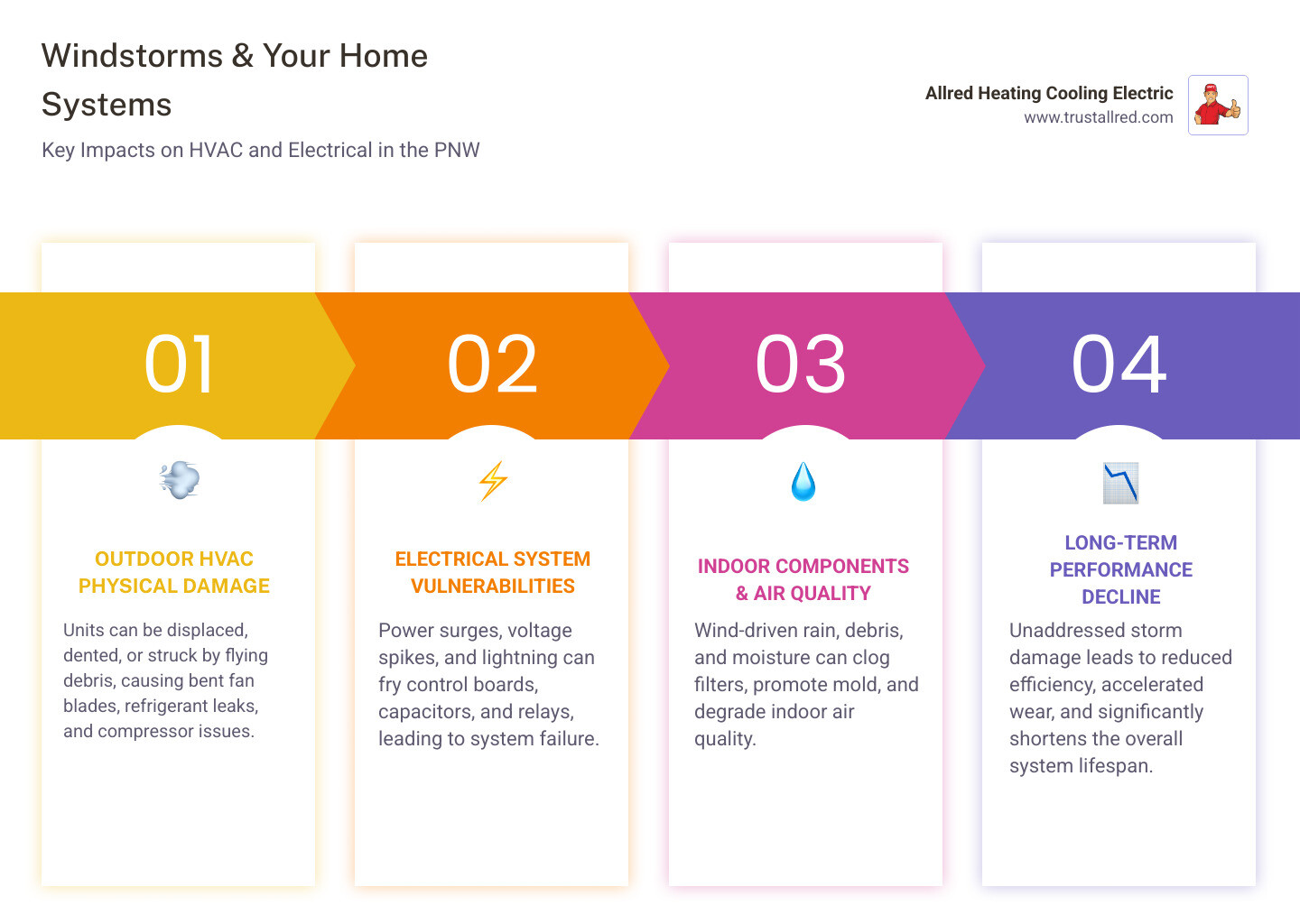
- Outdoor HVAC units can be physically displaced, dented, or struck by flying debris, leading to bent fan blades, refrigerant line breaks, and compressor damage
- Electrical systems are vulnerable to power surges, voltage spikes, and lightning-related grid fluctuations that can fry control boards, capacitors, and relays
- Ductwork and indoor components can be compromised by wind-driven rain, flooding, and moisture intrusion — creating conditions for mold and corrosion
- Indoor air quality drops when wind-blown dust and debris clog filters, coat evaporator coils, and enter the ventilation system
- Long-term damage from unaddressed storm impacts includes reduced efficiency, accelerated wear, and shortened system lifespan
When a powerful storm rolls through the Pacific Northwest — whether it’s a classic Puget Sound windstorm or a back-to-back atmospheric river dumping sustained rain and gusts across Western Washington — your home’s HVAC and electrical systems take the hit quietly. The damage isn’t always obvious right away. A unit might look fine on the outside while a voltage spike has already fried its circuit board, or a slightly tilted condenser might be slowly straining its refrigerant lines. That gap between “looks okay” and “actually okay” is exactly where expensive problems hide.
I’m Daniel Allred, co-founder of Allred Heating, Cooling & Electric, and with years of hands-on HVAC and electrical experience serving homeowners across the Puget Sound region, I’ve seen how windstorms affect your hvac and electrical systems — often in ways that don’t show up until weeks after the storm has passed. In the sections ahead, I’ll walk you through exactly what’s at risk, how to protect your systems before a storm hits, and what to do when one already has.
Physical Damage: How High Winds Impact Outdoor HVAC Units
When we talk about how windstorms affect your hvac and electrical systems, we have to start with the most exposed part of your home: the outdoor condensing unit. These units are built to be tough, but they aren’t invincible. A typical residential condensing unit weighs between 150 and 200 pounds, yet sustained winds or powerful gusts can actually shift or dislodge them from their ground pads.
In extreme scenarios, wind speeds reaching toward 160 MPH — while rare in the lowlands of Auburn or Kent — are capable of blowing units over entirely. Even at lower speeds, such as the 61 MPH gusts recorded during major regional wind events, the vibration and pressure can cause the unit to tilt. When a unit shifts, it puts immense “pulling” stress on the copper refrigerant lines and electrical conduits. This often leads to refrigerant leaks or snapped wires, which are much more expensive to fix than a simple cleaning.
The Threat of Flying Debris
It’s not just the wind itself; it’s what the wind carries. Branches, loose shingles, patio furniture, and even gravel become projectiles during a Puget Sound windstorm.
- Bent Fan Blades: If a small branch or heavy debris gets sucked into the top of the unit while the fan is spinning, it can bend the blades. This creates an unbalanced fan that vibrates violently, eventually destroying the motor bearings.
- Coil Fin Damage: The thin aluminum “fins” on your outdoor coil are very delicate. Flying debris can flatten these fins, “blinding” the coil and preventing the heat exchange necessary to cool your home.
- Cabinet Punctures: Heavy objects can puncture the metal housing, potentially hitting the compressor or the sensitive electrical components inside.
If you live in more rural or wooded areas like Buckley, the risk of falling branches is significantly higher. Ensuring you have Buckley Backup Power Solutions in place is a great start, but protecting the physical integrity of the HVAC unit is equally vital.
How Windstorms Affect Your HVAC and Electrical Systems
While physical dents are easy to see, the electrical damage caused by windstorms is often “invisible” until you try to turn the heat or AC back on. In April 2026, we are seeing more frequent “power flickers” during atmospheric rivers. These rapid on/off cycles are incredibly hard on your home’s electrical infrastructure.
Power Surges and Voltage Spikes
When a windstorm knocks a tree onto a power line, it doesn’t always result in a clean blackout. Often, it causes a “brownout” or a massive power surge. These surges send a high-voltage “spike” through your home’s wiring. Modern HVAC systems are packed with sensitive electronics, including circuit boards, capacitors, and relays. A single spike can fry a control board instantly.
Restarting Stress
When the power goes out and suddenly kicks back on, every large appliance in your home tries to start at the exact same time. This creates “restarting stress.” For an HVAC compressor, which already requires a high “inrush” of current to start, this unstable power environment can cause the motor to stall or the capacitor to fail.
Lightning and Grid Fluctuations
Even if lightning doesn’t strike your house directly, a nearby strike can travel through the utility grid and enter your home. This can cause “hidden” damage where wires are weakened but don’t fail immediately, leading to mysterious “tripped breakers” weeks later.
If you find yourself in the dark, knowing who to call is essential. Check out our Blog: Auburn’s 24/7 Emergency Electricians – When the Lights Go Out for immediate steps to take, or see our guide on Blog: Emergency Electrical Repairs in Kent, WA to understand when a surge has become a safety hazard.
Preventative Strategies for Washington Homeowners
Preparation is the best defense against how windstorms affect your hvac and electrical systems. In the Pacific Northwest, we don’t just deal with wind; we deal with saturated soil that makes trees more likely to fall and crawlspaces more likely to flood.
1. Secure the Perimeter
Trim any overhanging branches within 10 feet of your outdoor unit. During a windstorm, these are the first things to break and fall into your fan. Also, clear away loose yard items like toys or light furniture that could become airborne.
2. Install Surge Protection
A whole-home surge protector is one of the smartest investments you can make. Installed at your main electrical panel, it acts as a gateway, blocking high-voltage spikes before they reach your expensive furnace, heat pump, or kitchen appliances.
3. Use Hurricane Straps and Tie-Downs
If your unit is in a high-wind area (like the foothills of Bonney Lake or Sumner), we recommend using wind-rated tie-downs or “hurricane straps.” These heavy-duty cables anchor the unit to its concrete pad, preventing it from shifting or blowing over in 100+ MPH gusts.
4. Backup Power Solutions
When the grid fails, a standby generator can keep your HVAC system running, preventing your pipes from freezing and maintaining your indoor air quality. We provide specialized support for residents through our Bellevue Backup Power Solutions, Sammamish Backup Power Solutions, and Summit Backup Power Solutions.
To learn more about why these systems are a game-changer, read our Blog: Top 5 Reasons to Install a Generator.
Post-Storm Assessment and Professional Recovery
Once the wind dies down, it’s time for a “walk-around” inspection. Safety is the priority here — never approach your HVAC unit if there is standing water around it or if you see downed power lines nearby.
The Homeowner’s Checklist:
- Visual Check: Look for dents, punctures, or if the unit has moved off its pad.
- Debris Removal: Gently remove leaves or small twigs from the exterior, but do not stick anything inside the unit.
- Listen Closely: When you turn the system back on, listen for new noises. Hissing might indicate a refrigerant leak; buzzing or chattering often points to a failing capacitor or relay.
- Check the Breaker: If the system won’t turn on, check your electrical panel. If the breaker has tripped, reset it once. If it trips again immediately, stop and call a professional.
When to Call the Experts
Some damage isn’t visible to the naked eye. If your home experienced a major surge or if the outdoor unit was struck by a large object, a professional diagnostic is the only way to ensure the system is safe to operate. We offer comprehensive inspections and Tacoma Backup Power Solutions, as well as services for Puyallup Backup Power Solutions and throughout King County Backup Power Solutions.
Frequently Asked Questions
| Indicator | Minor Issue (DIY Check) | Major Damage (Call Allred) |
|---|---|---|
| System Power | Thermostat batteries dead | Breaker trips repeatedly |
| Unit Exterior | Surface dirt/leaves | Deep dents or punctured coils |
| Noises | Normal humming | Hissing, grinding, or loud buzzing |
| Airflow | Dirty air filter | Fan not spinning or weak airflow |
| Environment | Damp ground | Standing water or submerged unit |
How windstorms affect your hvac and electrical systems’ air quality?
Windstorms are massive “dust distributors.” High winds kick up dirt, pollen, and debris that get sucked into your HVAC system. If your outdoor unit’s condenser coils get coated in dust, the system has to work twice as hard to move heat. Furthermore, wind-driven rain from atmospheric rivers can push moisture into your ductwork or crawlspace. This creates a damp environment where mold can thrive, eventually blowing spores throughout your home every time the furnace kicks on.
How windstorms affect your hvac and electrical systems’ long-term efficiency?
The “hidden wear” of a storm is what usually catches homeowners off guard. A unit that was slightly displaced might have a microscopic refrigerant leak. Over several months, your system loses its cooling “charge,” causing energy bills to spike and the compressor to overheat. Similarly, salt-laden air (if you’re near the Sound in Northeast Tacoma or Browns Point) combined with wind-driven moisture can accelerate coil corrosion, shortening a 15-year system’s life to just 10 years.
When should I call a professional after a storm?
You should call a professional immediately if:
- Equipment was submerged: Water and electricity are a deadly mix. If your furnace or outdoor unit sat in standing water, it must be inspected before use.
- Burning smells: This indicates an electrical short or a fried motor.
- Buzzing/Whining: These are signs of electrical component failure (like a capacitor) that could lead to a total system breakdown.
- Visible structural damage: If a tree hit the unit or the refrigerant lines are bent.
Conclusion
At Allred Heating Cooling Electric, we know that your home is your sanctuary. As a family-oriented business, our goal is to ensure that when the next “once-in-a-decade” storm hits the Pacific Northwest, your family stays warm, dry, and safe. From the initial installation of surge protectors to 24/7 emergency repairs after a windstorm, our expert technicians are here to help you navigate how windstorms affect your hvac and electrical systems.
Don’t wait for the next atmospheric river to find out if your systems are vulnerable. Whether you need a routine safety check or are looking for Federal Way Backup Power Solutions, we are just a phone call away. Stay safe, stay comfortable, and trust the experts who know Seattle weather best.
