


What Your AC’s Strange Noises Are Trying to Tell You
AC making strange noises what they mean is often your system’s way of flagging a problem before it becomes a costly breakdown. Most modern air conditioners run between 25 and 55 decibels — about as loud as a quiet conversation. When something sounds off, it usually is.
Here is a quick overview of the most common AC noises and what they typically indicate:
| Noise | Likely Cause | Urgency |
|---|---|---|
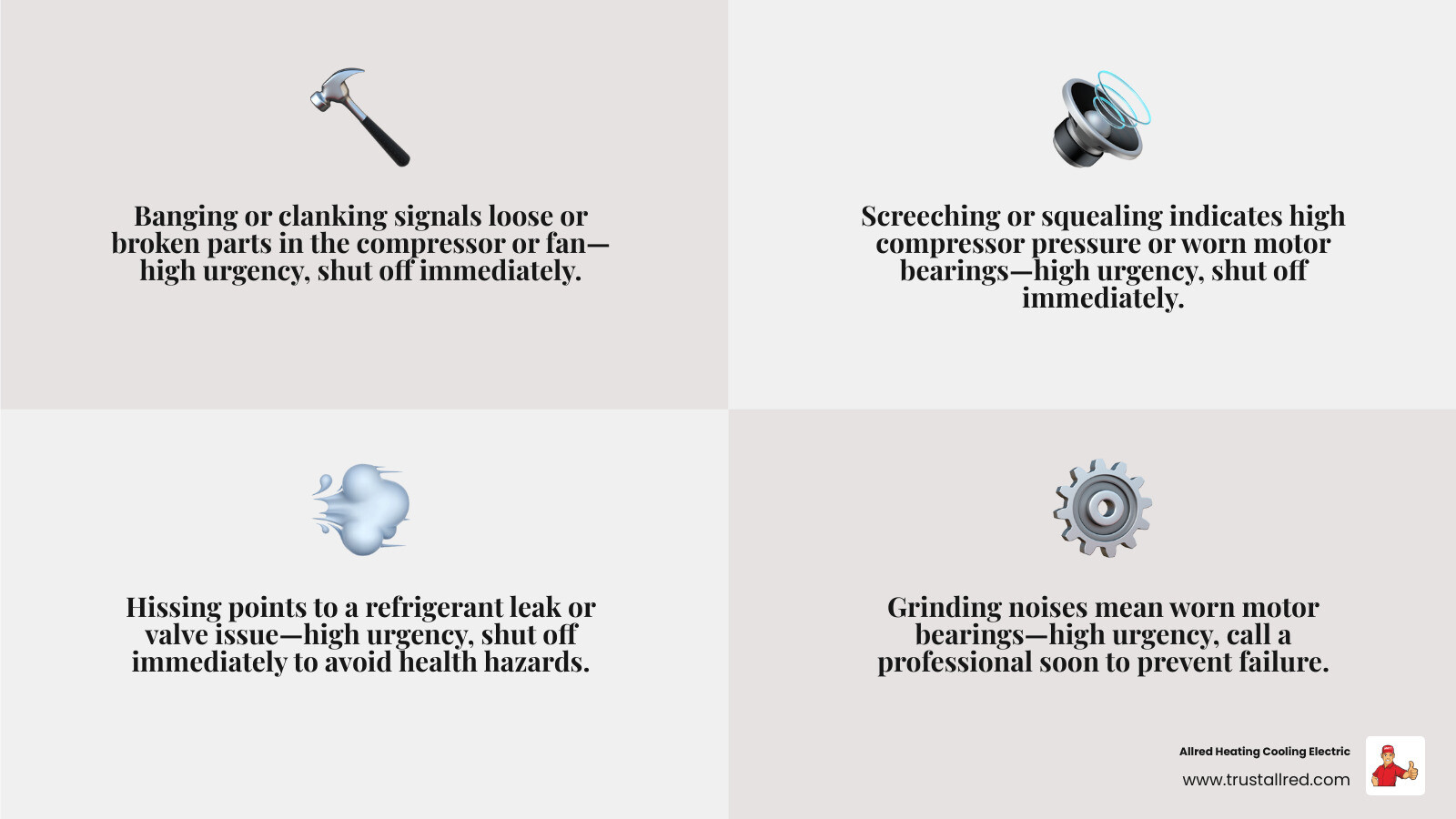
| Banging / Clanking | Loose or broken part in compressor or fan | High — shut off immediately |
| Screeching / Squealing | High compressor pressure or worn motor bearings | High — shut off immediately |
| Hissing | Refrigerant leak or internal valve issue | High — shut off immediately |
| Grinding | Worn motor bearings | High — call a pro soon |
| Buzzing | Electrical issue, frozen coils, or failing capacitor | Moderate — inspect promptly |
| Clicking (repeated) | Failing contactor or capacitor | Moderate — call a pro |
| Rattling | Loose panels, debris, or hardware | Low-Moderate — inspect soon |
| Whistling | Clogged air filter or blocked vents | Low — check filter first |
| Gurgling / Bubbling | Clogged condensate drain or refrigerant issue | Low-Moderate — monitor closely |
I’m Daniel Allred, co-founder of Allred Heating, Cooling & Electric, and over the years I’ve diagnosed more cases of ac making strange noises what they mean than I can count — from rattling condenser units on windy Puget Sound days to screeching compressors on the hottest afternoons of the year. In the sections below, I’ll walk you through exactly what each sound means, when to act fast, and what you can safely handle yourself.
Normal vs. Problematic: AC Making Strange Noises What They Mean
When it is May 2026, and the first real heatwave hits King or Pierce County, the last thing you want is a symphony of clanging metal coming from your backyard. But before you panic, it’s important to establish a baseline for what a healthy system sounds like.
Modern high-efficiency units, like the Hitachi airHome range, can operate as quietly as 19dB. To put that in perspective, that is quieter than a whisper in a library. Most standard central air systems operate in the 25 to 55 dB range. A healthy unit should produce a uniform, steady hum and a gentle “whoosh” of air through the vents.
You might also hear a single, distinct “click” when the system starts or stops. This is simply the thermostat relay or the electrical contactor engaging. In the damp, variable climate of the Seattle area, you might also hear the occasional pop or creak from your ductwork as the metal expands and contracts with temperature changes. These are generally not Signs Your Air Conditioner Needs Repair. However, when a sound becomes repetitive, loud, or aggressive, it’s a clear signal that the “Sound of Silence” has been compromised.
Decoding AC Making Strange Noises What They Mean for Your System
Every air conditioner has a unique “voice.” As a homeowner in Tacoma or Bellevue, you should become familiar with your unit’s regular operating sounds. When you hear something new, it’s often a sign that a small component is struggling.
The physical structure of your HVAC system can act like a speaker. A tiny vibration in a motor can be amplified by the metal cabinet or sent traveling through the ductwork, making a small issue sound much larger. For example, a loose screw on a panel can create a rhythmic rattling that vibrates through the framing of your home. While the screw itself isn’t a mechanical failure, the constant vibration can eventually lead to cracked refrigerant lines or worn-out electrical connections. Understanding Home Air Conditioning means recognizing that these sounds are early warning clues.
Identifying Indoor vs. Outdoor Sound Sources
To narrow down ac making strange noises what they mean, you first need to play detective and locate the source.
- Indoor Noises: These usually stem from the blower motor, the evaporator coils, or the ductwork. If you hear whistling, thwapping, or clicking inside your home, the issue is likely within the air handler or the vents.
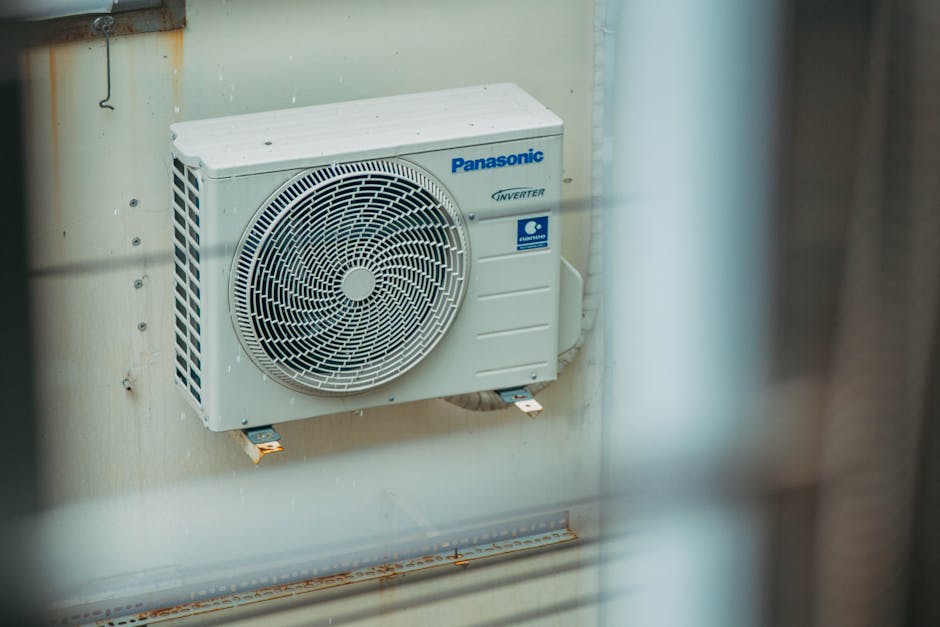
- Outdoor Noises: These come from the condenser unit. Banging, screeching, or intense buzzing outside usually points to the compressor or the condenser fan motor.
If you aren’t sure where the sound is coming from, try a “fan-only” test. Switch your thermostat to “Fan On” but turn the “Cooling” mode off. If the noise persists, it’s likely a blower motor or ductwork issue. If the noise stops, the problem probably lies with the cooling components (like the compressor) located in the outdoor unit. This simple step helps immensely when AC Repair: Trusting Our Technicians is the next logical move.
High-Urgency Sounds: When to Shut Down Immediately
Some noises are “red alerts.” If you hear any of the following, we recommend turning the system off at the thermostat and the breaker immediately to prevent catastrophic damage or safety hazards.
Banging and Clanking
If your AC sounds like a “trash truck” or a “construction site,” you likely have a loose or broken part inside the compressor. The compressor is a sealed unit; if an internal piston pin or connecting rod breaks, it will thrash around inside the housing. Because these units are sealed, they cannot be repaired individually—a banging compressor usually requires a full Same Day AC Installation: Your Urgent Cooling Solution in Maple Valley or a major component replacement.
Hissing and Screaming
A persistent hissing sound, similar to air escaping a tire, is almost always a sign of a refrigerant leak. Refrigerant is under high pressure, and a leak not only kills your system’s efficiency but can also pose health hazards like headaches or nausea.
Even more urgent is a high-pitched “screaming.” This often indicates that the internal pressure in the compressor has reached dangerous levels. Most modern systems have safety shut-offs for this, but if the sound persists for more than 15 seconds, shut it down manually.
Understanding AC Making Strange Noises What They Mean During Startup
The first 15 seconds of a cooling cycle are the most stressful for your AC. A brief, soft squeal at startup might just be a belt gaining traction, but a loud, metallic screech often points to high compressor pressure or failing motor bearings.
If you hear a rapid clicking followed by a loud “buzz,” your unit is likely experiencing electrical arcing or a failing capacitor. This is essentially electricity “jumping” where it shouldn’t. If you smell burning plastic alongside these sounds, it’s an electrical emergency. Turn off the power and call for professional help.
Common Mechanical Noises and Their Internal Causes
Not every noise requires an emergency shutdown, but ignoring them will certainly shorten the 15 to 20-year lifespan of your system.
- Grinding: This is the classic sound of metal-on-metal. In our experience in Auburn and Kent, this usually means the bearings in the fan motor have dried out. If caught early, we can often lubricate or replace the motor. If ignored, the motor will eventually seize, potentially causing an electrical short.
- Rattling: This is common in the South Puget Sound due to our wind and debris. Twigs, fir needles, or even small pebbles can fall into the outdoor unit. It could also be a sign that the “isolation feet” (the rubber mounts the compressor sits on) have perished, causing the unit to vibrate against its base.
- Clicking: While a single click is normal, repeated clicking usually means an electrical component is trying to engage but failing. This is often a failing contactor or capacitor—relatively simple repairs that prevent a total system lockout.
- Thwapping: If it sounds like a playing card in bicycle spokes, something is likely stuck in the blower blades. We’ve found everything from loose insulation to small toys inside indoor blower assemblies!
- Gurgling / Bubbling: This usually relates to the condensate drain line. If the line is partially clogged, air bubbles can get trapped, creating a sound like finishing a soda through a straw. In some cases, bubbling can also indicate air in the refrigerant lines, which can lead to acid formation that “eats” the compressor from the inside out. If you see water pooling, check for an Air Conditioning Replacement or repair needs.
Troubleshooting and DIY Fixes for a Noisy AC
Before you call us, there are a few safe “DIY” steps you can take to see if the fix is simpler than it sounds.
| Problem | DIY Check / Fix | When to Call Allred |
|---|---|---|
| Whistling | Check the air filter. If it’s clogged, replace it. Ensure 80% of your vents are open. | If whistling continues after the filter change. |
| Rattling (Outdoor) | Turn off power. Clear debris like leaves or twigs from the grille. | If the rattling is deep or metallic inside the unit. |
| Rattling (Indoor) | Tighten loose screws on the air handler panels or vent covers. | If the noise is coming from inside the motor. |
| Gurgling | Use a wet/dry vac to clear the condensate drain line of sludge. | If water is leaking into your home or the sound persists. |
| Buzzing (Indoor) | Check for frozen coils. If you see ice, turn the AC off and the Fan to “On.” | If the coils freeze again after thawing. |
The 80% Rule: Many homeowners in Sammamish or Issaquah close vents in unused rooms to “save energy.” However, closing too many vents increases pressure in the ductwork, leading to whistling and putting immense strain on the blower motor. Always keep at least 80% of your home’s vents wide open to maintain proper airflow and silence.
The Role of Maintenance in Preventing AC Noises
The best way to handle ac making strange noises what they mean is to prevent them from happening in the first place. Think of AC maintenance like an oil change for your car.
During a professional tune-up, our technicians perform several “silencing” tasks:
- Lubrication: We apply non-detergent oil to motor bearings, preventing the friction that causes screeching and grinding.
- Hardware Tightening: We check every bolt, screw, and electrical connection. In the vibration-heavy environment of an HVAC system, things naturally loosen over time.
- Coil Cleaning: Dirty coils force the system to run longer and harder, which increases vibration and the likelihood of buzzing from frozen components.
- Refrigerant Checks: We ensure your levels are exact. Too little refrigerant causes hissing and gurgling; too much can destroy the compressor.
Regular maintenance doesn’t just keep things quiet; it ensures your system reaches its full 20-year potential. For homeowners in Puyallup or Spanaway, a spring tune-up is the best insurance against a noisy, broken AC in July. You can learn more about our process by AC Repair: Trusting Our Technicians.
Frequently Asked Questions about AC Noises
Is it safe to run my AC if it is making a loud banging noise?
No. A loud banging or clanking noise is a sign of mechanical failure. Usually, a part has come loose or broken inside the compressor or the blower assembly. If you continue to run the unit, that loose part can act like shrapnel, causing catastrophic and irreparable damage to the rest of the system. Turn it off immediately.
Why does my air conditioner make a whistling sound like a tea kettle?
This is known as the “tea kettle effect,” and it is almost always caused by restricted airflow. When your blower motor tries to pull air through a filthy filter or a blocked return vent, the air is forced through tiny gaps at high speed, creating a whistle. Check your filter first—if you can’t see light through it, it needs to be replaced.
Can weather conditions cause my outdoor unit to rattle?
Absolutely. In the South Puget Sound, high winds can blow fir needles, twigs, and pebbles into the top of your outdoor condenser. If these hit the fan blades, you’ll hear a rhythmic rattling or clicking. Additionally, our damp weather can cause the metal cabinets to expand and contract, leading to occasional popping sounds that are perfectly normal.
Conclusion
Your home should be a sanctuary, and a noisy air conditioner is a major disruption to that peace. Whether it’s a “playing card” thwapping in Federal Way or a high-pitched squeal in Redmond, these sounds are your system’s way of asking for help. Catching these audio clues early can be the difference between a simple lubrication job and a full system replacement.
At Allred Heating Cooling Electric, we are a family-oriented business dedicated to keeping our neighbors in the Greater Seattle area comfortable. Our expert technicians are available 24/7 for emergency repairs, ensuring you never have to suffer through a noisy (or broken) AC for long.
Don’t let a strange noise turn into a summer disaster. Schedule your professional AC repair today and let us bring the “Sound of Silence” back to your home.