


Why the Air Inside Your Home May Be More Dangerous Than You Think
How to improve indoor air quality at home is one of the most important things you can do for your family’s health — and the steps are simpler than most people expect.
Here is a quick overview of the most effective ways to get started:
- Control pollution sources — Remove or reduce the things causing the problem in the first place (tobacco smoke, VOCs, gas appliances, mold)
- Improve ventilation — Open windows when outdoor air quality is good, and use exhaust fans in kitchens and bathrooms
- Use air cleaners with HEPA filters — These remove more than 99% of harmful airborne particles
- Maintain your HVAC filters — Upgrade to MERV 13 or higher and change them on schedule
- Control humidity — Keep indoor relative humidity between 30% and 50% to prevent mold and dust mites
- Reduce allergens — Vacuum weekly with a HEPA vacuum, wash bedding in hot water, and keep pets out of bedrooms
- Test for hidden dangers — Check your home for radon and install carbon monoxide detectors on every floor
Most people know outdoor air pollution is a concern — but here is the part that surprises them. According to the EPA, Americans spend roughly 90% of their time indoors, and indoor pollutant levels can run two to five times higher than what is outside your front door. During activities like painting, cooking, or cleaning, those levels can spike even further. You cannot see most of these pollutants, and you cannot smell them — but they are quietly affecting your breathing, your sleep, and your long-term health every single day.
For families in the Seattle area, where wet winters drive people indoors for months and wildfire smoke has become a seasonal reality, the quality of the air inside your home matters more than ever.
My name is Daniel Allred, and as the co-founder of Allred Heating, Cooling & Electric, I have spent years helping Puget Sound homeowners understand how to improve indoor air quality at home through proper HVAC maintenance, filtration upgrades, and ventilation solutions. In the sections ahead, I will walk you through exactly what works — backed by EPA guidance and real-world experience in homes just like yours.
The Three Core EPA Strategies for Healthy Air
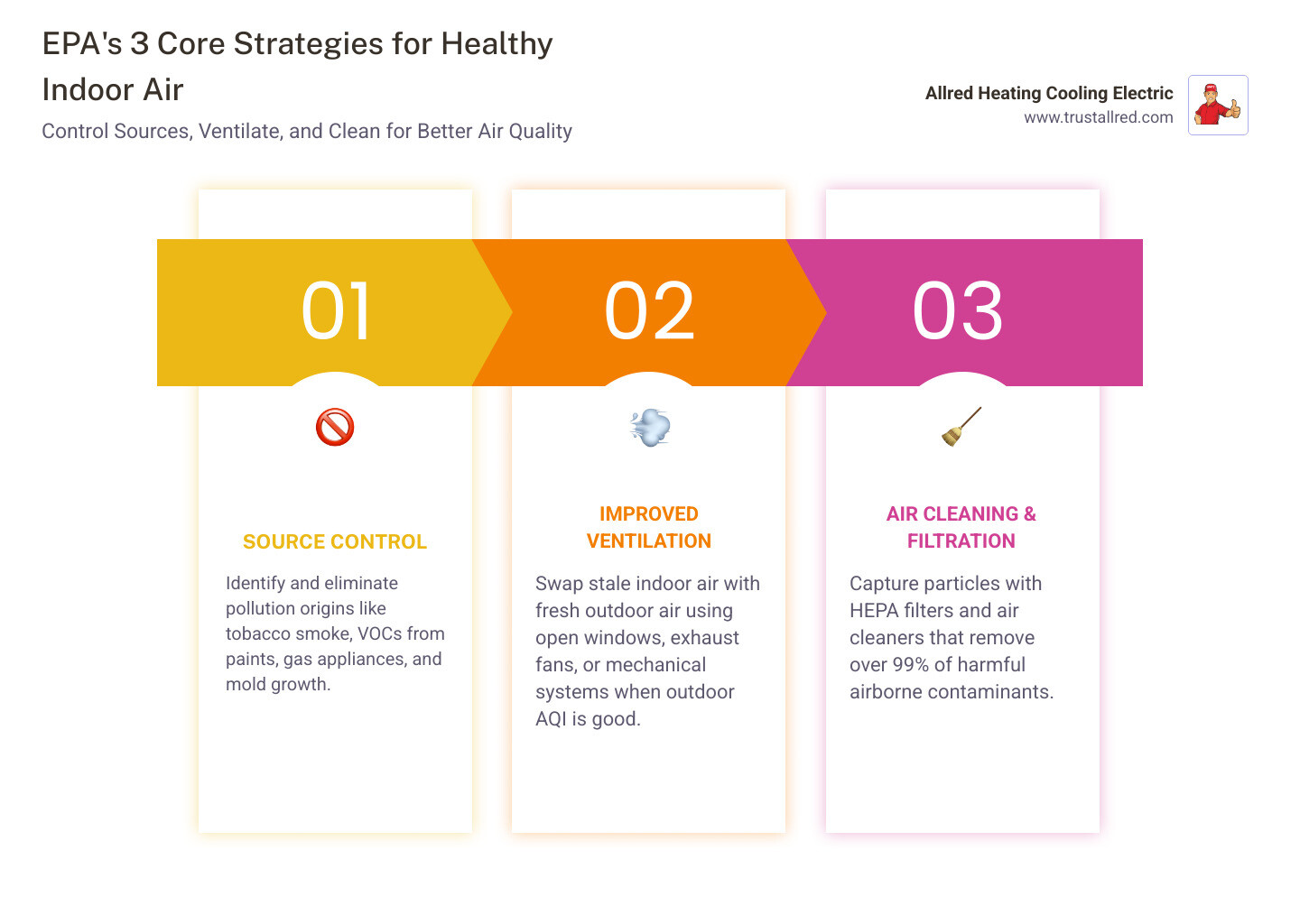
When it comes to the science of breathing easier, the Environmental Protection Agency (EPA) points to three fundamental strategies. Think of these as the “triple threat” against indoor pollution. While many homeowners jump straight to buying a gadget, we always recommend a balanced approach.
First is source control, which involves identifying and eliminating the origin of the pollution. Second is improved ventilation, which ensures that stale, contaminated air is swapped for fresh outdoor air. Finally, there is air cleaning and filtration, which uses technology to strip particles from the air that is already circulating.
Understanding Air Purifier Benefits is a great start, but technology works best when it isn’t fighting against a constant stream of new pollutants. By combining these three methods, you create a comprehensive shield for your home.
Source Control: The First Step in How to Improve Indoor Air Quality at Home
Source control is often the most cost-effective way to manage your air because it stops the problem before it starts. If you have an old home in Tacoma or Bellevue, you might have legacy issues like asbestos or lead dust. Sealing or enclosing asbestos-containing materials is a classic example of source control.
Another major source is combustion. Gas stoves that are poorly adjusted can emit nitrogen dioxide and carbon monoxide. Having a professional ensure your gas appliances are burning cleanly is vital. We also suggest looking at Volatile Organic Compounds (VOCs). These are gases emitted from paints, glues, and even “new car smell” plastics. Choosing low-VOC or VOC-free products when remodeling can drastically reduce the chemical load in your bedrooms and living spaces.
Practical Steps on How to Improve Indoor Air Quality at Home
You don’t always need a technician to make a difference. Some of the best moves are free. Implementing a strict no-smoking policy indoors is the single most important “source control” move you can make, as secondhand and even thirdhand smoke (which lingers on furniture) are major health risks.
We also recommend a “no-shoes” policy. Shoes track in pesticides, lead dust, and outdoor allergens. Simply leaving them at the door keeps those pollutants off your carpets. Additionally, switching to unscented or natural cleaners reduces the synthetic fragrances that can trigger asthma. For those in the King County area, South Seattle Furnace Duct Cleaning can also remove years of accumulated dust that acts as a “source” every time your fan kicks on.
Understanding How to Improve Indoor Air Quality at Home
Improving your air is a year-round job that requires a bit of detective work. In April 2026, as we look at modern home standards, we see a heavy emphasis on “unseen” threats. One of the most dangerous is radon—a naturally occurring radioactive gas that seeps through foundation cracks. It is the second leading cause of lung cancer in the U.S., and because it is odorless and colorless, testing is the only way to find it.
Humidity is another invisible factor. In the Pacific Northwest, our damp climate is a breeding ground for biological growth. Keeping your relative humidity between 30% and 50% is the “sweet spot.” Anything higher encourages mold and dust mites; anything lower can irritate your respiratory tract and make you more susceptible to viruses. Finally, ensure you have working carbon monoxide detectors on every floor, especially near sleeping areas.
Controlling Allergens and Biological Contaminants
Allergens like dust mites and pet dander are the primary triggers for indoor sneezing and wheezing. Dust mites love soft surfaces, so we recommend washing bedding weekly in water that is at least 130°F to kill them. If you have pets, keep them out of bedrooms and off upholstered furniture where dander can become embedded.
Mold is a particular challenge in areas like Puyallup and Issaquah. The key to mold control is moisture control. If you see a leak, fix it immediately. For homes with persistent dust issues, services like Orting Furnace Duct Cleaning can help clear the “highway” that distributes these allergens throughout your house.
Using Technology: How to Improve Indoor Air Quality at Home with Purifiers
When source control and ventilation aren’t enough—like during a summer wildfire smoke event—air purifiers become your best friend. The gold standard is the HEPA (High-Efficiency Particulate Air) filter, which can remove 99.97% of particles as small as 0.3 micrometers.
For odors and chemicals, look for units that include an activated carbon stage. When shopping, check the Clean Air Delivery Rate (CADR). You want a unit that can cycle the air in your room 4 to 6 times per hour. If you’re looking to upgrade your existing HVAC system’s capabilities, Enhance Air Quality With New Filter Services can provide a whole-home solution that beats any portable unit.
Advanced Ventilation and HVAC Maintenance
In the old days, homes were “leaky,” meaning air naturally swapped through gaps in windows and doors. Modern homes are built tight for energy efficiency, which is great for your bills but bad for air freshness. This is where mechanical ventilation comes in.
Systems like Energy Recovery Ventilators (ERVs) are becoming the standard for premium homes in Sammamish and Kirkland. These systems pull in fresh outdoor air and exhaust stale indoor air, but they use a heat exchanger to “transfer” the temperature. This means you get fresh air without losing your expensive heating or cooling. Following HVAC Maintenance Tips Long Lasting Systems ensures these mechanical lungs keep breathing clearly.
Optimizing Your Filtration System
Not all filters are created equal. Most people are used to the cheap, 1-inch fiberglass filters found at hardware stores. These are designed to protect the equipment, not your lungs. To actually clean the air, you need to look at the MERV (Minimum Efficiency Reporting Value) rating.
For residential homes, a MERV 13 filter is the “sweet spot.” It is dense enough to catch bacteria and smoke particles but not so restrictive that it kills your airflow.
| Filter Type | Efficiency | Best For |
|---|---|---|
| 1-inch Spun Fiberglass | Low | Protecting HVAC motor from large hair/lint |
| 1-inch Pleated | Medium | Basic dust and pollen capture |
| 4-inch Deep Pleated | High | Smoke, bacteria, and fine allergens |
| Electrostatic | High | Reusable; uses static charge to grab particles |
The Importance of Regular System Inspections
A dirty HVAC system is a major contributor to poor air quality. If your ducts are leaky, they can pull in dusty air from your crawlspace or attic and blow it into your living room. Annual tune-ups are essential for catching these issues before they affect your health.
During a professional inspection, we check for airflow restrictions and ensure your condensate drains aren’t harboring mold. Here Is Why Annual HVAC Maintenance Is Important: it keeps the air moving, the humidity controlled, and the pollutants trapped where they belong—in the filter.
Frequently Asked Questions about Indoor Air
Do houseplants really improve indoor air quality?
This is one of the most common myths we hear. While it’s true that plants can remove VOCs in a sealed laboratory setting, the reality in a home is different. You would need hundreds of plants in a single room to see a measurable difference in air quality. In fact, over-watering houseplants can lead to mold growth in the soil, which actually decreases air quality for allergy sufferers. Enjoy your plants for their beauty, but don’t rely on them as air purifiers.
How often should I change my home air filters?
For standard 1-inch pleated filters, we recommend every 30 to 60 days. If you use a high-capacity 4-inch deep-pleated filter, you can often go 6 to 9 months. However, if you have pets or live near a busy road in Kent or Redmond, you’ll need to check them more frequently. A gray, fuzzy filter is a sign that it’s time for a change.
When is the best time to open windows for ventilation?
The best time is when the outdoor Air Quality Index (AQI) is in the “Green” or “Yellow” range. We recommend “cross-ventilation”—opening windows on opposite sides of the house to create a breeze. However, if there is wildfire smoke or high pollen, keep the windows shut and rely on your HVAC system’s filtration.
Conclusion
At Allred Heating Cooling Electric, we believe that your home should be your sanctuary. Whether you are in Auburn, North Bend, or Tacoma, the air you breathe while you sleep and play with your kids matters. We have built our reputation on a family-oriented approach, ensuring that every technician who enters your home treats it like their own.
If you are concerned about your home’s air or want to explore advanced solutions like ERVs or whole-home HEPA filtration, we are here to help. We offer expert technicians and 24/7 emergency availability to ensure your comfort never wavers.
Ready to take the next step for your family’s health? Contact us today to learn more about our Indoor Air Quality Services and breathe easier tonight.
