


Why Mold Loves Northwest Homes — and What Your HVAC Can Do About It
How your HVAC system prevents mold in the northwest comes down to one thing: controlling moisture before it has a chance to settle. Here’s a quick summary of how a well-maintained HVAC system keeps mold at bay in the Pacific Northwest:
- Removes excess humidity by pulling moisture out of the air during the cooling process
- Drains condensation away from evaporator coils through a properly functioning condensate pan and drain line
- Filters airborne mold spores before they can circulate through your living spaces
- Keeps air moving so moisture doesn’t sit and stagnate in corners, ducts, or walls
- Maintains indoor humidity between 30–50%, the range where mold struggles to take hold
- Uses UV-C technology (when installed) to destroy mold DNA on coil surfaces before spores can spread
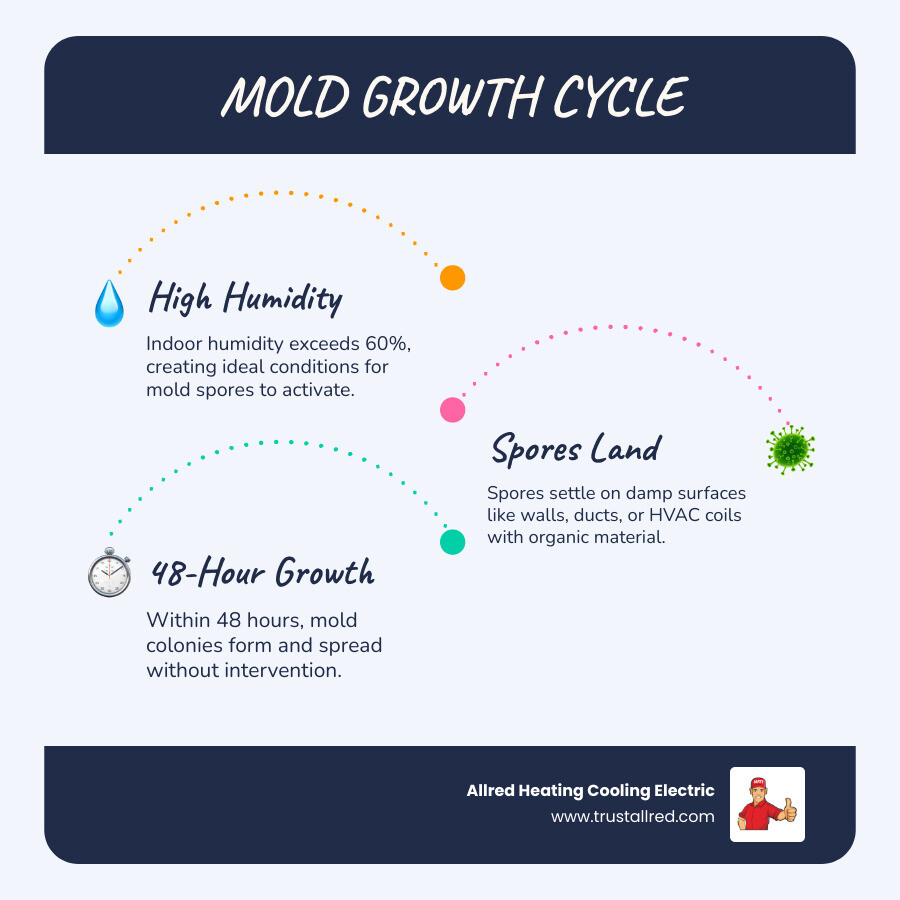
You may not think much about mold until you catch a whiff of something musty coming from a vent — or start sneezing every time your heat kicks on. But in the Pacific Northwest, where grey skies and steady rain are a way of life for most of the year, mold doesn’t wait for an invitation. Mold spores are always present in the air around us — too small to see, but ready to grow the moment they land on a damp surface. And here’s the unsettling part: they only need 48 hours of moisture exposure to start multiplying. When indoor humidity climbs above 60%, your home’s walls, ducts, and HVAC components can quietly become the kind of environment mold thrives in.
Your HVAC system is one of your strongest defenses against that — but only if it’s doing its job properly.
I’m Daniel Allred, co-founder of Allred Heating Cooling & Electric, and after years of servicing HVAC systems across the Puget Sound region, I’ve seen how the Northwest’s damp climate turns neglected systems into mold-friendly environments — and I’m here to walk you through exactly how your HVAC system prevents mold in the northwest so your home stays healthy year-round. Let’s get into it.
Why the Pacific Northwest Climate is a Breeding Ground for Mold
Living in places like Auburn, Kent, or Bellevue means we’re well-acquainted with the “Big Dark”—that long stretch of rainy season where the sun becomes a distant memory. While the rain is great for our evergreen trees, it creates a persistent challenge for our homes. The Pacific Northwest climate is naturally conducive to mold because of our high relative humidity and temperate weather.
Mold is an opportunistic guest. It doesn’t need much to throw a party: just a bit of moisture, some organic material (like the paper on your drywall or the dust in your vents), and a lack of airflow. In our region, the outdoor humidity often lingers well above the 60% threshold where mold begins to thrive. When that moist air makes its way inside and hits a cool surface, it reaches its “dew point,” turning into liquid water—also known as condensation.
Without a robust strategy for Indoor Air Quality, this moisture accumulates in stagnant air pockets. Think about the corners of your closets, the space behind the sofa, or inside your dark, quiet air ducts. These are the front lines of the battle against mold.
Common PNW Mold Triggers:
- Persistent rain increasing outdoor humidity levels.
- Temperature fluctuations that cause condensation on windows and inside walls.
- Stagnant air in tightly sealed, modern energy-efficient homes.
- Wet coats and shoes bringing moisture directly into the living space.
- Cooking and showering without proper exhaust ventilation.
How Your HVAC System Prevents Mold in the Northwest
You might think of your HVAC system primarily as a way to stay warm in the winter or cool during a rare Tacoma heatwave. However, its most important job in the Northwest is often moisture management. Understanding how your HVAC system prevents mold in the northwest requires looking at the refrigeration cycle.
When your air conditioner or heat pump is in cooling mode, it doesn’t just lower the temperature; it acts as a giant dehumidifier. As warm, moist indoor air passes over the freezing-cold evaporator coils, the moisture in the air condenses into liquid droplets—much like sweat on a cold soda can. This water drips into a condensate pan and is whisked away out of your home through a drain line. This process is essential to Breathe Easy because it physically removes the “fuel” mold needs to grow.
| Humidity Level | Impact on Home & Health | Mold Risk |
|---|---|---|
| 30% – 50% | Ideal for comfort; preserves wood furniture; discourages pests. | Low |
| 50% – 60% | Air feels slightly heavy; dust mites begin to multiply. | Moderate |
| 60%+ | Condensation on windows; musty odors; potential structural damage. | High |
Dehumidification: The First Line of Defense
In the Puget Sound region, “relative humidity” is the number to watch. If your indoor air stays too damp, mold can start growing on surfaces within just 48 hours. This is where your HVAC system’s dehumidification capabilities shine. By constant moisture extraction, the system keeps the air dry enough that mold spores remain dormant.
For homes that struggle with persistent dampness—common in older Puyallup or Issaquah homes with crawlspaces—standard AC might not be enough. In these cases, we often recommend whole-home dehumidifiers. These units work alongside your existing ductwork to pull gallons of water out of the air every day, ensuring every room stays within that safe 30–50% zone. Furthermore, modern Ductless AC Services Improve Air Quality by providing targeted dehumidification in specific zones of the home that might be prone to dampness, like a converted basement or a master suite.
Air Filtration and Capturing Spores
While moisture control is priority number one, your filtration system is the safety net. Mold spores are microscopic—usually between 3 and 100 microns. For perspective, a human hair is about 70 microns wide. Standard, cheap fiberglass filters catch large dust bunnies, but they let mold spores sail right through.
To truly protect your home, you need high-efficiency filtration. HEPA filters are the gold standard, capable of trapping 99.97% of particles down to 0.3 microns. By using filters with a higher MERV (Minimum Efficiency Reporting Value) rating, typically MERV 11 or higher, you can effectively scrub these airborne contaminants out of the sky. We’ve found that many homeowners can significantly Enhance Air Quality with New Filter Services, ensuring that the “lungs” of the home aren’t just circulating spores from room to room.
Identifying the Warning Signs of Mold in Your Ductwork
Because your ductwork is hidden behind walls and under floors, mold can be a “silent lurker.” However, it almost always leaves clues. The most common sign is a musty or earthy odor that becomes more intense when the blower fan turns on. If you notice a “stale” smell that doesn’t go away with cleaning, it’s time to look deeper.
Visible signs often appear around your registers or vents. Look for “black dust” or fuzzy spots on the grilles. This isn’t always just dirt; it can be a sign that mold is feeding on the dust accumulated near the vent where cool air meets warm room air, creating condensation. If members of your family are experiencing unexplained allergy flare-ups, watery eyes, or respiratory irritation only when they are inside the house, your ducts might need a professional Duct Cleaning. In the damp Northwest, keeping these pathways clear is essential to Clear the Air and prevent your HVAC system from becoming a distribution network for spores.
How Your HVAC System Prevents Mold in the Northwest Through Proper Airflow
Mold hates moving air. It thrives in stagnant pockets where humidity can settle and saturate a surface. This is why you often find mold in the back of a closet but rarely in the middle of a hallway. Your HVAC system prevents mold by acting as a giant circulation fan for your entire house.
When your system is properly balanced, the blower fan ensures that air is constantly being pulled from the rooms, filtered, conditioned, and pushed back out. This movement helps evaporate tiny amounts of surface moisture before they can accumulate. However, if your ducts are leaky or blocked, that circulation breaks down. This is the Importance of Regular Ductwork Maintenance; if air isn’t reaching a specific room, that room becomes a high-risk zone for mold growth.
Proactive Strategies for Long-Term Mold Prevention
Prevention is always more affordable than remediation. In our experience serving communities from Federal Way to Redmond, the homeowners who have the fewest mold issues are those who stick to a proactive maintenance schedule.
Seasonal Maintenance Checklist for Mold Prevention:
- Check the Condensate Drain: Ensure water is flowing freely and the pan isn’t slimy or standing full of water.
- Flush the Lines: A seasonal flush with a mild vinegar solution can prevent algae and mold “sludge” from clogging your drain lines.
- Seal Your Ducts: Leaky ducts in a damp crawlspace or attic can suck in mold spores and moisture. Professional sealing keeps the bad stuff out.
- Inspect Insulation: Ensure the insulation around your ducts is intact. If it’s missing, the cold metal ducts will “sweat” in the humid air, leading to mold in your attic or crawlspace.
How Your HVAC System Prevents Mold in the Northwest with UV Technology
If you want to move from “defensive” to “offensive” in your battle against mold, UV technology is the answer. Ultraviolet Germicidal Irradiation (UVGI) uses specific UVC light wavelengths to penetrate the cells of microorganisms. When a mold spore passes through this light, or tries to grow on a surface bathed in it, the UV light disrupts its DNA. This renders the spore inactive—it can’t grow, and it can’t reproduce.
We often install these lights directly over the evaporator coil. Since the coil is the dampest part of your system, it’s the most likely place for mold to start. By keeping the coil sterile, you ensure that the air passing over it remains clean. It’s a permanent, low-maintenance solution for superior microbial control.
Frequently Asked Questions about HVAC Mold
What are the health risks of mold in my air ducts?
When mold grows in your HVAC system, it releases spores and mycotoxins directly into the air you breathe. For many people, this leads to chronic respiratory infections, worsening of asthma symptoms, and persistent “cold-like” symptoms such as sneezing and itchy eyes. Long-term exposure can also cause more vague symptoms like headaches, fatigue, and difficulty concentrating—often referred to as “Sick Building Syndrome.”
Can I remove mold from my HVAC system myself?
We strongly advise against DIY mold removal inside an HVAC system. Spraying bleach or household cleaners into your vents can damage the sensitive components of your system and often fails to reach the source of the growth. More importantly, disturbing a mold colony without proper containment (like negative air machines and HEPA vacuuming) can actually send millions of spores flying into your living room, making the problem much worse. Professional remediation ensures the mold is removed safely without cross-contaminating your home.
How often should I change my filters in the PNW?
In the Northwest, we recommend checking your filters every 30 days and replacing them at least every 90 days. However, if you have pets, live near a construction site in a growing area like Maple Valley, or have family members with severe allergies, you should change them every 30–45 days. A clogged filter restricts airflow, which makes your system work harder and can actually lead to the kind of stagnant, humid conditions that mold loves.
Conclusion
At Allred Heating Cooling & Electric, we know that your home is your sanctuary. We are a family-oriented business, founded by twin brothers who believe in treating every customer like a neighbor. Whether you’re in Auburn, Tacoma, or Kirkland, our expert technicians are available 24/7 to ensure your home remains a place of comfort, not a science experiment.
The unique dampness of the Seattle climate requires a specialized touch. Don’t wait for a musty smell to take action. From high-efficiency filtration to UV light installations and precision tune-ups, we have the tools to keep your air clean and your humidity under control. Schedule your HVAC Maintenance with us today and let us help you breathe easier.
