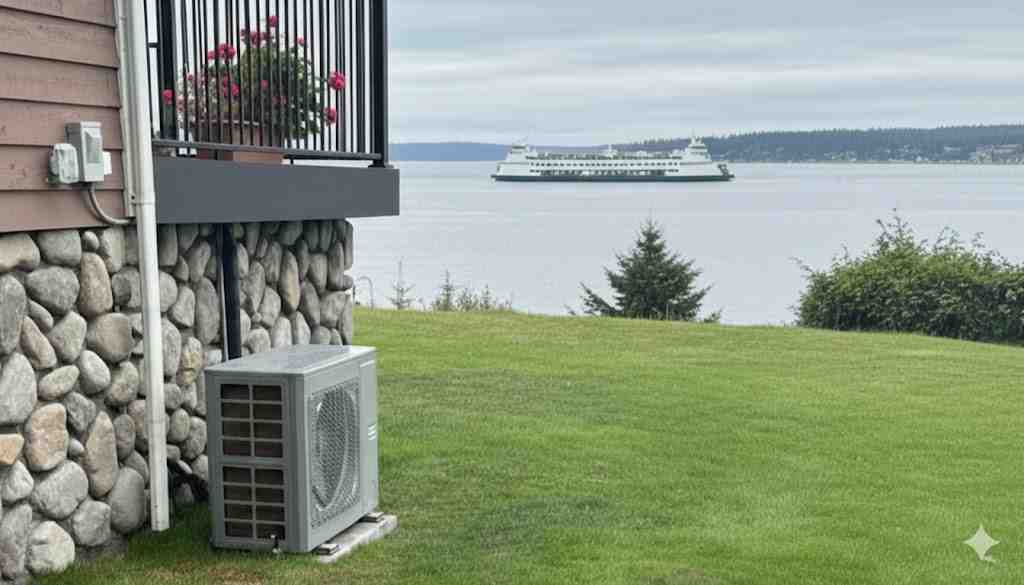



How Pacific Northwest Climate Affects Your HVAC System — And What You Can Do About It
How pacific northwest climate affects your hvac system comes down to one relentless force: moisture. Here’s a quick breakdown of the key impacts:
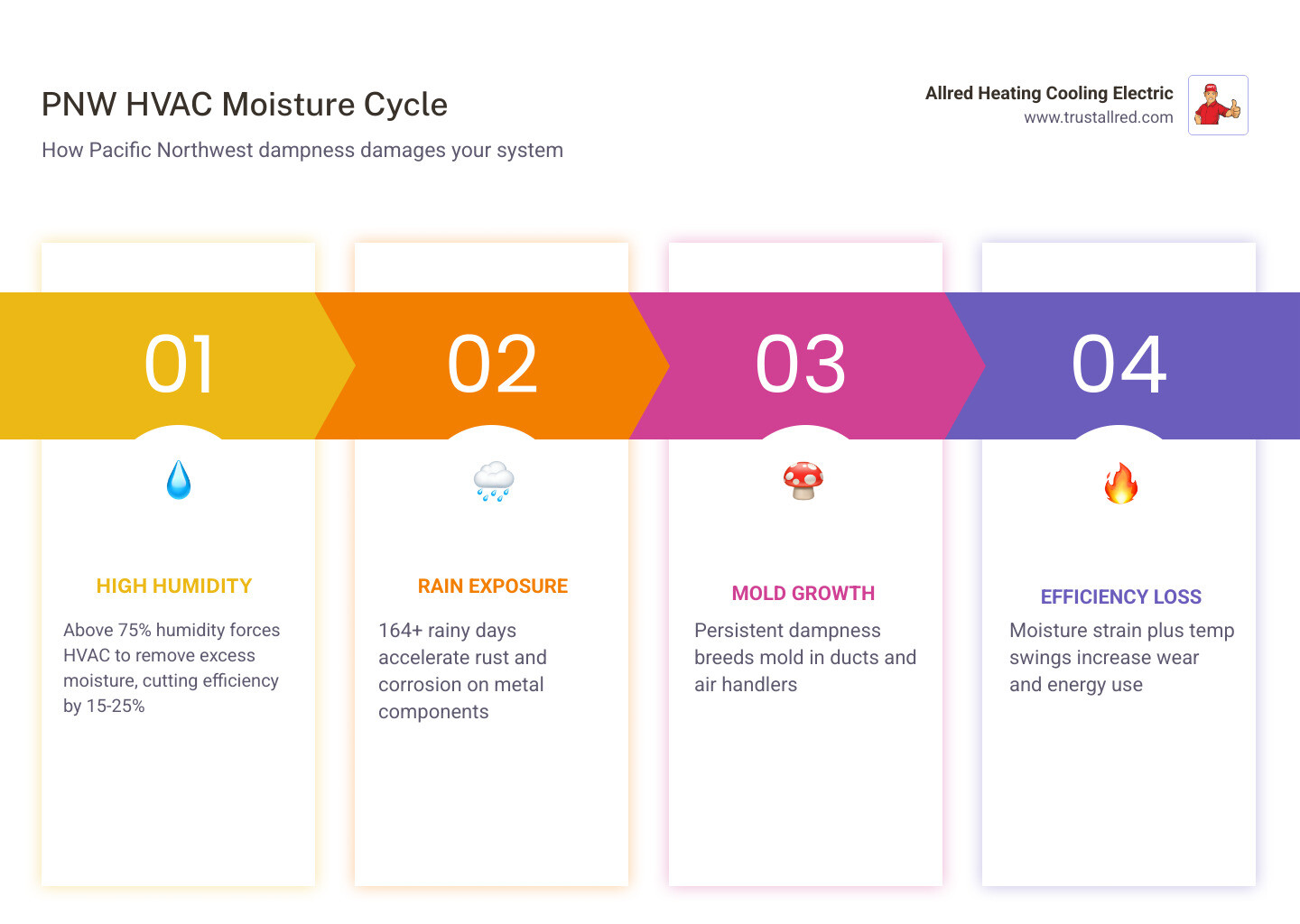
- High humidity (often above 75%) forces your system to work harder to heat or cool the air, reducing efficiency by 15–25%
- 164+ rainy days per year accelerates rust and corrosion on metal HVAC components
- Mild but long heating seasons keep your system running for months, increasing wear over time
- Sudden summer heat waves can overwhelm cooling equipment that sat idle all winter
- Daily temperature swings of up to 30°F cause repeated mode switching, adding 8–12% more strain on components
- Persistent dampness creates ideal conditions for mold growth inside ducts and air handlers
- Marine climate zone standards influence which equipment efficiency ratings apply to your home
The Pacific Northwest is one of the most beautiful places to live in the country — but its climate is genuinely hard on home comfort systems. What looks mild on a weather app can quietly push your HVAC to its limits, season after season, in ways that most homeowners don’t notice until something breaks.
I’m Daniel Allred, co-founder of Allred Heating, Cooling & Electric, and after years of servicing HVAC systems across the Puget Sound region, I’ve seen how pacific northwest climate affects your hvac system in ways that catch even diligent homeowners off guard. In the sections ahead, I’ll walk you through exactly what’s happening to your equipment — and how to stay ahead of it.
How Pacific Northwest Climate Affects Your HVAC System Performance
Living in the Puget Sound area, from Auburn to Bellevue, means we deal with a unique “Marine” climate zone. While we don’t often see the sub-zero temperatures of the Midwest or the triple-digit humidity of the Southeast, our persistent dampness creates a specific set of hurdles.
The most significant factor in how pacific northwest climate affects your hvac system is the sheer volume of moisture. In cities like Seattle and Tacoma, we experience an average of 164 rainy days per year. During the wet season, which stretches from October through May, humidity levels frequently exceed 75%.
This high humidity creates a “latent heat” challenge. Your HVAC system doesn’t just change the temperature; it has to remove moisture from the air to make you feel comfortable. Because water vapor has a high specific heat capacity, humid air requires significantly more energy to heat or cool than dry air. Without Regular HVAC Maintenance for Optimal Performance, your system can see efficiency losses of 15-20% during our wettest months. Furthermore, constant exposure to rain and mist accelerates rust and corrosion on the metal fins and electrical components of your outdoor unit, potentially shortening its lifespan by years.
The Impact of High Humidity on Indoor Air Quality
When the air outside is thick with rain, that moisture finds its way into your home through air leaks and daily activities like showering or cooking. The EPA recommends keeping indoor humidity between 30% and 50%, but in the PNW, it’s common to see indoor levels spike much higher.
Excessive dampness leads to condensation on windows and inside wall cavities, which are breeding grounds for mold and mildew. This isn’t just a structural issue; it’s a health concern. Mold spores and allergens can be circulated throughout your home every time the fan kicks on. For our neighbors in areas like Ashburn, focusing on Ashburn Indoor Air Quality is essential. High-efficiency filtration and dedicated dehumidification are often necessary to combat the “thick” air feeling and the musty odors that often accompany a long Washington winter.
Why Temperature Swings Strain Your System
We’ve all experienced those classic PNW spring days: it’s 38°F when you leave for work in the morning, but by 3:00 PM, the sun is out and it’s 65°F. These 30-degree fluctuations cause significant thermal stress on your equipment.
When a system has to switch modes or cycle on and off frequently to keep up with shifting outdoor temperatures, it consumes 8-12% more startup energy compared to a system running at a steady state. This constant “start-stop” action leads to component fatigue, particularly for the compressor and fan motors. If you’ve ever looked through our HVAC FAQs, you’ll see that frequent cycling is a top cause of premature part failure. The mechanical strain of expanding and contracting metal parts during these swings can also lead to refrigerant micro-leaks over time.
Navigating the Marine Climate Zone: Best Systems for Washington Homes
Because we live in a Marine climate, the federal government actually sets different efficiency standards for our equipment compared to the South. For example, while the Southwest requires higher SEER (Seasonal Energy Efficiency Ratio) ratings for cooling, our focus in the PNW is often on heating efficiency and moisture management.
| System Type | Best Use Case in PNW | Efficiency Focus |
|---|---|---|
| Heat Pump | Moderate climates; year-round use | High SEER/HSPF; Inverter tech |
| Gas Furnace | Colder inland areas; quick heating | 90%+ AFUE; Modulating valves |
| Mini-Split | Older homes; additions; no ducts | Zoning; Max moisture removal |
Understanding Your Home’s Heating & Cooling System is the first step in choosing a setup that won’t buckle under our regional weather. In the PNW, systems featuring variable-speed blowers are highly recommended because they run longer at lower speeds, providing superior humidity control and more consistent temperatures.
Why Heat Pumps Excel in the Pacific Northwest Climate
Heat pumps are widely considered the gold standard for the Puget Sound region. Unlike a furnace that creates heat by burning fuel, a heat pump transfers heat from the outside air into your home. Even when it feels chilly to us, there is still heat energy in the air that modern Heat Pump Systems can extract.
For homeowners considering a Seattle heat pump installation, the benefits are clear: you get high-efficiency heating and cooling in a single unit. Modern “cold climate” heat pumps use inverter technology to adjust their output precisely, meaning they don’t have to blast on and off. This is perfect for our moderate temperatures, as the system can run a long, slow cycle that pulls maximum moisture out of the air without over-cooling or over-heating the room.
High-Efficiency Furnaces for Extended Heating Seasons
While heat pumps are popular, many of our customers in places like North Bend or Snoqualmie prefer the “toasty” feel of a gas furnace, especially during those damp, bone-chilling cold snaps. When choosing a furnace, looking for a 90% AFUE (Annual Fuel Utilization Efficiency) rating or higher is critical. This means 90% of the fuel you pay for is turned into heat, rather than being lost up the chimney.
There is a significant Furnace vs. Heat Pump Difference in how they deliver comfort. Furnaces provide a quick burst of high-temperature air, which can be a relief when you’re trying to dry out a damp house. However, the Importance of Regular Furnace Tune-Ups cannot be overstated in our climate. Moisture in the air can lead to rust on the heat exchanger, which is a major safety risk.
Essential Maintenance to Combat Dampness and Corrosion
In the Pacific Northwest, maintenance isn’t a luxury; it’s a survival tactic for your machinery. The combination of high moisture and organic debris (like the moss and pine needles common in Puyallup and Federal Way) can quickly choke an HVAC system.
One of the biggest regional challenges is moss and algae growth on outdoor coils. When damp debris sits against your unit, it traps moisture and accelerates corrosion. We recommend a 2-foot clearance rule: keep all plants, woodpiles, and shrubs at least two feet away from your unit to ensure proper airflow. For our neighbors in Auburn, regular Auburn HVAC Maintenance includes professional coil cleaning to remove this buildup before it causes a breakdown. Following our Fall HVAC Tips can help you prep your system before the heavy rains arrive.
Proactive Steps to Prevent Climate-Specific Failures
You can handle several small tasks yourself that make a world of difference. First, check your filters every 30-90 days. Because our air is damp, filters can become “heavy” with moisture and dust more quickly, restricting airflow and forcing the motor to work twice as hard. Understanding the Types of HVAC Filters available can help you choose one that balances air purity with system longevity.
Additionally, keep an eye on your condensate drain line. In a humid climate, your system pulls gallons of water out of the air every day. If the drain line clogs with algae or “slime”—which thrives in our damp environment—it can cause water to back up into your home, leading to expensive floor and ceiling damage. Our HVAC Techs often install weather-resistant housing or protective coatings on outdoor units to add an extra 5-7 years of life to equipment exposed to the salt air near Browns Point or Tacoma.
Safety Risks Heightened by How Pacific Northwest Climate Affects Your HVAC System
The most serious impact of our climate is the hidden damage it does to safety components. Constant moisture can lead to cracked heat exchangers in gas furnaces. A crack as thin as a hair can allow carbon monoxide—a colorless, odorless, and deadly gas—to leak into your living space.
If you notice Signs Your Air Conditioner Needs Repair or your furnace making strange noises, don’t wait. Moisture-induced electrical shorts are also more common here, as dampness can degrade wire insulation over time. Professional inspections are the only way to verify that all safety controls are functioning correctly before you head into a long heating season.
Maximizing Energy Efficiency in a Humid Environment
Efficiency in the PNW is about more than just buying a high-rated unit; it’s about managing the “envelope” of your home. If your home is “leaky,” your HVAC system will constantly be fighting to dehumidify the air that’s seeping in from the outside.
Installing a smart thermostat is one of the most effective upgrades you can make. Many modern units have weather-responsive programming that adjusts the system’s behavior based on local humidity and temperature forecasts. This can improve efficiency by up to 23%. We focus on Maximizing Home Energy Efficiency by looking at the whole picture. Simple steps like weatherstripping doors and caulking windows can reduce heat loss by up to 40%, making it much easier for your HVAC to keep you Keeping Your Home Eco-Viable This Winter.
Proper Sizing and Installation for Damp Climates
One of the most common mistakes we see is improper system sizing. In a damp climate, an oversized unit is actually worse than an undersized one. If a system is too powerful, it will “short-cycle”—turning on and off rapidly. While it might reach the target temperature quickly, it won’t run long enough to remove the humidity from the air. This leaves you feeling clammy and encourages mold growth.
When performing a Washington HVAC System Replacement, we conduct detailed load calculations. We look at your home’s insulation, the number of windows, and the local microclimate to ensure your system is perfectly matched to your needs. Proper installation ensures that moisture management features, like variable-speed motors, can actually do their job.
Frequently Asked Questions about PNW HVAC Care
Why does my heat pump struggle when it’s 45 degrees and raining?
This is the “latent heat” challenge in action. When it’s 45 degrees and raining, the air is saturated with moisture. Your heat pump has to work much harder to extract heat from that damp air, which can reduce its efficiency by up to 25% compared to a dry 45-degree day. Furthermore, the outdoor unit may frequently enter “defrost mode” to melt ice buildup caused by the high humidity, which is normal but uses extra energy.
How often should I change my filters in the Seattle area?
We recommend checking them every 30 days and replacing them at least every 90 days. If you have pets, live near a greenbelt with high pollen, or if anyone in your family has allergies, you should lean toward every 30-45 days. Clogged filters are the #1 cause of airflow restriction and energy waste in our region.
Is a ductless mini-split better for how Pacific Northwest climate affects your HVAC system?
Ductless mini-splits are fantastic for the PNW, especially in older homes in areas like Tacoma or Kirkland. Because they don’t use ducts, you eliminate the 20-30% energy loss associated with leaky ductwork. They are also world-class at moisture removal and allow for zoning, so you aren’t wasting energy heating or cooling rooms you aren’t using.
Conclusion
At Allred Heating Cooling Electric, we understand that your home is your sanctuary against the gray, damp days of the Evergreen State. As a family-oriented company founded by twin brothers, we take a personal interest in ensuring our neighbors in Kent, Federal Way, and beyond stay comfortable year-round. Our expert technicians are highly rated and available 24/7 for emergencies, because we know that HVAC issues don’t always happen during business hours.
Whether you need a reliable Tacoma HVAC Contractor to inspect your furnace or you’re ready to upgrade to a high-efficiency heat pump, we’re here to help. Don’t let the moisture-heavy climate of the Pacific Northwest wear down your comfort and your wallet. Schedule your regional comfort assessment today and let us help you keep your HVAC system running at peak performance through every rainy day and surprise heat wave.