


Why Every PNW Homeowner Needs a post storm hvac and electrical checklist
A post storm hvac and electrical checklist is the safest way to verify your home systems after severe weather — and in the Pacific Northwest, that matters more than most people realize. Nearly 80% of power outages across the United States are caused by weather events, and the storms that roll through the Puget Sound region are no exception. High winds, heavy rain, and debris can leave behind damage that isn’t always obvious at first glance — bent condenser fins, tripped breakers, water-logged ductwork, or wiring that’s been compromised by a surge.
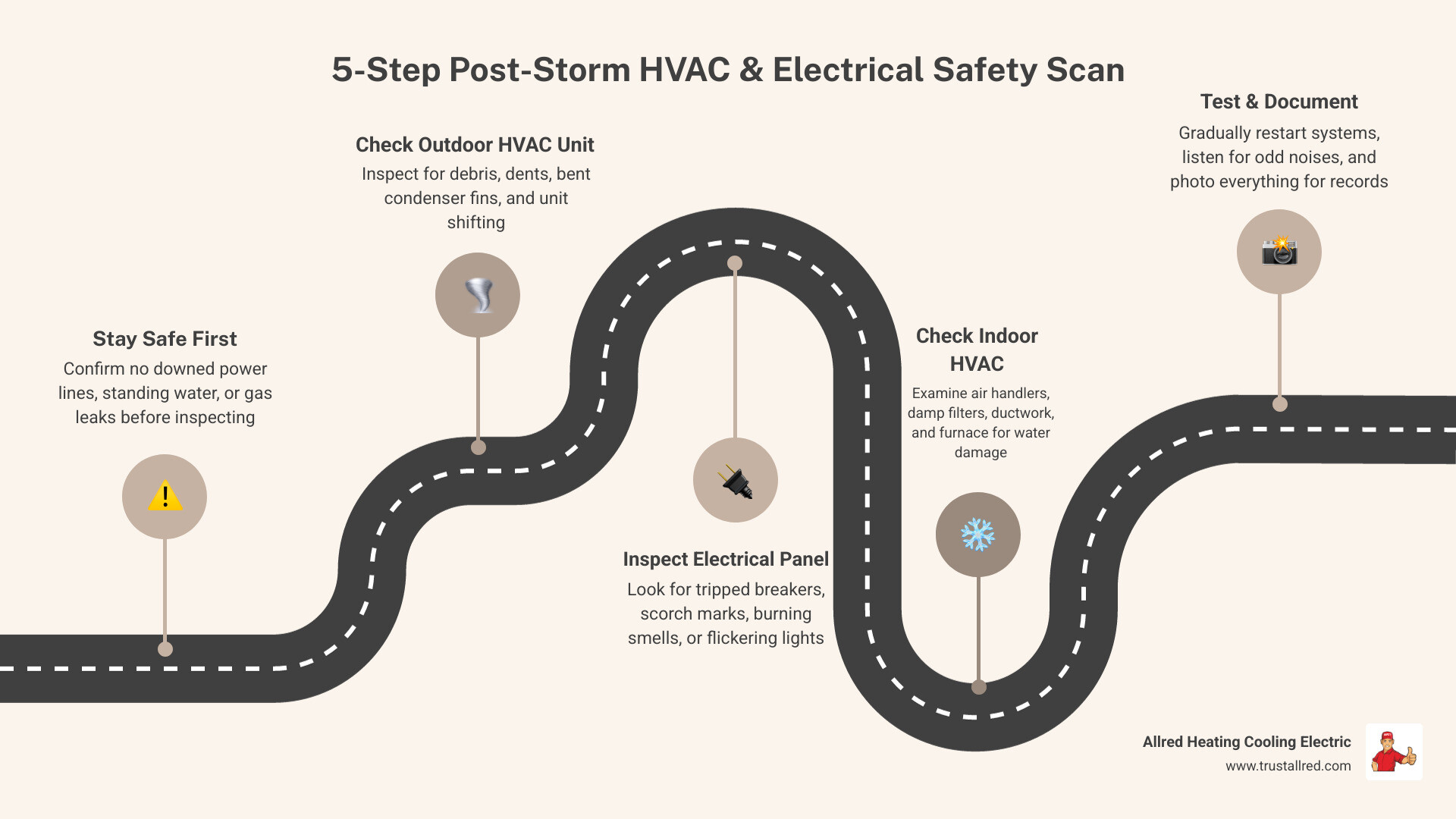
Here’s a quick overview of what to check after a storm:
- Stay safe first — confirm downed lines are clear and power is stable before inspecting anything
- Check the outdoor HVAC unit — look for debris, dents, bent fins, and unit shifting
- Inspect your electrical panel — watch for tripped breakers, scorch marks, or burning smells
- Check indoor HVAC components — air handlers, filters, ductwork, and the furnace
- Test thermostats and restart systems gradually — listen for unusual sounds or smells
- Document everything — photos and notes support insurance claims
- Call a professional — if anything looks off, don’t risk it
The concern isn’t just visible damage. Storms can cause hidden electrical issues that increase the risk of short circuits, fire hazards, and HVAC failures that show up days or weeks later — long after the storm has passed.
I’m Daniel Allred, co-founder of Allred Heating Cooling Electric, a licensed electrician and HVAC professional serving the Puget Sound region since 2011 — and after years of post-storm service calls, I’ve seen how a thorough post storm hvac and electrical checklist can prevent a minor issue from turning into a costly emergency. Let’s walk through exactly what to look for, step by step.
Immediate Safety Precautions Before Your Inspection
Before you even think about grabbing your flashlight and heading to the backyard, we need to talk about safety. In the PNW, our storms often involve heavy rain and wind-toppled Douglas firs. This combination creates a high risk for electrical hazards that you can’t always see.
Watch for Downed Power Lines
If a tree limb has come down near your home, stay back. Downed power lines can energize the ground, fences, or even your home’s siding. If you see a line down, call your utility provider immediately and keep at least 30 feet away. Never assume a downed line is “dead.”
Beware of Standing Water
Flooding isn’t just a mess; it’s a massive electrocution risk. If your basement or the area around your outdoor HVAC unit is flooded, do not walk into the water. Water can become energized if it comes into contact with submerged outlets, extension cords, or the internal wiring of your HVAC system. If you suspect your electrical system has been compromised by water, you may need Emergency Electrical Repairs in Kent WA to safely isolate the damage.
Check for Gas Leaks
If your home uses natural gas or propane for heating, use your nose. If you smell “rotten eggs,” do not turn on any lights or use your phone inside the house. Leave the premises immediately and call the gas company from a safe distance.
Gear Up
When you are sure the area is safe to enter, wear proper personal protective equipment (PPE). This includes:
- Rubber-soled boots to provide some insulation.
- Heavy-duty gloves to protect against sharp debris.
- Safety glasses to keep dust and insulation fibers out of your eyes.
The Essential Post Storm HVAC and Electrical Checklist: Outdoor Units
Once it is safe to head outside, your first stop should be the outdoor condenser unit (the big metal box for your AC or heat pump). These units are built to withstand the elements, but they aren’t invincible against the flying debris common in Auburn or Federal Way windstorms.
Visual Inspection for Physical Damage
Walk around the unit and look for:
- Dents and Cracks: Large branches can dent the cabinet or crack the fan blades.
- Bent Fins: The tiny aluminum “fins” on the sides of the unit are crucial for airflow. Hail or wind-blown debris can flatten these, which restricts airflow and forces your system to work harder, leading to inefficiency.
- Unit Shifting: If the soil under the concrete pad has washed away due to heavy rain, the unit might tilt. A tilted unit can put stress on copper refrigerant lines, leading to leaks.
Debris Clearance
Storms love to shove leaves, pine needles, and small twigs inside the unit’s grille. This debris is a leading cause of post-storm HVAC inefficiency.
- Clear a perimeter of at least 18–24 inches around the unit.
- Gently remove any visible debris from the top and sides.
- Pro Tip: Do not try to spray out the inside of the unit with a high-pressure hose, as you could damage the delicate fins or force water into electrical compartments.
If you notice the unit is making a strange sound or isn’t cooling properly after you’ve cleared the debris, check out these Auburn WA 24/7 HVAC Repair Tips to help troubleshoot the next steps.
Using a Post Storm HVAC and Electrical Checklist for Surges
In our region, lightning isn’t as common as in the South, but power grid fluctuations during a windstorm are a constant threat. When the power flickers or “surges” back on after an outage, it can send a massive spike of electricity through your home.
Hidden Damage to Circuit Boards
Modern HVAC systems are basically giant computers. A power surge can fry the delicate circuit boards and capacitors inside your furnace or heat pump. Signs of surge damage include:
- The system won’t turn on at all.
- A “burning” smell coming from the vents.
- The outdoor unit hums but the fan doesn’t spin.
The Value of Surge Protection
One of the best ways to avoid this entry on your post storm hvac and electrical checklist in the future is to install a whole-home surge protector. These devices sit at your main electrical panel and “shunt” excess voltage into the ground before it can reach your expensive appliances. If you’re worried about your home’s resilience, our team provides 24 Hour Electrical Service in Auburn WA to help you upgrade your protection.
Identifying Water Damage in Exterior Components
Heavy rainfall in places like Puyallup or Sumner can lead to localized flooding. If your outdoor unit was sitting in standing water, even for a few hours, you need to be extremely cautious.

The Danger of Submersion
If the water level reached the electrical components or the compressor, do not turn the system on.
- Corrosion: Even fresh rain water can cause corrosion on electrical contacts.
- Mud and Silt: Floodwater often carries fine silt that can get inside the motor bearings, causing them to seize up.
- Short Circuits: Moisture trapped inside the wiring insulation can cause a short circuit the moment you flip the switch.
If your unit was submerged, it requires a professional inspection and a “deep clean” of the coils to ensure it’s safe to operate.
Assessing Your Home’s Electrical System and Panel
After checking the outdoors, head to your main electrical panel. This is the brain of your home’s power system, and it often bears the brunt of storm-related stress.
Circuit Breaker Testing
Open the panel door and look for any breakers that are in the “off” or “middle” position.
- The One-Reset Rule: If a breaker is tripped, you can try to reset it once. If it immediately trips again, stop. This indicates a direct short circuit or a grounded wire caused by the storm.
- Check for Heat: Carefully feel the front of the breakers. If any feel hot to the touch, or if you see scorch marks or smell ozone (a sharp, metallic scent), you have a serious hazard on your hands.
Flickering Lights and GFCI Outlets
Walk through your home and check your lights. Flickering can indicate a loose “neutral” wire at the service mast outside your home—a common issue after a windstorm. Also, test your GFCI outlets (the ones with the “Test” and “Reset” buttons) in your kitchen, bathrooms, and garage. These are designed to trip if they detect moisture, protecting you from shocks.
If your panel is buzzing or you smell smoke, you need an expert fast. I Have an Electrical Emergency Who Provides 24 Hour Electrical Service in Auburn WA? We do, and we’re ready to help 24/7.
Inspecting Indoor HVAC Components and Ductwork
The “out of sight, out of mind” parts of your system—like the furnace in the basement or the ductwork in the crawlspace—are often the most vulnerable to storm-related water damage.
Air Handlers and Furnaces
If you had a roof leak or a basement flood, your furnace may have taken on water. Even a small amount of moisture can ruin the blower motor or the gas valve.
- Check the Air Filter: This is a simple but vital step on your post storm hvac and electrical checklist. If the filter is damp, replace it immediately. A wet filter blocks airflow and can quickly become a breeding ground for mold.
The 24-48 Hour Mold Window
Mold can begin to grow in wet insulation or ductwork within just 24 to 48 hours. If your ducts got wet, they need to be professionally dried and sanitized.
| Component | Dry Condition | Water-Damaged Sign |
|---|---|---|
| Fiberglass Insulation | Fluffy, light, and odorless | Matted down, dark spots, musty smell |
| Flex Ductwork | Circular, firm shape | Sagging, heavy with water, visible condensation |
| Blower Compartment | Dusty but dry | Rust on the floor, water lines on the motor |
If your heating system was affected by the storm, don’t wait for the mold to set in. We offer Emergency Furnace Repair in Kent WA to get your air quality back to healthy levels.
Final Steps on Your Post Storm HVAC and Electrical Checklist
If everything looks dry and the breakers are holding, it’s time for the “test run.”
Thermostat Functionality
Check your thermostat display. If it’s blank, the storm may have tripped the dedicated furnace breaker or blown a small fuse on the HVAC control board. If it powers up, try to turn on the fan first, then the heat or cooling.
Staged Restart Sequence
Don’t just crank the thermostat to 75 degrees and walk away.
- Turn on the system and stay near the indoor unit for five minutes.
- Listen for grinding, rattling, or banging. These sounds could mean a loose component or debris stuck in the blower.
- Sniff the air coming from the vents. A “dusty” smell is normal if the system hasn’t run in a while, but a “burning plastic” smell is an immediate red flag.
If the system behaves erratically, you might need 24/7 Heating Repair in Auburn WA to diagnose a potential electrical control failure.
When to Call a Professional and Documenting Damage
Sometimes, the damage isn’t something you can see with a standard flashlight. Our technicians use advanced tools, like thermal imaging, to find “hot spots” in your electrical wiring or moisture hidden behind drywall.
Insurance and Documentation
If you find damage, document it before you clean it up.
- Take Photos and Video: Capture the debris, the water lines, and any visible dents.
- Keep a Log: Note the date and time of the storm and when you first noticed the issue.
- Call Your Agent: Most homeowner insurance policies cover “sudden and accidental” storm damage, but they may not cover issues caused by “deferred maintenance” (like a dirty filter that caused the system to overheat after a storm).
Warranty Protection
Many HVAC manufacturers will void your warranty if you continue to run a system that has been damaged by a “natural disaster” without a professional inspection. Getting a certified technician to sign off on the repair ensures your long-term protection remains intact. For residents in the South Sound, we provide 24 Hour Heating Service in Puyallup WA to help with these critical inspections.
Frequently Asked Questions about Post-Storm Inspections
Is it safe to turn on my AC if the outdoor unit was in standing water?
No. If the water reached the base of the unit where the electrical connections are located, you risk a short circuit that could destroy the compressor. Have a professional perform an insulation test on the motor windings before restoring power.
Why does my circuit breaker keep tripping after a windstorm?
This is often caused by “wind-driven rain” entering an outdoor outlet or the service mast. It could also be a sign that a tree limb has frayed a wire somewhere on your property. Do not keep resetting the breaker; call an electrician to find the short.
How do I know if a power surge damaged my furnace?
Common signs include a blank thermostat, the indoor fan running constantly even when the heat is off, or the system “short cycling” (turning on and off every few minutes). Surges often damage the control board, which requires professional replacement.
Conclusion
The 2026 storm season in the Pacific Northwest will undoubtedly bring its fair share of challenges, but with a solid post storm hvac and electrical checklist, you can protect your home and your family from the hidden hazards of severe weather.
At Allred Heating Cooling Electric, we’re more than just technicians; we’re your neighbors in Auburn, Kent, Tacoma, and beyond. Whether you need a quick safety inspection after a windstorm or you’re looking to Protect your home with Federal Way backup power solutions, our family-oriented team is here for you 24/7. Stay safe, stay dry, and don’t hesitate to reach out if your home systems aren’t behaving quite right after the clouds clear.
